How to Reduce Heat and Glare Under a Glass Roof
By midsummer, your glass-roofed sunroom may become too hot to use. The air conditioner runs continuously, sunlight washes out laptop screens, and the inexpensive roller blind you installed has begun to sag overhead.
These problems need different solutions. Darker fabric may reduce brightness without sufficiently reducing heat. A hanging blind may lack the tension required for overhead installation, while exterior shading introduces weather exposure, drainage and fixing requirements.
Before selecting a skylight shading system, identify the actual problem: Is the priority reducing solar heat, controlling glare, maintaining visibility, or ensuring reliable operation?
Why Does a Glass Roof Make a Room So Hot?
Glass roofs expose a large overhead area to direct solar radiation. Some solar energy is reflected, some is absorbed by the glazing, and some passes through into the room. The transmitted energy reaches floors, furniture and interior surfaces, which then release heat back into the space.
This is why a sunroom or glass extension can feel significantly hotter than the outdoor temperature suggests. The problem is not only the air temperature outside, but also the amount of solar energy entering through the roof.
Two glazing parameters are especially important: Solar Heat Gain Coefficient (SHGC) and Visible Transmittance (VT).
SHGC describes how much solar energy enters through the glazing system. A lower SHGC generally means less solar heat gain. VT describes how much visible light passes through the glass, which affects daylight availability and glare.
For existing glass roofs, replacing the glazing is often expensive or impossible. A properly selected skylight shading system provides another method to control solar exposure without replacing the entire roof structure.
Exterior or Interior Shading: Which Problem Are You Solving?
The position of the shading system changes how it manages solar energy.
Exterior shading:
Sun → Shade → Glass → Room
Exterior systems intercept sunlight before it reaches the glazing. For glass roofs with severe overheating problems, this approach can provide stronger solar control because less radiation reaches the glass surface.
Exterior shading is worth considering when:
- The roof receives strong direct sunlight.
- The room overheats during afternoon hours.
- The glazing area is large.
- The project allows outdoor installation.
Interior shading:
Sun → Glass → Shade → Room
Interior skylight blinds remain useful, especially when the main problems are glare, excessive brightness or daylight control. However, the solar radiation has already reached the glazing before it reaches the blind.
For example, a residential sunroom facing strong afternoon sun may benefit from exterior shading because it reduces solar exposure before the glass absorbs heat. An office with acceptable thermal performance but uncomfortable glare may achieve the desired result with an interior tensioned skylight blind.
The correct choice depends on the actual problem, installation limitations and glazing condition.
Choose Fabric According to How the Space Is Used
Openness factor describes the percentage of open area in a screen fabric. A lower openness fabric generally provides stronger solar filtering and glare reduction, while a higher openness fabric maintains more outward visibility and daylight.
However, openness alone does not determine the final solar performance. Fabric color, yarn structure, reflectance and glazing type also influence the result.
Home Office: Control Direct Glare
For a workspace beneath a skylight, the biggest issue is often not temperature but direct sunlight on computer screens. A tighter screen fabric can reduce visual discomfort while maintaining some daylight.
Approximately 1%–3% openness fabrics are often considered when glare control is a priority. However, if complete darkness is required, a blackout fabric should be evaluated instead of assuming that a low-openness solar screen provides blackout performance.
Residential Sunroom: Balance Comfort and View
For living spaces where occupants still want daylight and outdoor visibility, approximately 3%–5% openness is often a practical starting range.
The same openness value does not always mean identical solar performance. Different yarns, colors and coatings can produce different optical results.
For example, published technical data from screen fabric manufacturers shows that two fabrics with the same openness can have different solar transmittance values depending on color and construction.
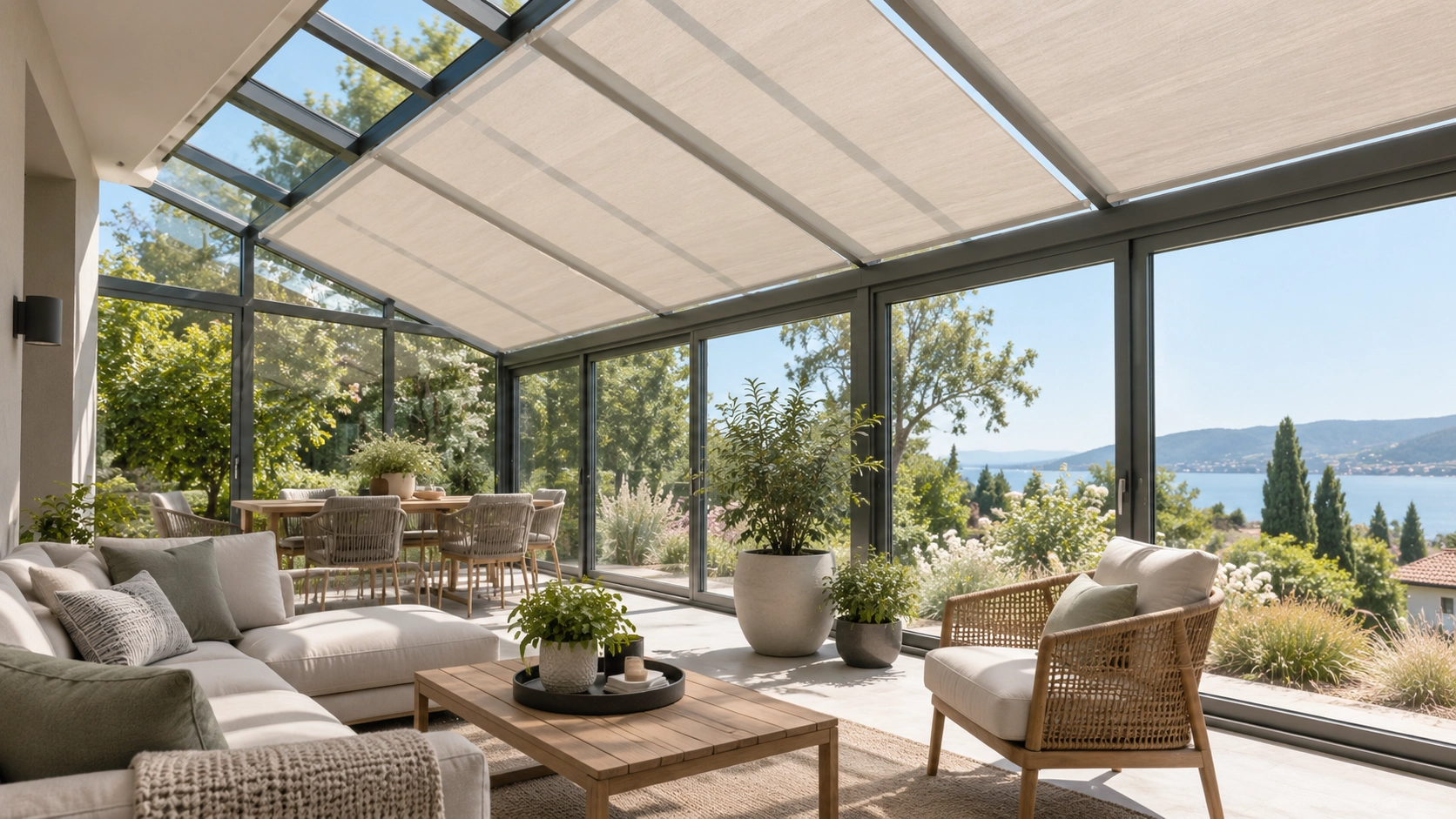
Conservatory: Preserve Useful Daylight
A conservatory or glass extension may require a different balance. The goal is often to reduce harsh sunlight while keeping the space bright and comfortable.
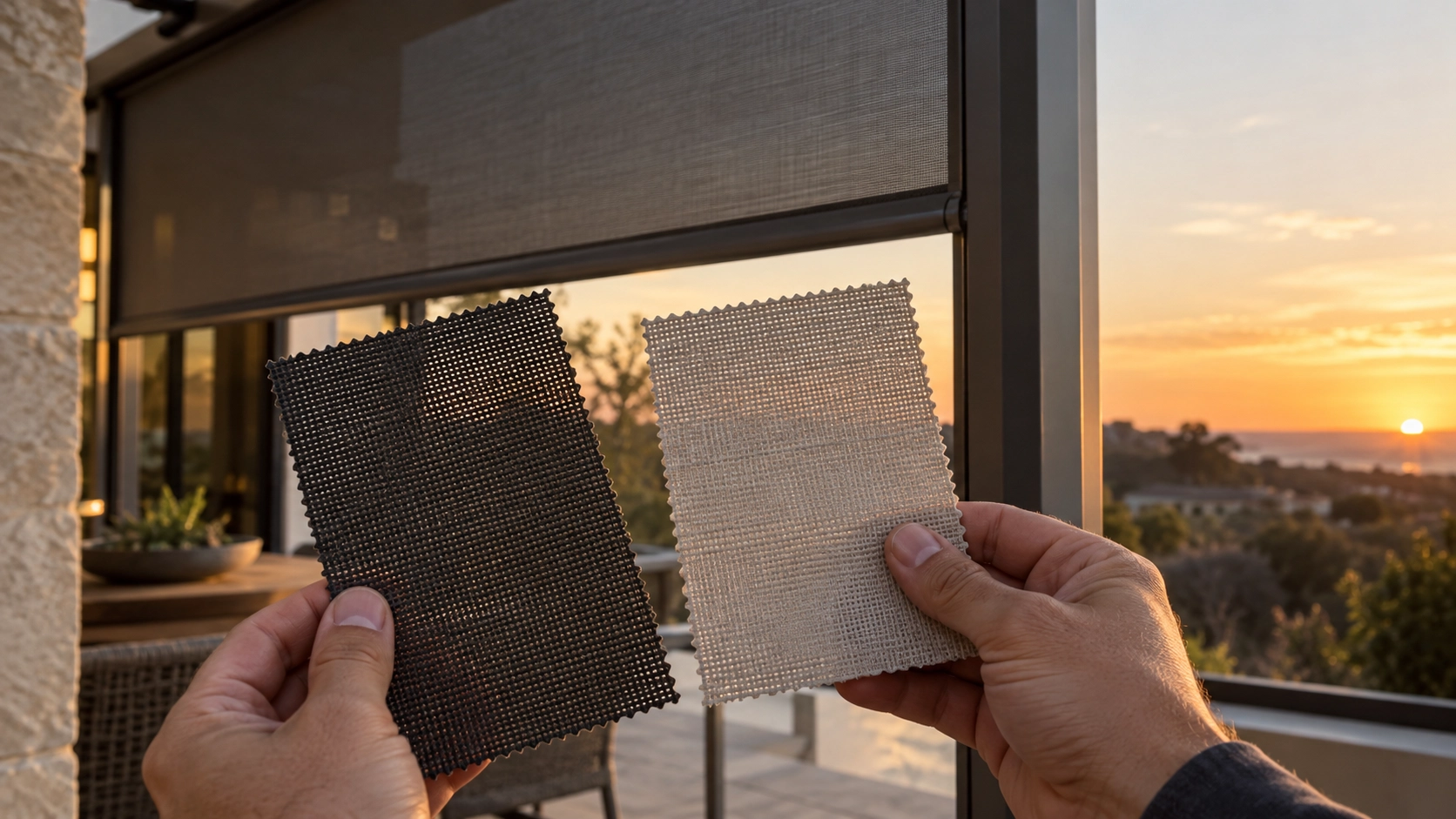
Higher openness fabrics can maintain more visibility, but they may provide less solar screening during peak sunlight hours. For these applications, reviewing actual fabric samples under real daylight conditions is more valuable than choosing only by specification numbers.
Why Regular Roller Blinds Fail on Glass Roofs
A standard vertical roller blind works because gravity helps keep the fabric hanging vertically. When the same concept is moved onto a horizontal or sloped roof, the mechanical conditions change completely.
The fabric must be pulled across the opening while maintaining controlled tension. Without a suitable traction and guidance system, common problems include:
- Fabric sagging.
- Uneven movement.
- Edge gaps.
- Bottom rail instability.
- Motor overload.
The solution is not simply choosing a stronger motor. The motor, roller tube, tension system, guide mechanism and fixing structure must work together.
When evaluating a skylight blind supplier, ask: How does the system maintain fabric tension when fully extended?
Measure the Roof Before Selecting a Skylight System
The maximum size of a skylight blind is not determined by width alone. As the opening becomes larger, the system must manage greater fabric weight, roller tube loading, motor torque and tension requirements.
Before selecting a system, confirm:
- Clear opening width.
- Fabric travel distance.
- Roof angle or installation slope.
- Indoor or outdoor installation position.
- Available fixing structure.
A common mistake is comparing only the advertised maximum width. A system that works well on a small skylight may require additional support when installed across a wider opening.
For larger applications, ask whether an intermediate fabric support rail is required. This helps control fabric deflection and keeps the system stable during operation.
Wind Resistance for Exterior Skylight Shading
Exterior skylight shading systems face different challenges from indoor blinds. Wind pressure acts on the fabric surface, guide components and fixing points. The complete assembly must be considered rather than only the fabric itself.
The European product standard for external blinds and awnings is EN 13561:2015, which defines performance requirements including wind resistance.
For skylight and conservatory awnings, wind resistance classifications are based on pressure rather than simply quoting a wind speed. The relationship between wind speed and pressure changes according to installation height, exposure, building geometry and local conditions.
A simplified dynamic pressure equation:
q ≈ 0.613V²
shows that 110 N/m² corresponds approximately to 13.4 m/s (about 48 km/h) under free-stream conditions. However, this should not be interpreted as the maximum operating wind speed of a deployed shading system.
The actual allowable condition depends on:
- Product structure.
- Installation method.
- Roof exposure.
- Guide and fixing design.
- Manufacturer operating instructions.
For outdoor skylight systems, request the declared wind classification, tested configuration and automatic retraction requirements before installation.
Can Skylight Shades Cause Glass Thermal Stress?
The concern is not shading itself, but uneven heating across the glass surface.
Glass expands when heated. If one section of a pane becomes significantly hotter than another section, different expansion rates can create thermal stress.
This situation can occur when strong sunlight creates sharp temperature differences caused by:
- Partial shading.
- Building shadows.
- Nearby structures.
- Uneven shading patterns.
- Glass coatings with higher solar absorption.
A large, uniform shading area creates a different thermal condition compared with a narrow shadow moving across only part of the glass.
The National Glass Association has documented cases where specific insulated glazing constructions experienced large temperature differences between shaded and exposed areas. These examples demonstrate that thermal gradients are possible under certain conditions, but they should not be treated as a universal temperature limit for every skylight.
For large commercial glass roofs or special glazing systems, coordinate the shading design with the glazing supplier or façade engineer.
NewHoo Skylight Systems: Selecting the Right Structure
The best skylight shading system is not necessarily the one with the largest motor or strongest components. The correct choice depends on how the system controls fabric movement, maintains tension and fits the installation environment.
SR60 / SR60B: Compact Indoor Skylight Shading
For smaller indoor skylights, the NewHoo SR60 Series provides a compact motorized overhead shading solution.
Unlike a standard hanging roller blind, SR60 uses a guided wire-rope system to control fabric movement across the skylight opening. This helps maintain alignment when the blind operates horizontally or at an angle.
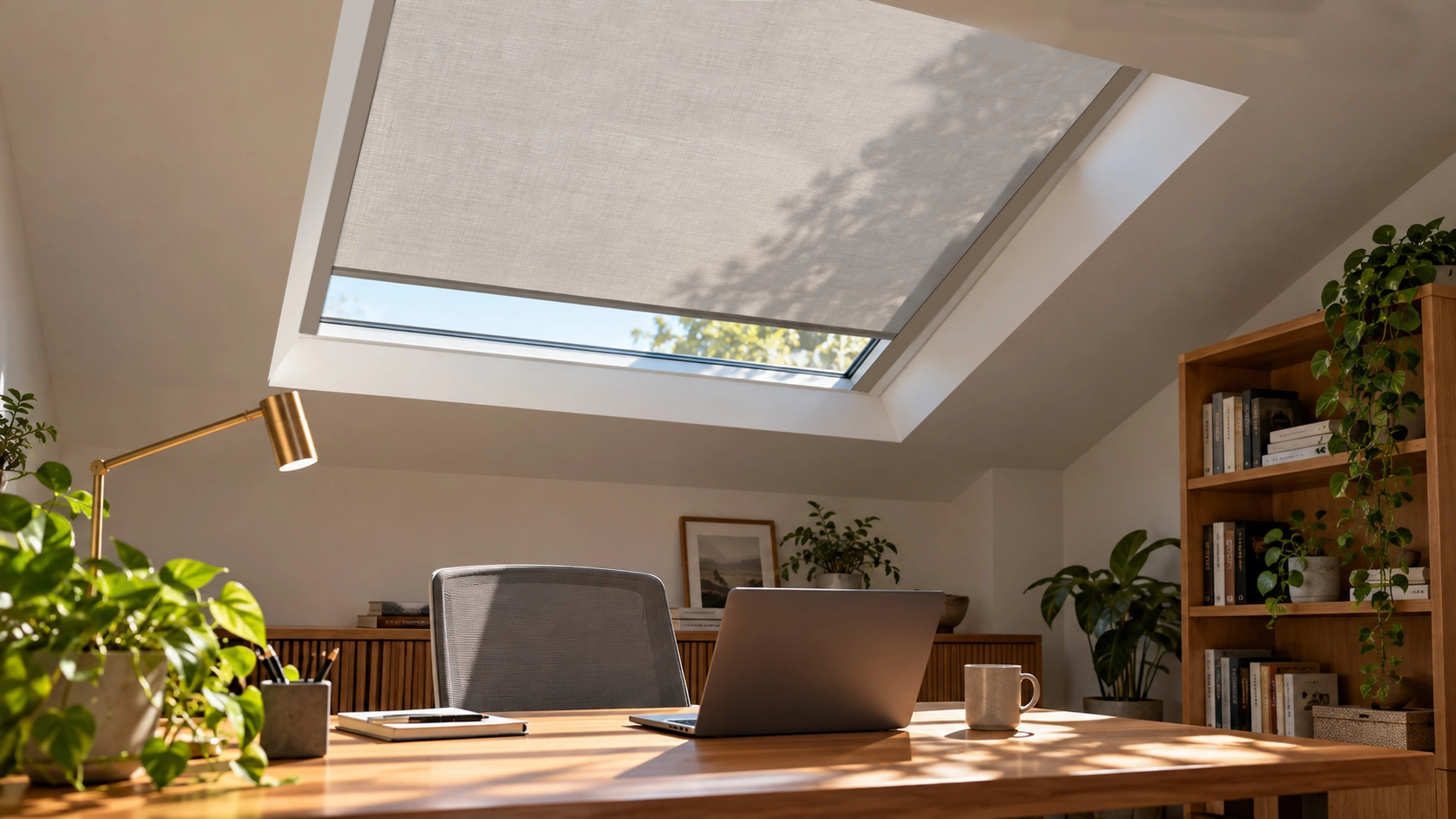
SR60 is suitable when the main requirement is:
- Small indoor skylight shading.
- Motorized operation.
- Compact installation.
- Direct sunlight and glare control.
For projects requiring better edge control, the SR60B adds side rails and an upgraded bottom rail structure. The additional guidance helps reduce movement at the fabric edges and provides improved control for specific installation conditions.
Choose SR60 when the priority is compact skylight shading. Choose SR60B when the project requires stronger edge guidance or improved light control around the sides.
Why SR60B Can Improve Skylight Performance
A skylight blind does not fail only because of the fabric. Many problems occur because the fabric is not sufficiently controlled during movement.
Side guidance helps maintain the position of the fabric and bottom rail, reducing the risk of uneven travel. This is especially valuable where the customer expects cleaner edges and more consistent coverage.
SR150: Tensioned Shading for Sunrooms and Sloped Glass Roofs
For larger sunrooms and sloped glass roofs, the main challenge is not only reducing sunlight. The system must also keep the fabric under controlled tension during the entire operating cycle.
The NewHoo SR150 Sunroom Skylight Shading System is designed around this requirement.
The SR150 uses a motorized FGS traction system with double springs and coated 316 stainless-steel wire. The spring-assisted structure helps maintain fabric tension while the wire guides the movement across the opening.
Compared with adapting a standard roller blind for overhead use, a tensioned skylight system addresses the main mechanical problems:
- Fabric sagging over longer distances.
- Unstable bottom rail movement.
- Uneven fabric travel.
- Loss of tension during operation.
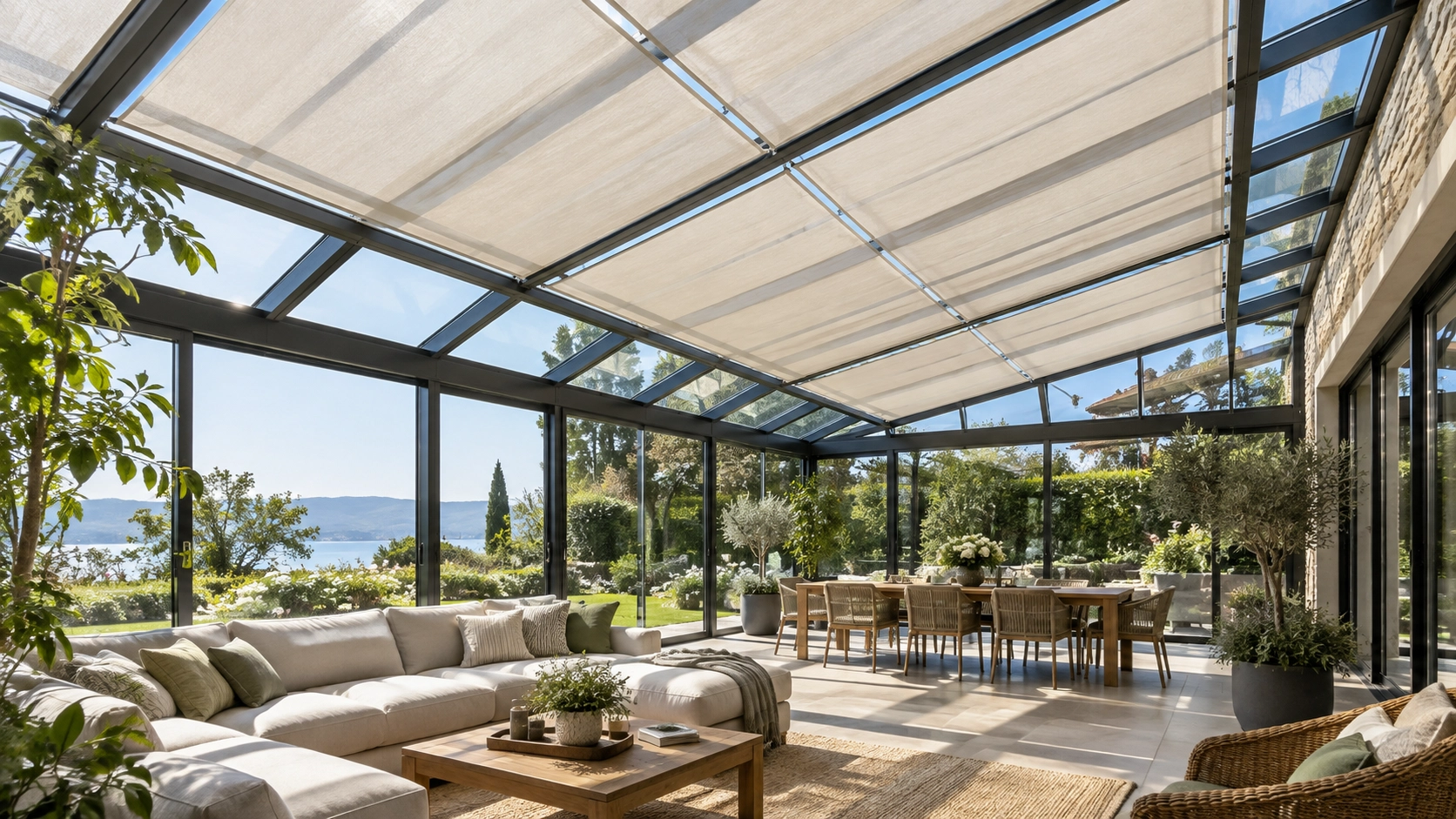
The SR150 is suitable for applications such as:
- Residential sunrooms.
- Sloped glass roofs.
- Large skylight openings.
- Projects requiring stable overhead fabric movement.
NewHoo's published SR150 configuration supports widths below 4 m and projection below 5 m. For wider installations, additional fabric support should be evaluated to maintain long-term stability.
The important selection question is not: "Does this blind have a stronger spring?"
The better question is: "How does the complete system maintain fabric tension at my actual size and installation angle?"
TW001: Motorized Skylight Shading for Larger Roof Applications
For larger overhead spaces, commercial glazing areas and covered architectural structures, the system must provide reliable motorized movement while maintaining fabric control.
The NewHoo TW001 Skylight Roller Blind System combines motorized operation, spring-assisted tension and stainless-steel wire-rope traction.
Its structure is designed to solve a common problem in overhead shading: the fabric needs continuous guidance because gravity cannot provide the same support as a vertical blind.
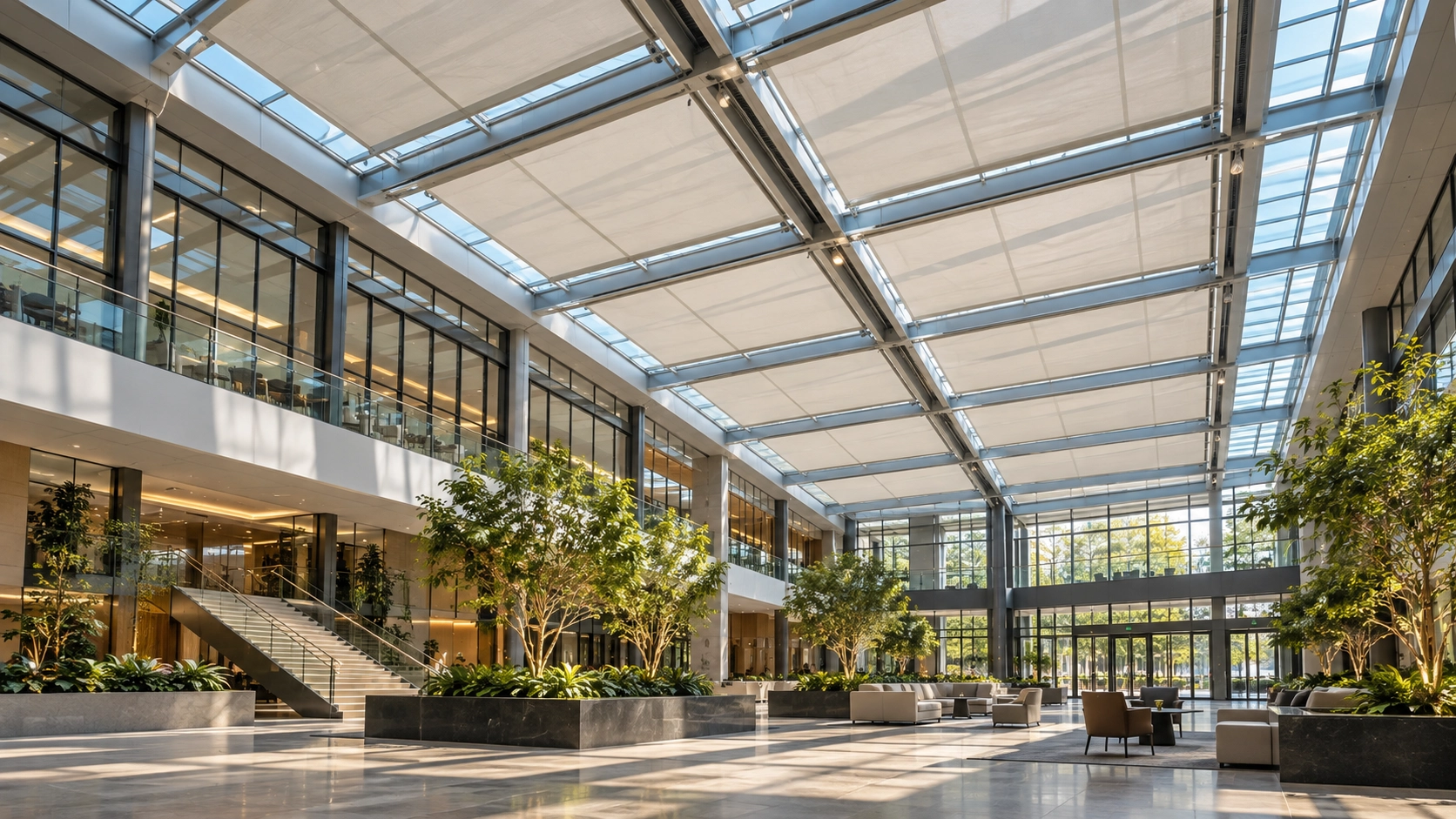
TW001 can be considered for:
- Glass roof systems.
- Sunrooms.
- Covered terraces.
- Commercial overhead shading applications.
The system uses a 63 mm grooved roller tube configuration and is designed for guided overhead movement. However, tube diameter alone does not determine the maximum possible size.
The final specification should consider:
- Opening width.
- Fabric weight.
- Projection length.
- Support spacing.
- Installation structure.
What Information Should You Send Before Requesting a Quote?
A useful skylight shading quotation requires more information than only the opening size.
Prepare the following information before contacting a supplier:
- Opening width and projection.
- Roof angle or installation slope.
- Indoor or outdoor installation.
- Photos of the existing structure.
- Glass type if available.
- Main requirement: heat reduction, glare control, privacy or blackout.
- Preferred operation method: manual, motorized or smart control.
For exterior systems, also provide:
- Project location.
- Wind exposure conditions.
- Drainage requirements.
- Available fixing points.
If an existing blind has failed, include photos showing:
- Fabric sagging.
- Damaged guides.
- Motor problems.
- Uneven movement.
A professional supplier should not only quote a product. They should explain why the proposed structure matches your roof conditions.
Frequently Asked Questions
Are exterior skylight shades better for reducing heat?
Exterior shading has a physical advantage because it blocks sunlight before it reaches the glazing. However, the final result depends on the glass specification, fabric performance, orientation and installation conditions.
What openness factor is best for skylight shading?
There is no single best option. Approximately 1%–3% openness is commonly considered when glare and solar control are priorities, while 3%–5% can provide a better balance between heat control, daylight and visibility.
Why do normal roller blinds sag on glass roofs?
Vertical blinds rely partly on gravity. Overhead systems require dedicated tension and guidance because the fabric must travel horizontally or at an angle.
Can skylight shades crack glass?
The concern is not shading itself but uneven heating across the glass. Large or unusual glazing systems should be reviewed together with the shading design to reduce potential thermal stress risks.
Can exterior skylight shades stay open in strong wind?
Only within the manufacturer's specified operating conditions. Wind resistance should be evaluated according to the complete system configuration, installation method and local exposure.
Which NewHoo skylight system should I choose?
For compact indoor skylights, SR60 or SR60B is suitable. For sunrooms and sloped glass roofs requiring stronger tension control, SR150 is the appropriate direction. For larger motorized overhead shading applications, TW001 provides a guided tensioned solution.
Need a Skylight Shading Solution?
Send your roof dimensions, installation photos and project requirements. NewHoo can help evaluate fabric selection, system structure and suitable skylight shading options.
Request a Project QuoteMotorized Outdoor ZIP Screen Cost: What Cheap Quotes Leave Out
How to Choose Skylight Blinds for Large Glass Roofs
Related Article