Outdoor Blinds for Coastal Homes: How to Choose for Salt, Wind and Sea Views
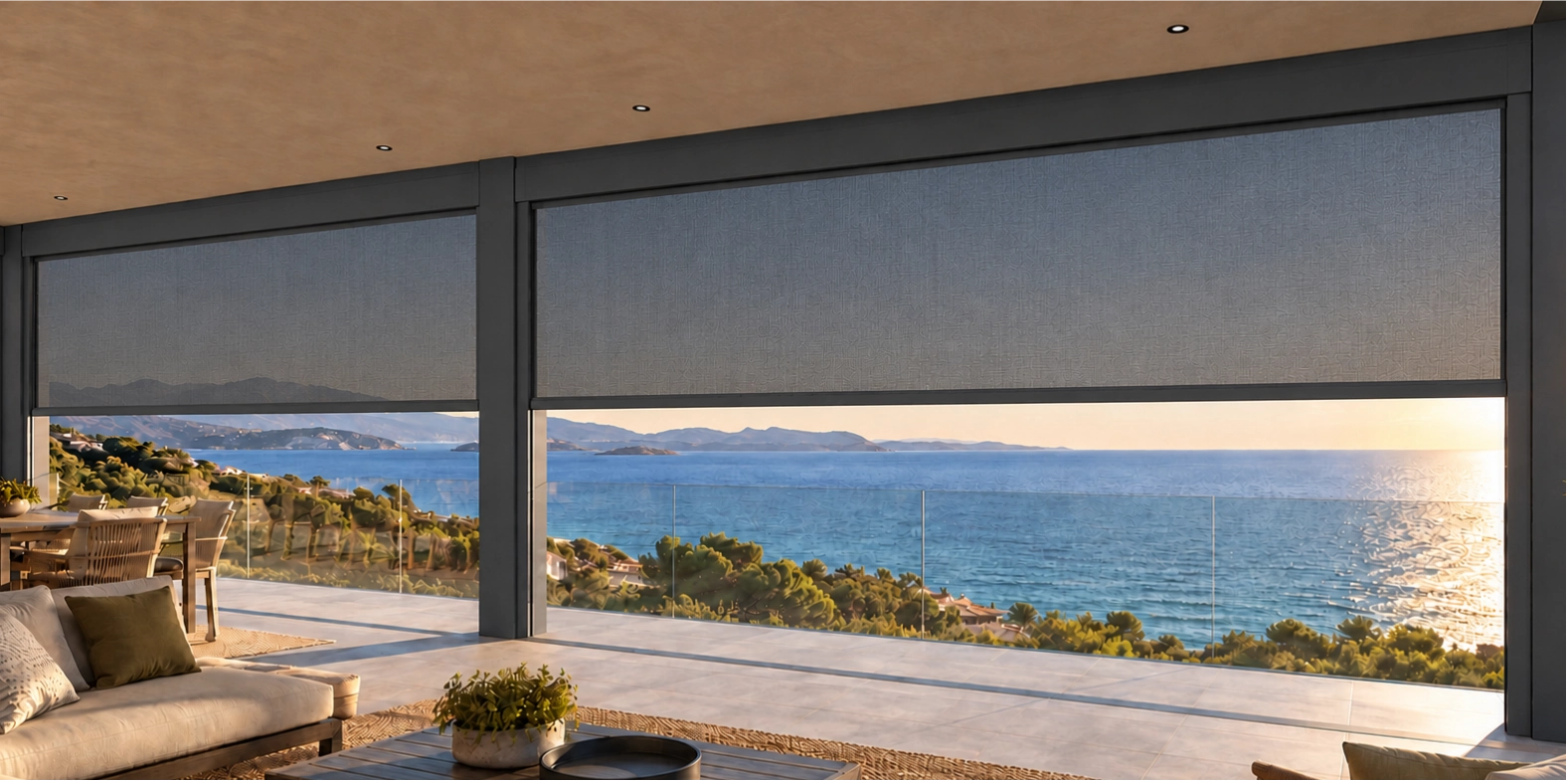
A screen may look right on installation day, then become a recurring repair job: staining around fixings, salt trapped in a guide, a bottom bar that vibrates in wind, or mesh that obscures the water you wanted to see. Labels such as “outdoor,” “windproof” and “marine grade” do not establish how the entire assembly will perform at your opening.
Start with three decisions. How exposed is the opening to salt and wind? What must the screen do while it is down? Can the selected size, fixing structure and service plan support that result? The sections below turn those decisions into specifications and acceptance checks.
1. Coastal Durability: Specify the Parts That Meet Salt Air
Stainless hardware: 316 is a starting point, not a promise of zero corrosion
Ask for the material of the brackets, screws, bolts and other exposed fasteners separately. “Stainless steel hardware” can mean different grades in different places. The Australian Stainless Steel Development Association (ASSDA) recommends grade 316 or an equivalent corrosion-resistant grade as a minimum within five kilometres of surf. It says splash zones, unwashed areas and rough surfaces may require higher grades. This is useful selection guidance for stainless components, not a five-kilometre rule that automatically qualifies the complete blind.
Even 316 can show tea staining if salt remains on the surface. Drainage, surface finish, dissimilar-metal contact and the ability to wash the assembly all affect the outcome. For a directly exposed balcony, a quote that simply says “SS hardware” leaves a material decision unresolved.
Coated aluminium: pretreatment and edges matter as much as the finish colour
The headbox, side guides and bottom bar often use coated aluminium. The words “powder-coated aluminium” identify a finishing method; they do not tell you the pretreatment, coating system, treatment of cut or machined edges, or how crevices drain. QUALICOAT's corrosion-protection guidance addresses pretreatment and also identifies damaged films, trapped dirt, galvanic contact, unsealed machining and poor drainage as factors that reduce corrosion resistance. A single claimed coating thickness cannot answer those questions.
If a supplier cites QUALICOAT or its Seaside designation, ask for the applicable licensed coater and process evidence; QUALICOAT publishes a licensed-coater database. A reference to the standard does not by itself certify a particular NewHoo assembly.
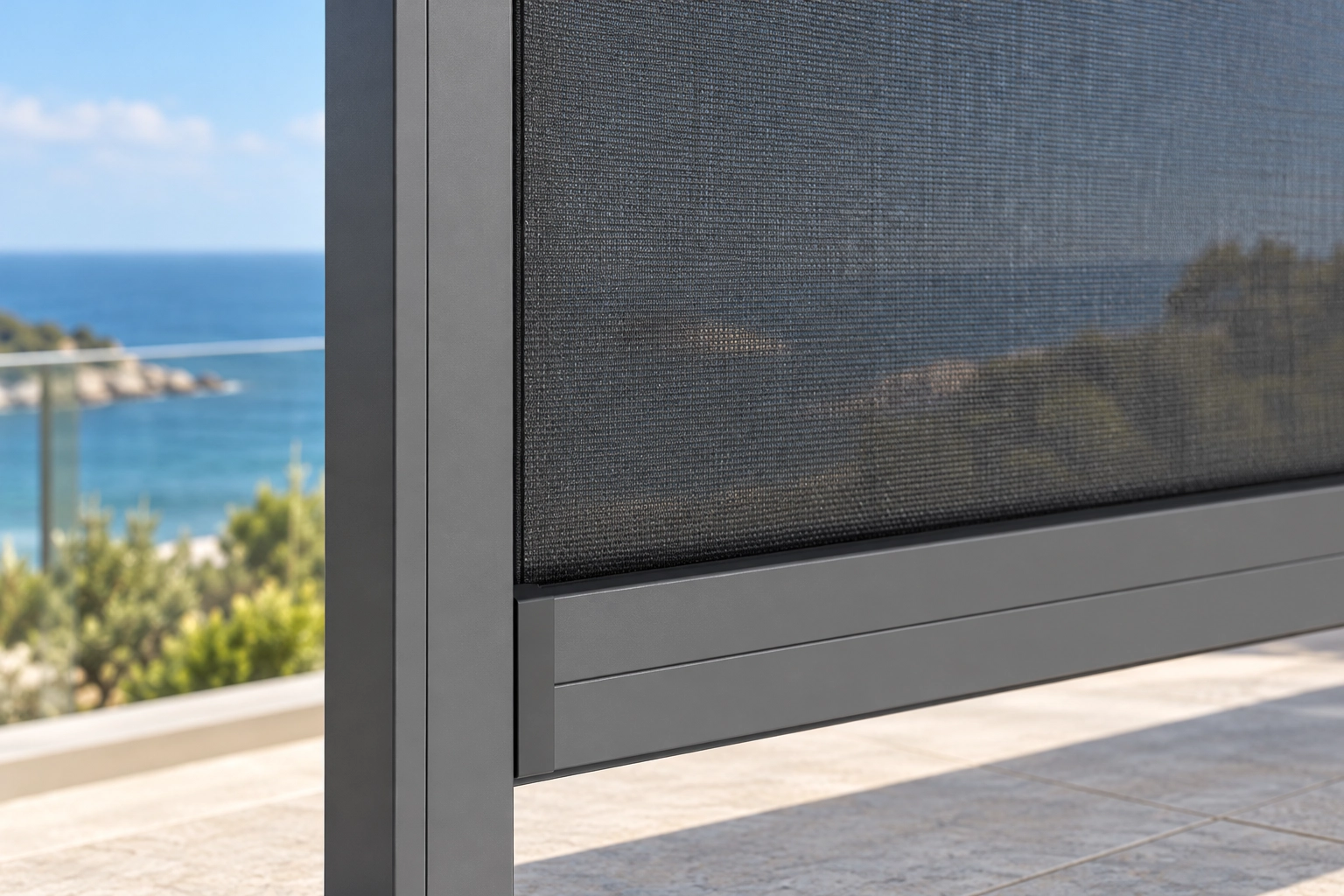
A usable coastal quote identifies the grades of exposed fasteners and brackets, the aluminium finish and pretreatment, the treatment of vulnerable joints, and the cleaning and corrosion-warranty terms. If one of those is missing, the durability specification is incomplete.
2. Read the Wind Claim Against Your Opening
A ZIP-guided screen retains the fabric edges inside side guides, which helps control lateral movement compared with a free-hanging blind. That does not make every ZIP Screen suitable for every storm. The load still passes through the fabric, zipper edge, guides, headbox, bottom bar and fixings into the building.
The physics explains why a large screen needs more than a stronger fabric. For comparable conditions, wind pressure varies roughly with the square of wind speed, while total force increases with the loaded area. As an illustration, doubling a 3 m × 2 m panel to 6 m × 2 m doubles its area and approximate total force at the same pressure; doubling the wind speed makes the pressure approximately four times as large. Real screen behaviour also depends on gusts, pressure distribution, deflection and installation. A NIST wind-engineering reference discusses the wind-speed-squared pressure relationship and its limits for flexible structures.
As load and width grow, the fabric can bow, the edge can pull harder on the guide, and the tube or bottom bar can deflect. Whether the zipper disengages is a system and installation question; it cannot be inferred from an area calculation alone. Ask for performance evidence for the proposed width and drop, fabric, guide, tube, fixing substrate and use position. A headline wind-speed figure or a catalogue maximum width is not that evidence.
What the owner should know before the next windy day
Obtain the manufacturer's permitted operating conditions and the position in which the screen should be left for forecast severe weather. Confirm the chosen motor and wind sensor are compatible, the sensor location is representative, and the retract action is demonstrated at handover. Somfy's Eolis WireFree io installation guide explicitly warns that its sensor does not protect an awning from strong gusts; treat automation as a response aid, not a storm guarantee. The installer should also show what happens during a power outage or low battery, using the instructions for the actual drive fitted. Retract in advance when the applicable system instructions call for it.
3. Choose Daytime View: Compare Fabrics Against the Sea
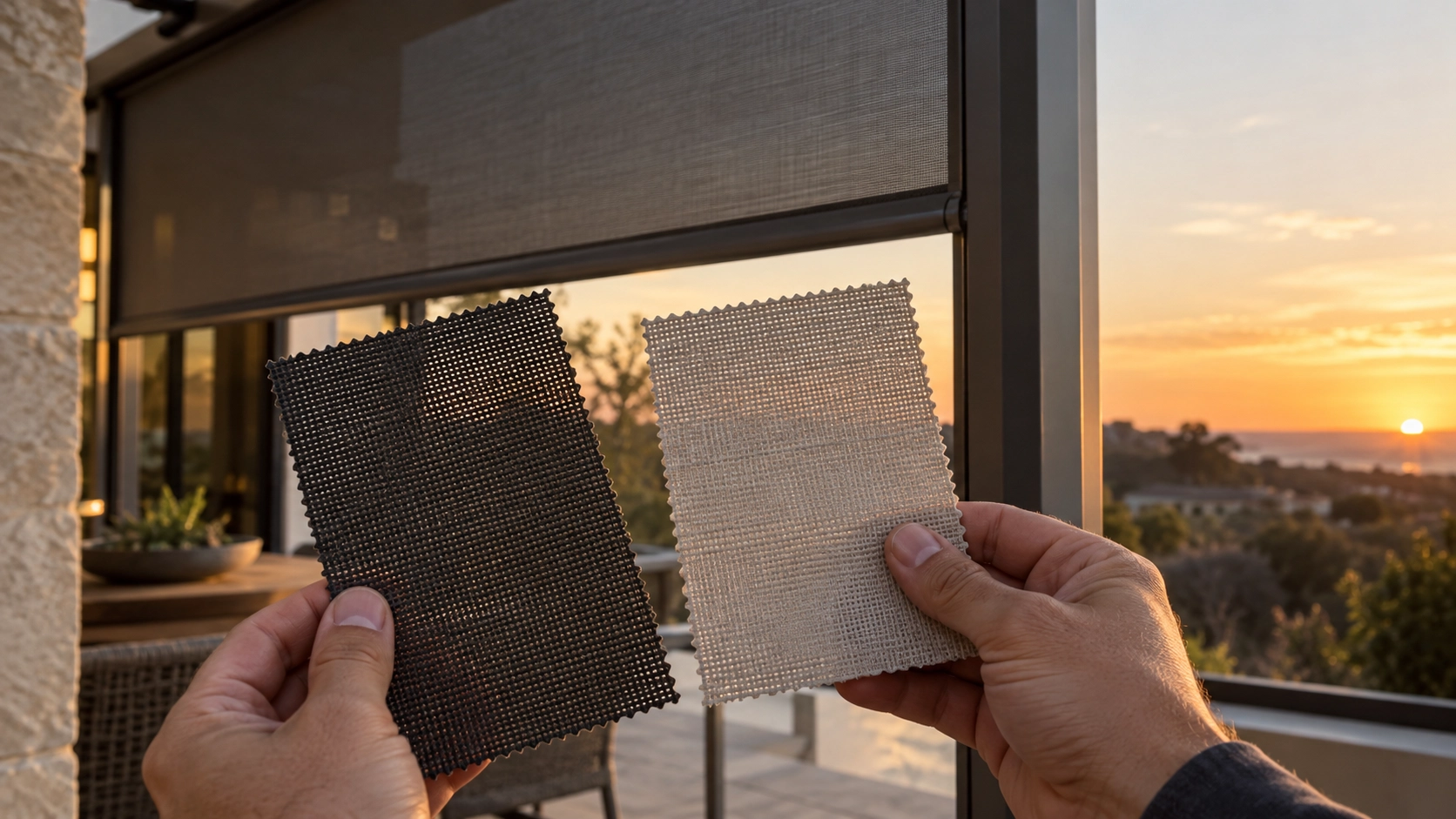
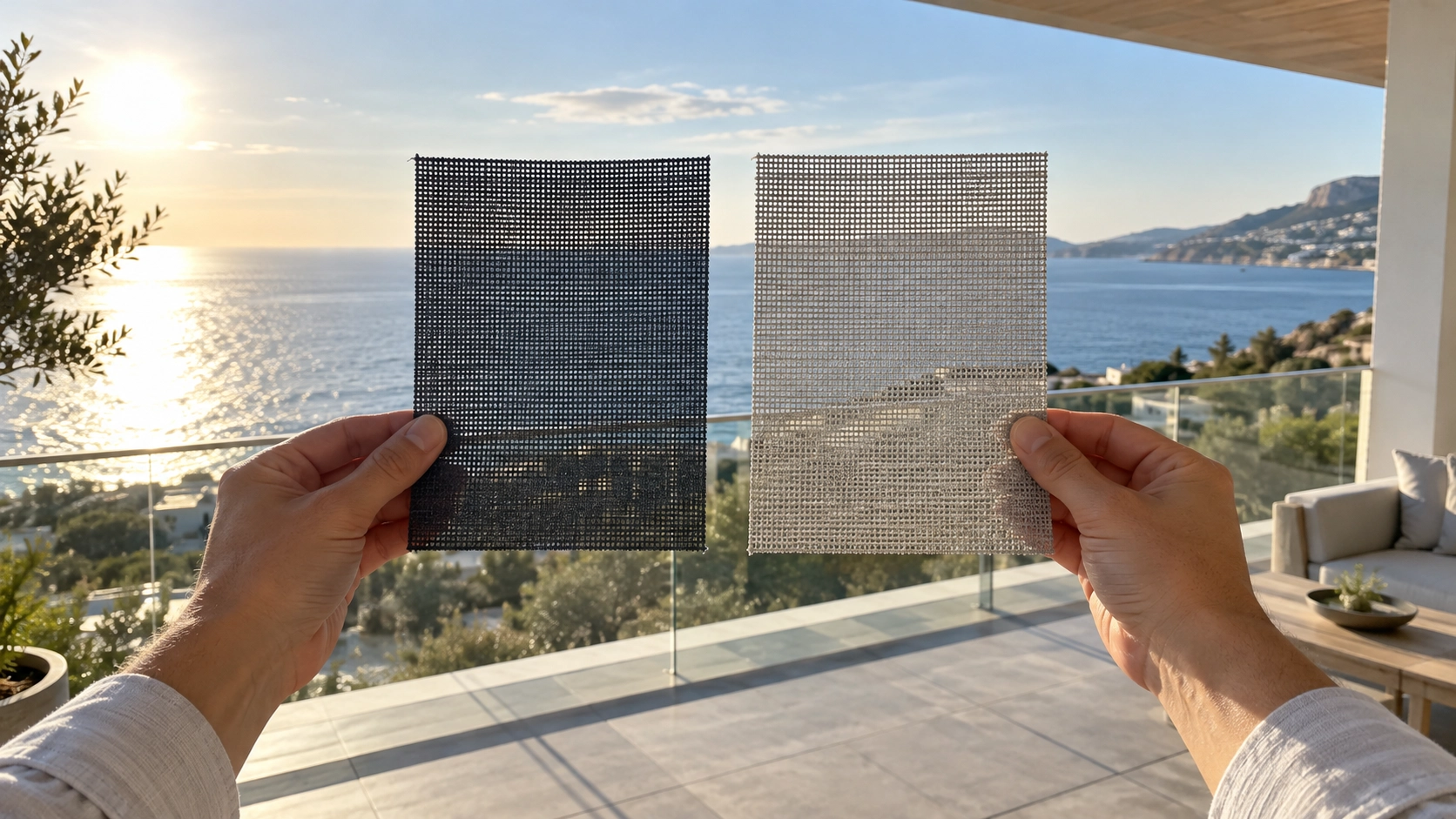
The useful test is not a product photo. Stand where you normally sit and compare full-size fabric samples against the sea in morning light, the harshest sun and late afternoon. Phifer explains that outward visibility changes with openness, colour and the light contrast between inside and outside. Darker mesh commonly improves the outward daytime view and glare control; a lighter mesh can look brighter as a surface, with different privacy and heat trade-offs. Do not translate a colour choice into a universal cooling claim.
| Your main aim | Samples to compare first | What you may give up |
|---|---|---|
| Reduce strong west-facing glare | Begin with lower-openness samples, such as 1%–3%, in suitable outdoor fabrics. | Less outward detail and daylight. |
| Keep the sea visible | Compare darker 5%–10% samples against lower-openness alternatives. | Less screening from nearby observers and potentially more glare. |
| Require privacy after dark | Assess an opaque second layer or another verified privacy solution. | Added space, cost and a blocked view when the opaque layer is down. |
These percentages are sample-comparison starting points, not coastal wind ratings or guaranteed privacy levels. A mesh that seems private by day can reveal an illuminated interior at night. Phifer notes that interior lighting can reverse the viewing effect and describes an opaque fabric with a dual roller arrangement as a way to obtain full visual privacy. For a balcony, the feasibility and wind suitability of any second layer must be assessed as part of the actual installation; a lighting schedule alone is not a privacy guarantee.
4. Choose One Wide Screen or Several Narrower Ones
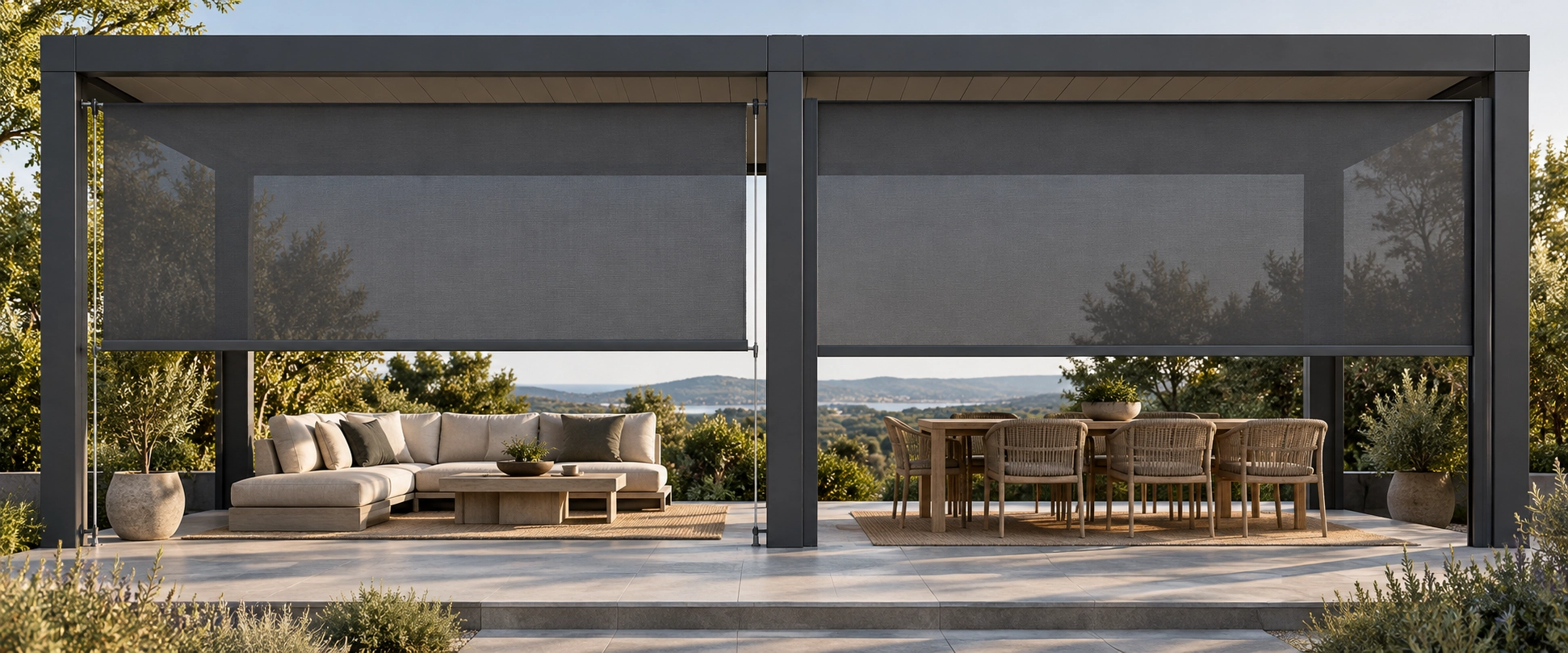
A single wide screen keeps the view free of a central guide when raised or partially lowered. Two or more screens can make transport, handling, replacement and independent shading easier, but introduce visible divisions and require dependable intermediate fixing points. Neither layout is inherently better for every 5 m-plus opening.
NewHoo's WR135-150 page describes a design range of 5.5–6.5 m and reinforced components intended to control tube bending and fabric guidance. That published size range is a manufacturing and configuration reference; it does not prove a specific coastal wind rating at every width and height. Before selecting a single panel, the project review should address tube and bottom-bar deflection, fixing strength, fabric roll width, motor selection, access for installation and eventual replacement. If those conditions do not support one panel, a split layout is a sound engineering and service decision.
5. Price the Warranty and Maintenance as Part of the System
Compare more than the warranty duration. Get the written terms for corrosion and finish changes, fabric, motor, guide and hardware. Ask who pays for removal, reinstallation, freight and access equipment if a component is replaced. A covered part can still create a large site-service bill when the screen is mounted high above a balcony.
Maintenance is also a design input. Salt, sand and dirt need to be removed using the instructions for the actual finish, fabric and drive. ASSDA recommends washing exposed stainless steel with mild detergent and clean-water rinsing; its guidance warns against chloride- or bleach-containing abrasive cleaners. Do not assume the same cleaner or pressure-washing method is appropriate for coated aluminium, mesh and motor parts. Arrange access to the headbox and guides before construction closes them in, and avoid storing a wet screen rolled up where the product instructions advise against it.
The lower purchase quote is not necessarily the lower ownership cost if it leaves the exposed fixings unspecified, needs difficult access to service, or excludes the labour required to replace covered parts.
Get a Configuration for Your Actual Coastal Opening
Send NewHoo the opening width and height, project location, photos of the fixing surfaces, the direction of the sea-facing exposure and your preferred view/privacy outcome. The resulting proposal should identify the screen layout, relevant components and finishes, fabric options, operating limits, control plan, installation assumptions, maintenance instructions and warranty responsibilities.
Solar vs Wired Motorized Outdoor Blinds: Which Should You Choose?
Related Article