Do Outdoor ZIP Screens Keep Rain Out?
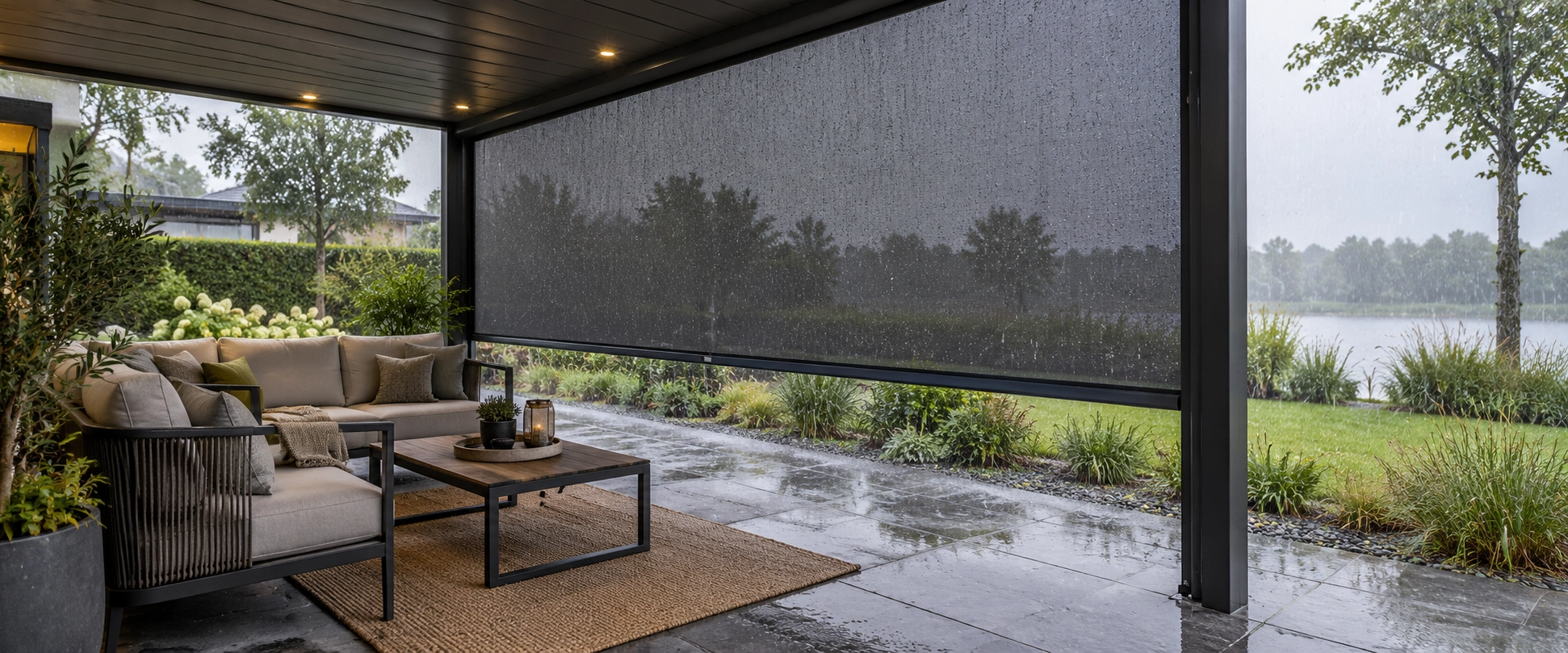
Rain starts blowing into your covered patio. You lower the ZIP screen. Can you leave the cushions outside?
If they must stay dry, do not rely on a mesh ZIP screen alone. It can reduce rain blowing across the opening, but some water may pass through the fabric or enter around the installation. For weather-resistant seating where occasional dampness is acceptable, that may be enough. For absorbent cushions, electronics, or a restaurant that needs every table dry, the standard is higher.
Decide what you need to protect before choosing the screen:
| Your acceptable result | The decision |
|---|---|
| Some dampness is acceptable | A mesh ZIP screen can improve comfort on a covered patio. Position vulnerable items away from the opening. |
| Rain must not pass through the fabric | Check whether the proposed system supports a suitable solid material. Then check the edges separately. |
| No continuing water entry is acceptable | Specify the roof, screen connections, floor, and drainage as one enclosure. A fabric choice alone cannot deliver this result. |
An outdoor ZIP screen is a vertical barrier. It works best as part of a space that already has a roof. Without overhead protection, rain can fall directly onto the furniture behind it.
Find the Water Before Changing the Screen
When a patio gets wet, the location of the first water matters more than a product label saying “waterproof.” Water has four main routes: through the fabric, beside the guides, beneath the bottom rail, or from above the cassette.
Watch the installation while rain is entering, if it is safe to do so. Take one photograph of each route. A photo of the wet floor after the storm shows the result, but often hides the cause.
Water appears across the inner face of the fabric
Likely cause: Rain is passing through the screen material. With an open mesh, air and some light pass through the weave; wind-driven water can do the same.
How to distinguish it: Look for droplets or a fine mist over a broad part of the fabric, away from the tracks. If only one vertical edge is wet, start with the side connection instead. Check the screen during rain: water that has run from a roof beam may later spread across the fabric and confuse the diagnosis.
What works: If reducing spray is enough, retain the mesh and keep absorbent furniture farther from the opening. If water through the screen is unacceptable, ask for a material intended to resist penetration and confirmed to work in the proposed ZIP system.
What will not fix it: A heavier side guide cannot close the openings in a mesh fabric. Neither can a better seal between the guide and the post.
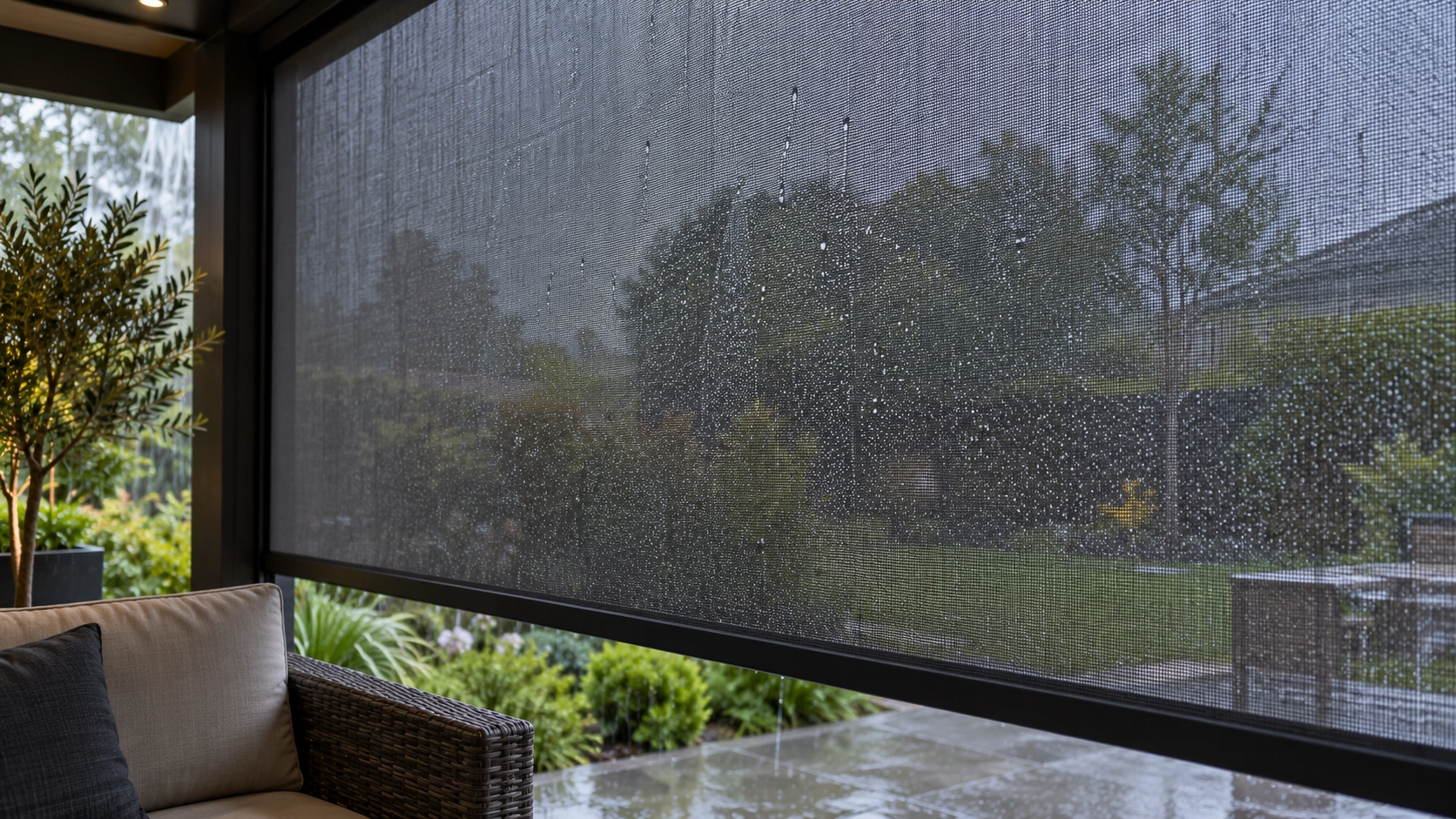
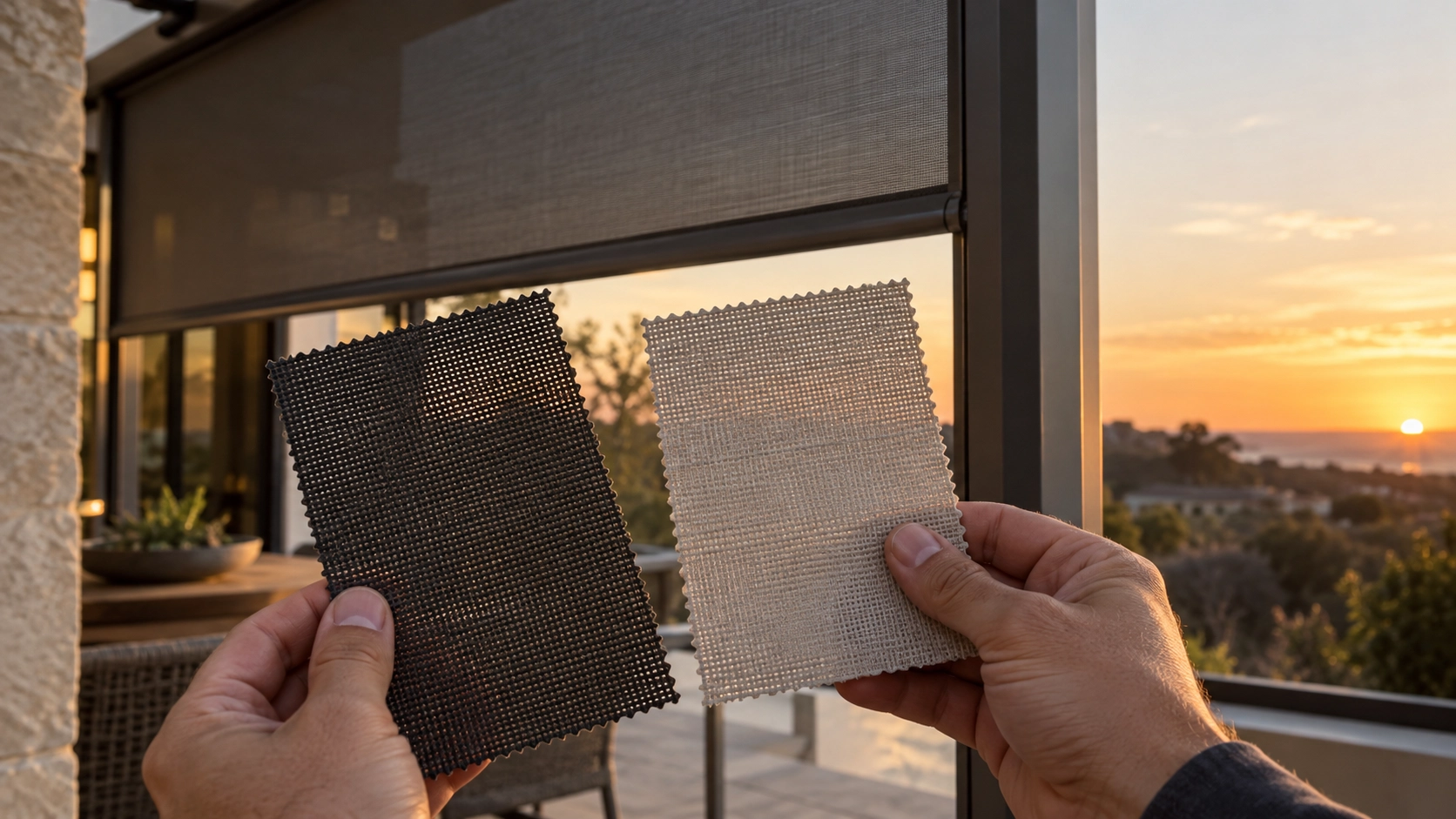
Do not assume that “PVC-coated” means solid. A PVC-coated mesh may still have visible openings. The material’s construction, rather than the word PVC, answers whether water can pass through the fabric.
A wet line starts beside a guide or post
Likely cause: Water is bypassing the screen at the connection between the side guide and the supporting structure.
How to distinguish it: Check whether the fabric stays comparatively dry while moisture first appears at one edge. Follow any water running down the outside of the post or wall. The entry point may be above the wet mark: water can travel along a frame before appearing indoors.
What works: Examine the guide’s fixing surface, its joint to the post or wall, and where water from adjoining members is directed. The solution may be a revised connection or an appropriate weathering detail. It must fit the actual frame and allow the assembly to drain as designed.
What will not fix it: Changing from 5% to 1% openness will not close a gap between an aluminium guide and an uneven post. The presence of a concealed ZIP edge does not prove that the outside of its guide has been weatherproofed.
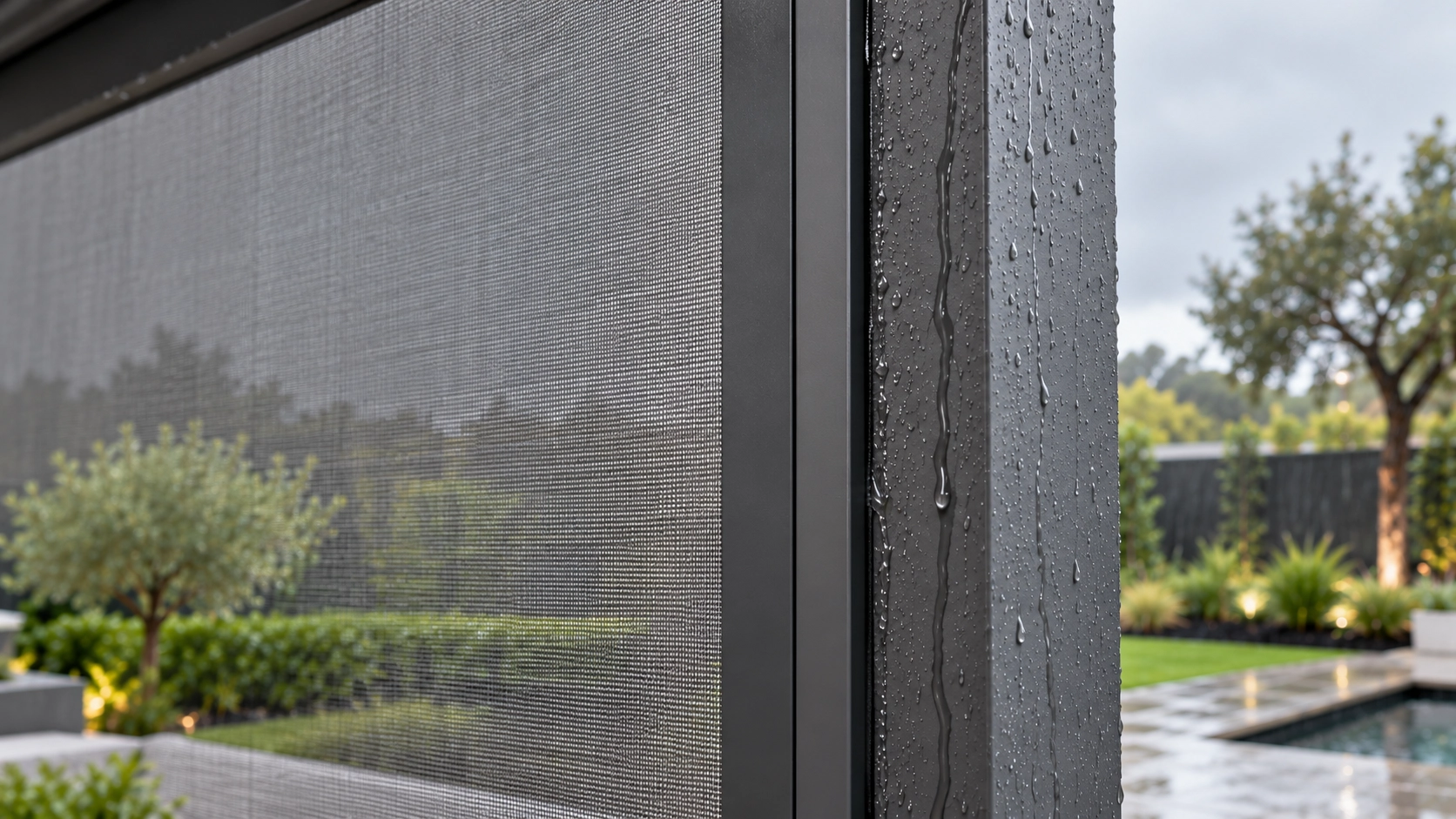
A product demonstration can show that the fabric stays in its track. The project drawing must also show how that track meets the building.
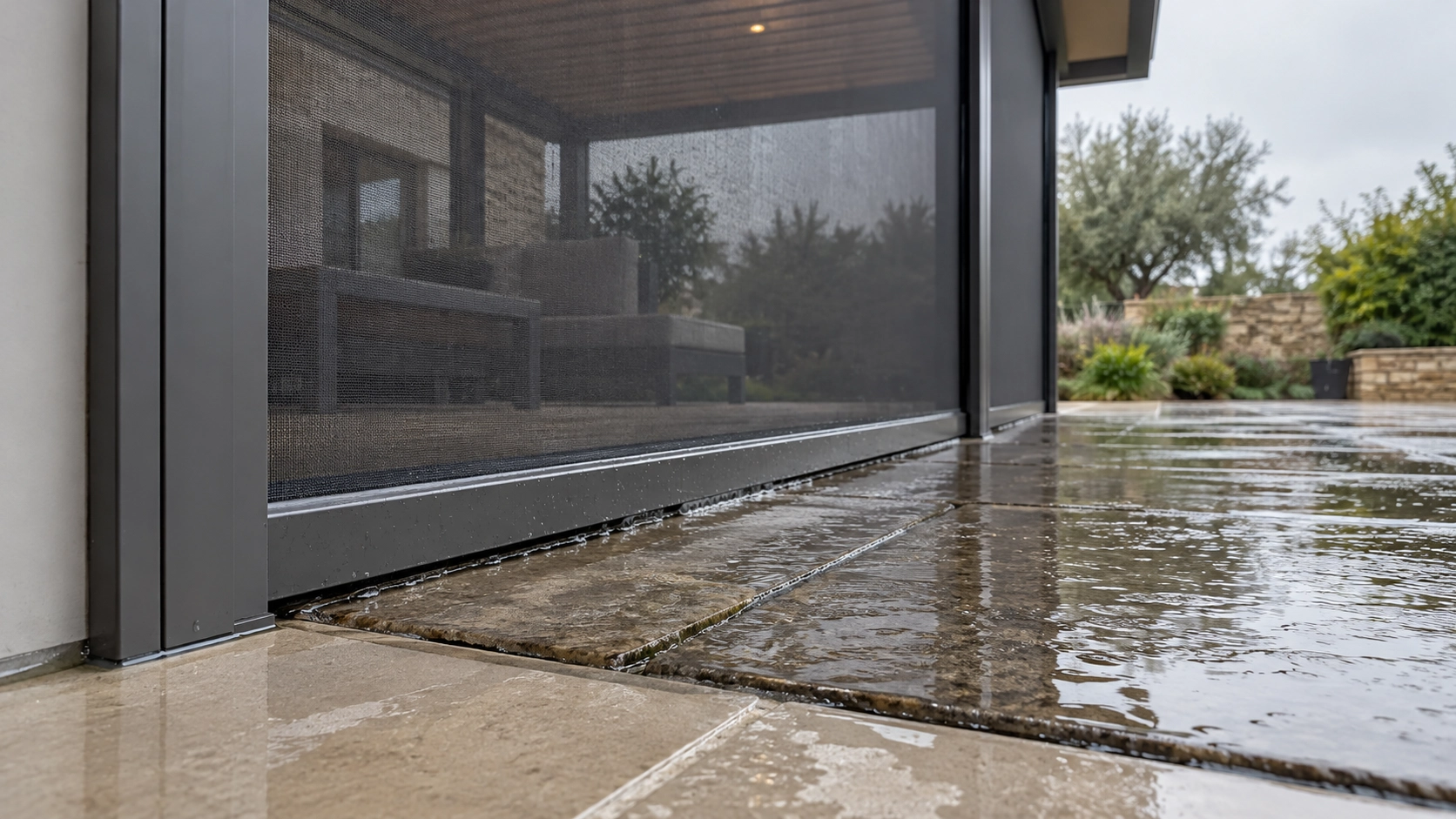
The floor becomes wet beneath the bottom rail
Likely cause: There may be a gap beneath the rail, water may be flowing across the paving, or rain may be splashing back from outside.
How to distinguish it: Confirm that the screen has reached its intended lower stop. Look along the full width of the rail; a floor that rises at one end can leave a gap at the other. During rain, watch the ground outside. If water accumulates against the opening, replacing the screen fabric will not stop it crossing the floor.
What works: Match the bottom detail to the surface and give water a route away from the opening. Depending on the project, that may require correcting the rail position, changing the threshold detail, or addressing the paving and drainage.
What will not fix it: A claim that the bottom rail “sits close to the ground” is not proof that it seals an uneven deck or resists water flowing across paving.
Water drips near the cassette or roof beam
Likely cause: Rain may be coming from the roof edge, a gutter, an overhead panel joint, or the connection above the screen.
How to distinguish it: Trace the wetting to the highest visible point. If the first drip appears above the screen fabric, inspect the roof and beam before blaming the blind. Check whether roof runoff is being delivered directly onto the opening.
What works: Correct the overhead water path and specify how the roof-to-screen connection sheds water. On an existing pergola, this may involve a roof or gutter detail outside the screen supplier’s scope.
What will not fix it: A solid screen material cannot repair a leaking roof connection.
These observations are initial diagnoses, not substitutes for an on-site inspection. Their value is that they prevent an expensive but irrelevant upgrade: fix the route the water uses.
Choose the Screen Around the Result You Need
If occasional dampness is acceptable
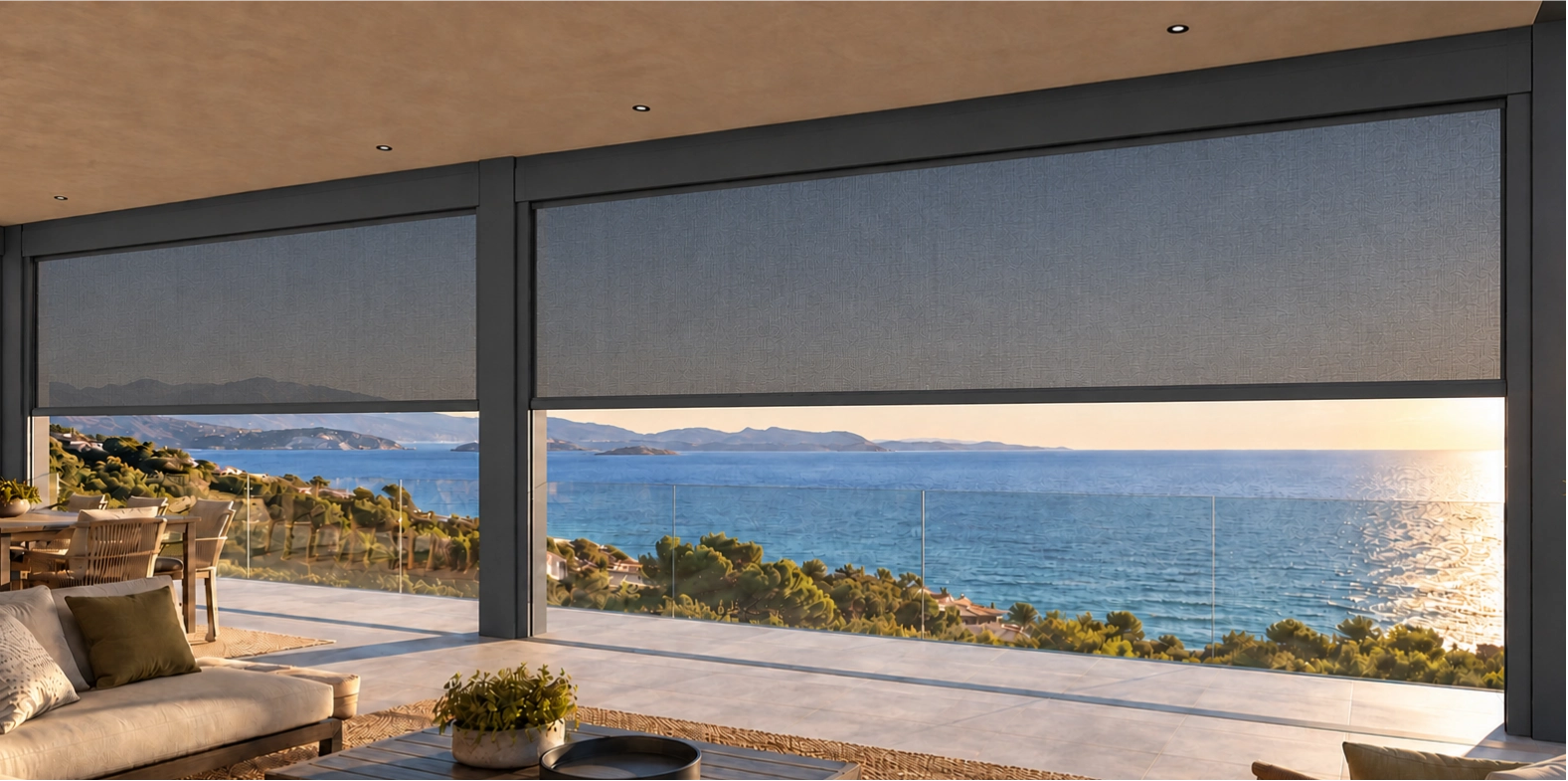
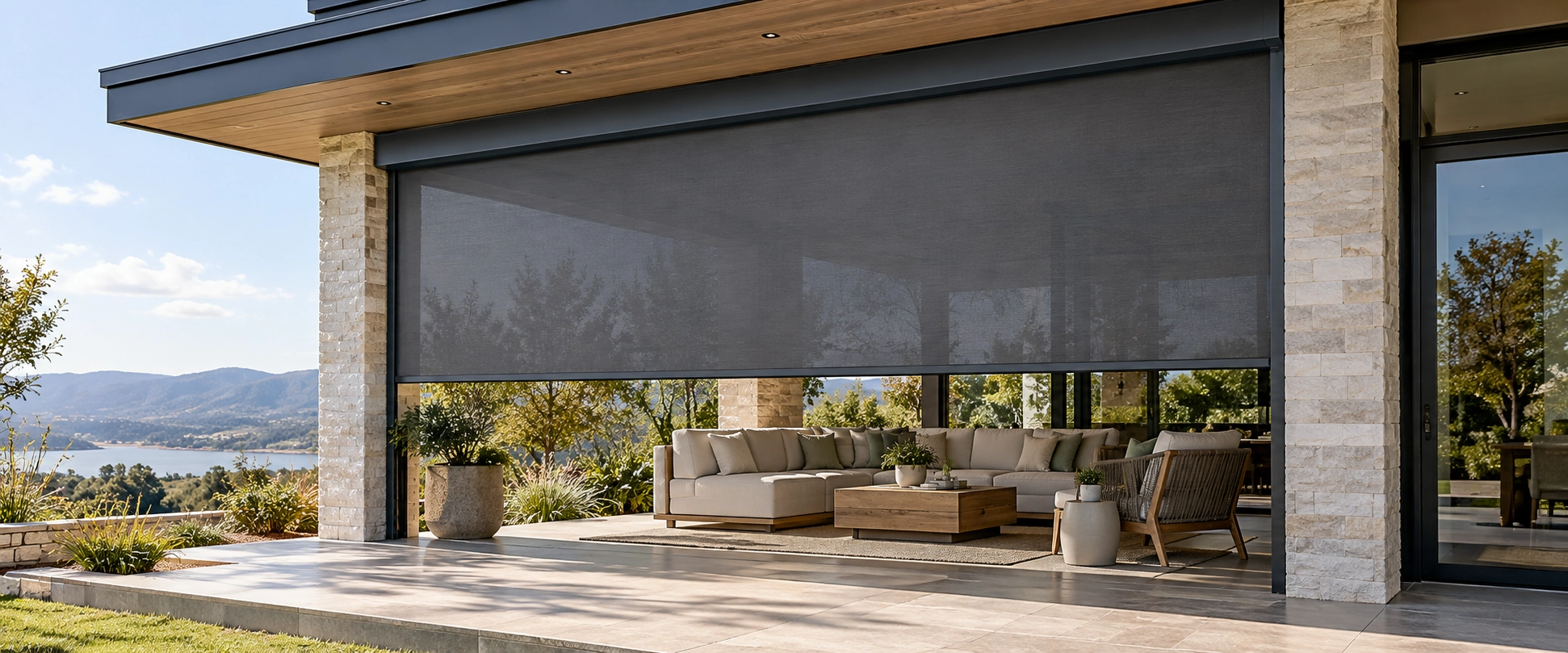
Mesh is a reasonable option for a roofed patio where the main nuisance is sideways drifting rain. It preserves airflow and some outward view when lowered. A ZIP-guided edge also keeps the fabric more controlled within the opening than a freely hanging shade; NewHoo’s outdoor ZIP screen systems use retained fabric edges for that purpose.
Set expectations around the furniture. “The seating area is more usable during a passing shower” is different from “the cushions can remain outside through a wind-driven downpour.” If the cushions absorb water and must be ready for immediate use afterward, protect or move them unless the complete proposed installation has evidence for that requirement.
If water must not pass through the fabric
Discuss a compatible solid or otherwise suitable water-resistant material with the supplier. A solid sheet addresses penetration through the sheet. It also reduces ventilation while lowered, and its weight and handling characteristics must suit the screen mechanism.
Ask for the exact material specification and written confirmation that it is suitable for the proposed model and dimensions. Do not assume a material offered for another system is available in a NewHoo ZIP screen. A lower mesh openness percentage is not a substitute: 1%, 3%, and 5% describe fabric openness, not tested percentages of rain blocked.
If the whole area must remain dry
Start with the enclosure. A restaurant terrace that must keep upholstered seating available during sustained rain needs an overhead water-management plan, detailed connections at each side and corner, a suitable bottom threshold, and drainage that keeps runoff away from the occupied area. A ZIP screen may form one part of that design.
What Evidence Should You Request Before Ordering?
A useful rain-protection claim identifies what was tested and where water was observed. If keeping furniture dry matters, ask for the proposed model and fabric, the opening size, the top and side connection drawings, the bottom detail, and any relevant rain observations or tests.
A fabric test supports a claim about the fabric. For example, ISO 811:2018 sets out a hydrostatic-pressure method for measuring a fabric’s resistance to water penetration. It does not test water travelling around an installed side guide or beneath a bottom rail.
For a claim about an installed patio, ask what fabric was installed, how large the opening was, which way rain was blowing, and what happened at the top, sides, and bottom. A photograph of dry seating during a shower can be useful context, but it does not establish a universal “90% rain blocking” figure.
Keep rain performance separate from permission to operate the screen in severe weather. Obtain instructions for the selected model, dimensions, fixings, and site exposure. A headline wind-resistance figure alone does not tell you when to leave a particular screen down during a storm.
Where Does NewHoo Fit?
For a pergola or framed patio, the product decision begins with the opening and its supporting structure. NewHoo positions its WR110 Pergola ZIP screen for pergolas, gazebos, and semi-open outdoor spaces. Its published product information describes a 63 mm tube commonly used for openings under 4 m wide and a 78 mm double-layer tube option for wider openings up to 5.4 m. These are configuration details, not rain ratings; the final choice still depends on the proposed size and installation.
For a rain-exposed project, the useful questions are specific: Which side gets driving rain? What material is proposed? How will each guide meet the pergola post? Where does roof runoff go? What happens at the floor? The answers identify whether the screen is likely to improve comfort and what other work the site needs.
Two Questions Worth Settling Before Installation
Can I add sealant wherever an existing ZIP screen leaks?
Find the entry point first. Sealing a visible gap may be appropriate in some connections, but indiscriminate sealant can leave the original water path unresolved or interfere with drainage and future servicing. Show the installer photographs taken while the leak occurs and ask them to identify the joint and its intended drainage path before making a repair.
Will a ZIP screen protect furniture on a patio without a roof?
It can reduce rain blowing through the screened side. It cannot stop rain falling from above onto exposed furniture. If keeping cushions dry is the goal, overhead protection must be addressed first.
Make the Requirement Clear in Your Enquiry
“Is this screen waterproof?” is too broad to produce a useful specification. Tell the supplier what must stay dry and under what ordinary use conditions.
For a NewHoo outdoor ZIP screen project, send the opening width and height, photographs showing the roof, posts, and floor, the usual direction of driving rain, and the position of the seating or equipment you need to protect. State whether occasional dampness is acceptable. That gives the project team a concrete basis to discuss the fabric, connections, and operating limits—and to identify when the patio needs work beyond a ZIP screen.
Do ZIP Screens Provide Privacy at Night?
ZIP Screens vs Cable-Guided Outdoor Blinds: Which Fits Your Project?
Related Article