Solar vs Wired Motorized Outdoor Blinds: Which Should You Choose?
A motorized outdoor blind should be easy to install, move when you need it, and have a workable recovery path when power is unavailable. Those outcomes matter more than whether its motor is called “solar” or “wired.”
For a finished patio with useful light at the panel location and modest daily use, start with solar. For a newly built opening with accessible wiring, multiple blinds that operate frequently, or a heavily shaded panel location, start with wired. Large spans and automated wind controls require a closer look at the actual motor, fabric, and power budget before either choice is final.
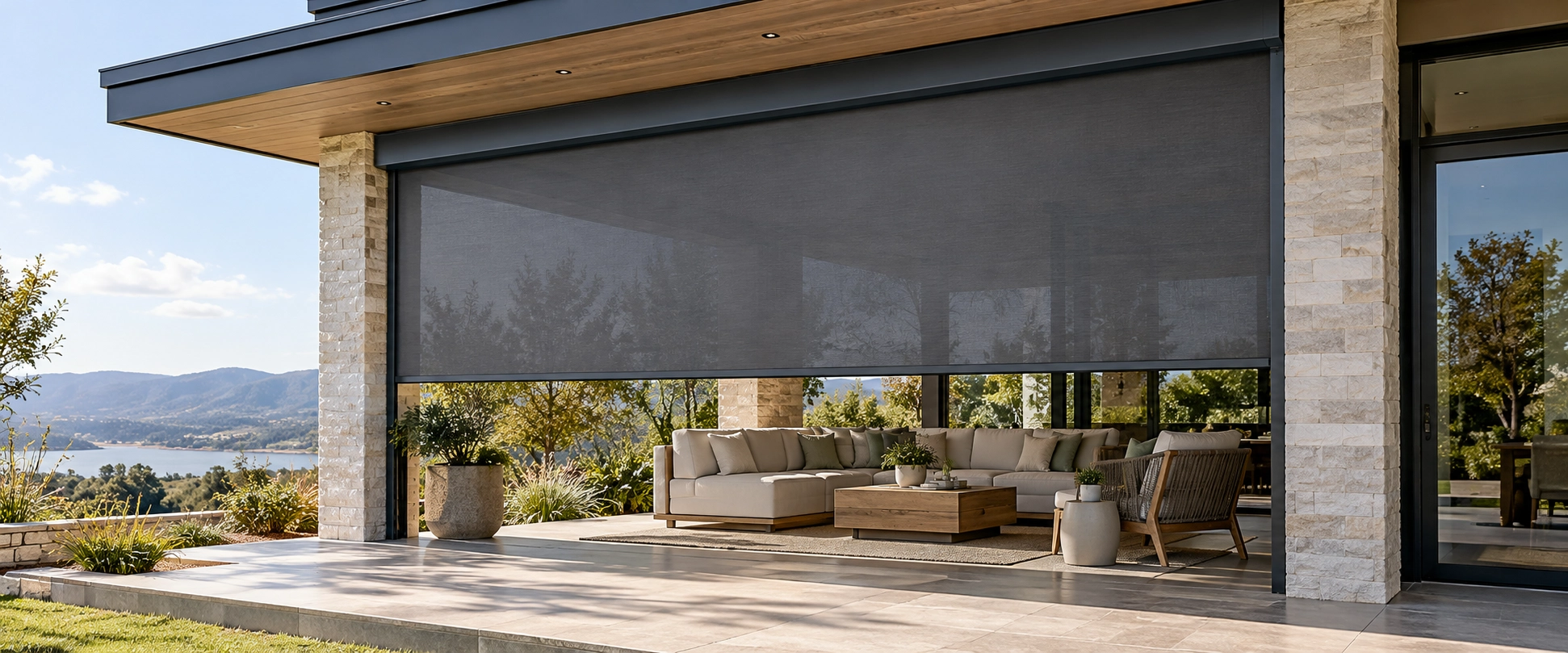
Start with the condition that can rule an option out
The first question is whether the solar panel can collect enough energy at its installed position, especially in the least favorable season. The second is whether the site can accept the cost and disruption of adding a permanent power route. Use this table to find the first constraint worth investigating.
| Site condition | Start with | Reason |
|---|---|---|
| Finished patio; panel location receives useful light; one or two routine operations daily | Solar | Avoids opening finished surfaces or adding visible mains cable. |
| Cassette sits under a deep eave, but a permitted, sunny remote-panel position exists | Solar, conditionally | A compatible remote panel may solve the shade problem; its route and yield must be documented. |
| Panel remains substantially shaded and cannot be relocated | Wired | The battery cannot compensate indefinitely for inadequate charging. |
| New build with power available before walls or ceiling close | Wired | Power can be routed and concealed during the build. |
| Many linked screens, frequent cycles, or sensor-driven movement | Wired | Demand can be high or variable; the supply does not depend on daily panel harvest. |
Solar is an energy pool, not a motor that runs only in sunshine
A small photovoltaic panel charges a battery. The battery supplies the motor when the blind moves, including after dark. A cloudy day does not automatically stop a charged blind. Repeated days in which the system uses more energy than it collects, however, gradually lower its reserve.
Daily balance = energy collected at the panel − (energy per movement × number of movements + control and sensor consumption). Panel rating alone cannot answer the question: a panel under an eave may collect far less than the same panel mounted in open light. The U.S. Department of Energy identifies shade, heat, and dirt as factors affecting real photovoltaic energy yield. See the DOE explanation.
For example, if an illustrative system collects 2 Wh on a poor-weather day but uses 2.5 Wh for movement and controls, it loses 0.5 Wh from its stored reserve that day. The numbers are an arithmetic example, not a NewHoo specification. A real assessment needs the chosen panel’s expected yield at the proposed location, the usable battery capacity, the motor’s consumption for the specified opening, and the expected controls and daily movements.
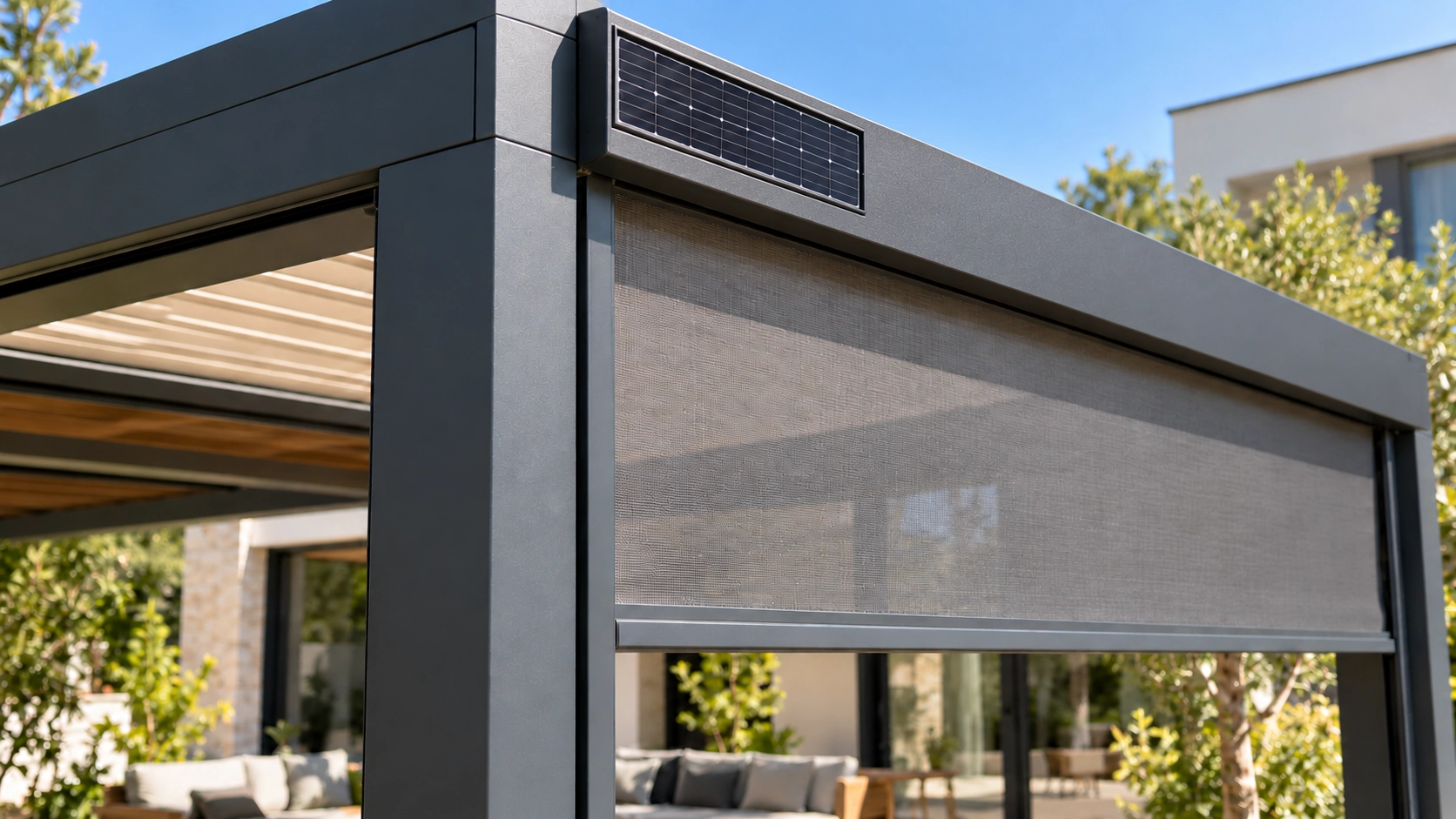
One or two planned movements a day can be a reasonable solar use case, while several automated movements every day deserve an energy-budget calculation. There is no defensible universal cutoff such as “solar always fails after five cycles”: motor load, panel exposure, battery size, and control behavior vary. If the seller cannot supply a cycle rating with stated light conditions, treat a high-use solar proposal as unproven.
A deep eave can make the panel location the deciding factor
A patio can feel bright while the top cassette spends most of the day in shade. Check the precise panel position, not the light on the floor. Look at its likely exposure in the least favorable month and consider roof overhangs, nearby walls, trees, and future growth. A clear summer photograph is insufficient evidence for winter charging.
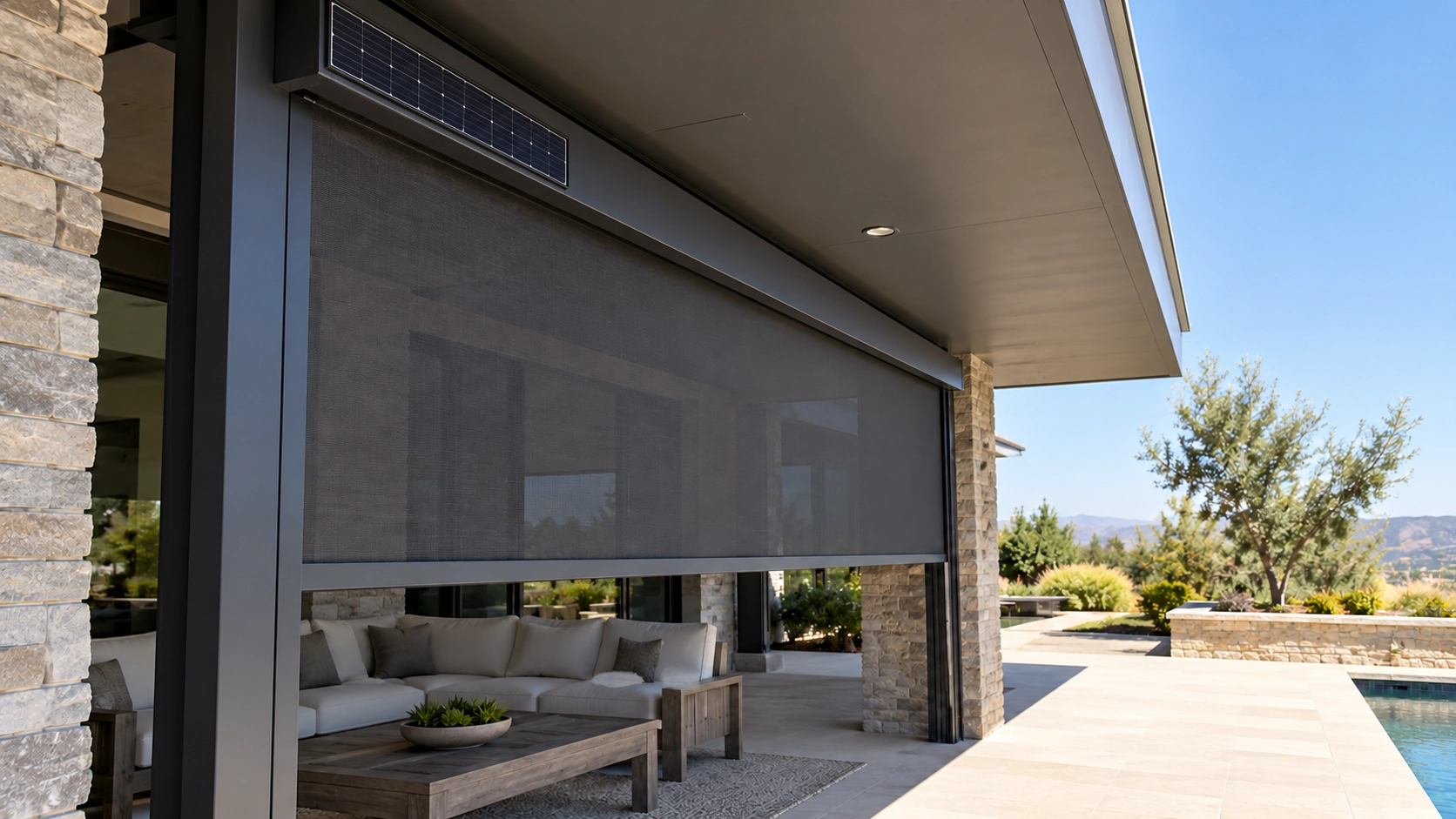
If the cassette is shaded, a compatible remote solar panel may be mounted at a brighter fixed position. That is a product-specific option, not a promise that every integrated-panel blind can be modified. The quote should show the permitted panel and cable, mounting location, weatherproof connection, route that avoids moving parts and drainage, and how the panel remains reachable for cleaning. If none of those is available, use the wired option.
Prevent the mid-travel hang trap
Power loss matters most when the blind has stopped partway down and weather is deteriorating. A wired motor normally stops during a mains outage unless that specific installation includes backup power or an accessible manual override. A solar motor may continue to run from its battery during the same outage, but a depleted battery presents a different problem. Neither power source alone guarantees emergency retraction.
Set a practical acceptance standard: the proposed blind needs a documented, physically accessible way to move to the agreed safe position after its relevant power failure. Depending on the actual motor, this may be a compatible manual crank, a manufacturer-approved emergency charging connection, a backup supply, or documented low-charge behavior that reserves a final movement. A Type-C socket and automatic low-voltage retraction are possible designs, not universal features or a safe assumption for NewHoo WR120F.
Before handover, have the installer demonstrate the recovery procedure on the installed blind with the motor supply disconnected or the low-battery condition simulated according to the motor maker’s instructions. Record where the access point is and who can reach it. Do not improvise a power connection or manually force the screen against the motor.
Wiring changes the installation and ownership cost
On a finished patio, a wired option may need an electrical route through the wall, ceiling, or exposed conduit, plus weatherproof termination and making good. During a new build, the same route can often be designed before finishes are installed. Solar usually avoids the mains run to each screen, but it adds a battery and panel whose condition and replacement access matter over time.
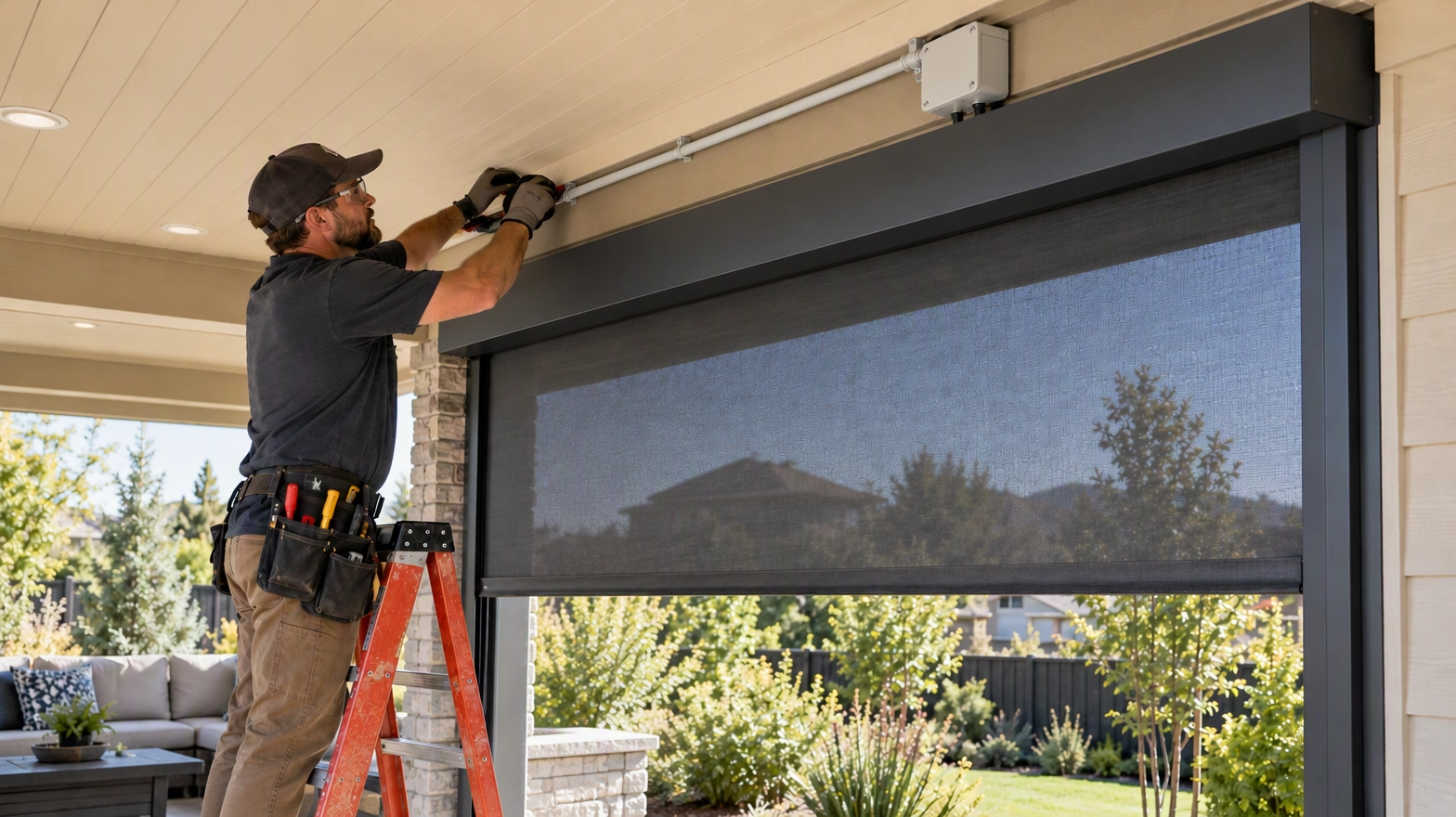
A single universal installed-price winner would be misleading. To establish scale, Home Depot’s published U.S. service guidance lists adding a circuit or moving an outlet at US$200 or more, and states that new wiring can take several hours. Those are general U.S. electrical-service examples, not a blind-installation quotation or a price for Australia. Exterior access, cable length, wall repair, permits, and local labor can move the project total substantially.
Compare both options over the period you expect to own them:
| Include in the quote | Solar | Wired |
|---|---|---|
| Up-front equipment | Motor, battery, panel, panel bracket or approved extension | Motor, controls, power components |
| Installation | Screen and panel labor; weatherproof cable route if remote | Electrical labor, cable route, protection, wall repair and finishes |
| Later work | Battery replacement allowance, panel cleaning and access | Electrical and motor service access |
The useful comparison is the difference between two complete installed quotes, plus likely service access and parts over your ownership period. Hardware prices alone hide the installation cost that often determines a retrofit decision.
Wide openings and automatic controls raise the stakes
A larger or heavier screen generally needs more motor torque and a suitable tube, guides, and fixing structure. More movement means more energy use. Automatic wind or sun control can change the number of movements from the “twice a day” assumption in a sales brochure. It is the actual programmed response—including delays, thresholds, and repeated triggers—that belongs in the energy estimate.
NewHoo’s WR120F is offered in wired electric and integrated-panel solar motorized versions, with published widths from 0.7 to 6 m and heights up to 3.6 m. That range describes the product family; it does not establish that every 6 m fabric, exposure, control pattern, and motor configuration has the same solar endurance. For a wide screen, NewHoo’s project review should use the opening dimensions, fabric selection, mounting photos, available power, panel exposure, and expected movements to specify the actual configuration.
Wind resistance comes from the complete installed screen—fabric guidance, cassette, bottom bar, fasteners, and supporting structure—not from whether its motor is solar or wired. A sensor may protect the screen according to its setup, but its behavior and power needs must be included in the project design.
The order-ready standard
A good proposal turns the choice into inspectable facts. Before approving a solar configuration, obtain the specified motor and battery model, usable energy or supported-cycle basis, panel rating and proposed position, expected least-favorable-season exposure, control and sensor configuration, and the documented low-charge recovery procedure. For a wired configuration, obtain the power route, electrical scope, accessible override or backup arrangement if required, and the repair or finish allowance.
For either option, the quotation should state the opening dimensions, fabric and tube selection, fixing substrate, control logic, service access, and what the installer will demonstrate at handover. If the operating range or recovery method is absent, that is a concrete reason to hold the order until the missing specification is supplied.
For a NewHoo WR120F project: send the width and height of each opening, photos showing the cassette position and its shade through the day, the available electrical route, fabric preference, and expected daily and sensor-driven movements. This lets the configuration and installed-cost comparison address your actual site. Review WR120F and request a project quotation.
Common remaining questions
Will a solar outdoor blind work on a cloudy day?
It can operate from stored battery energy. How long that reserve lasts depends on charge level, real panel yield, temperature, screen load, and number of movements. “Cloudy-day operation” is not a substitute for a documented energy and reserve rating.
Will a wired blind keep working during a power outage?
A normal mains-powered motor will not move without power. A specified manual override or backup supply can provide a recovery route; verify that feature on the exact motor and demonstrate it after installation.
Is solar suitable for a 6 m opening?
A published maximum width is a size limit for a product family, not a guarantee of endurance for every fabric and site. The motor, battery, panel position, tube, and expected operations need to be specified together for that opening.
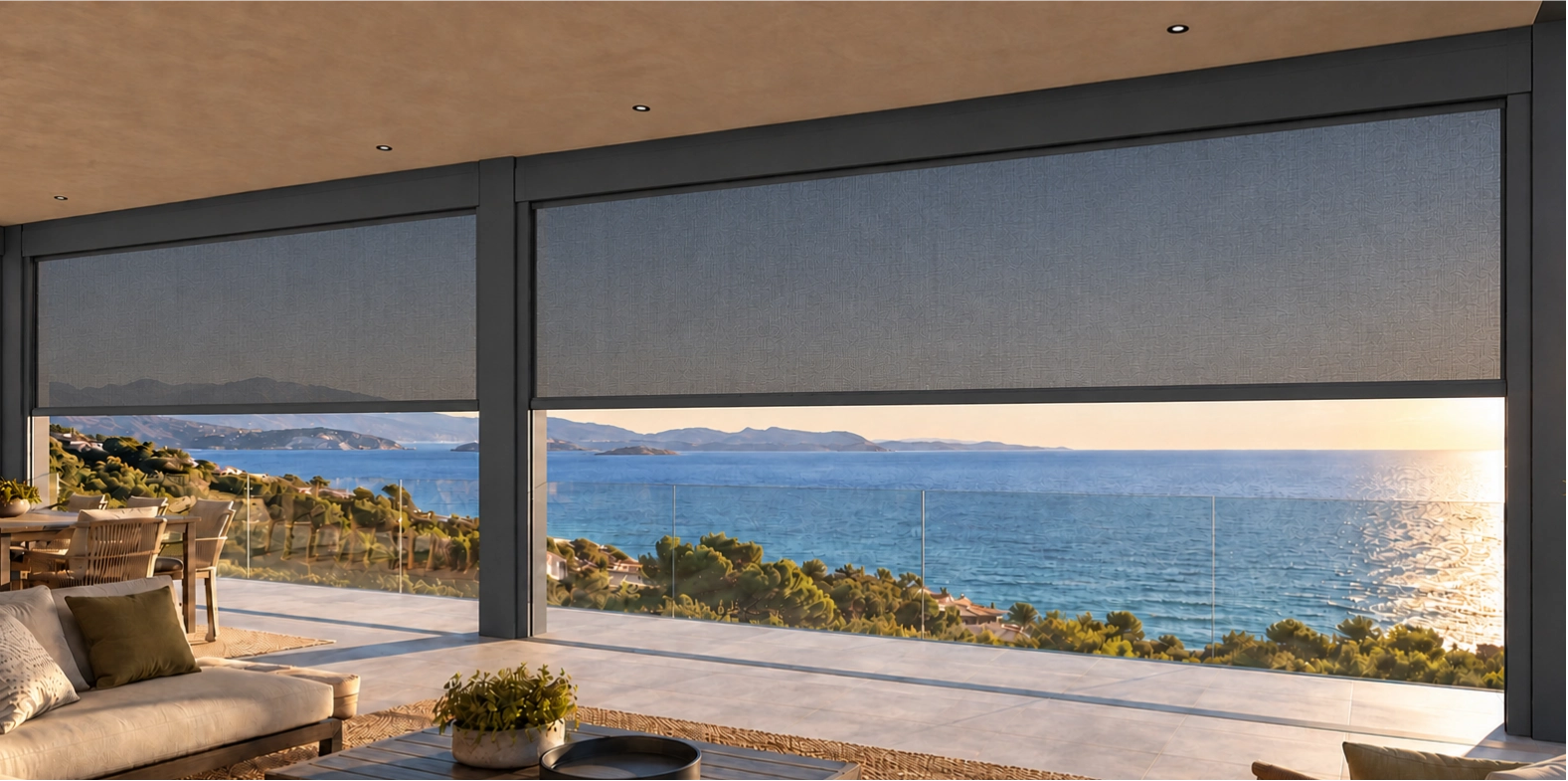
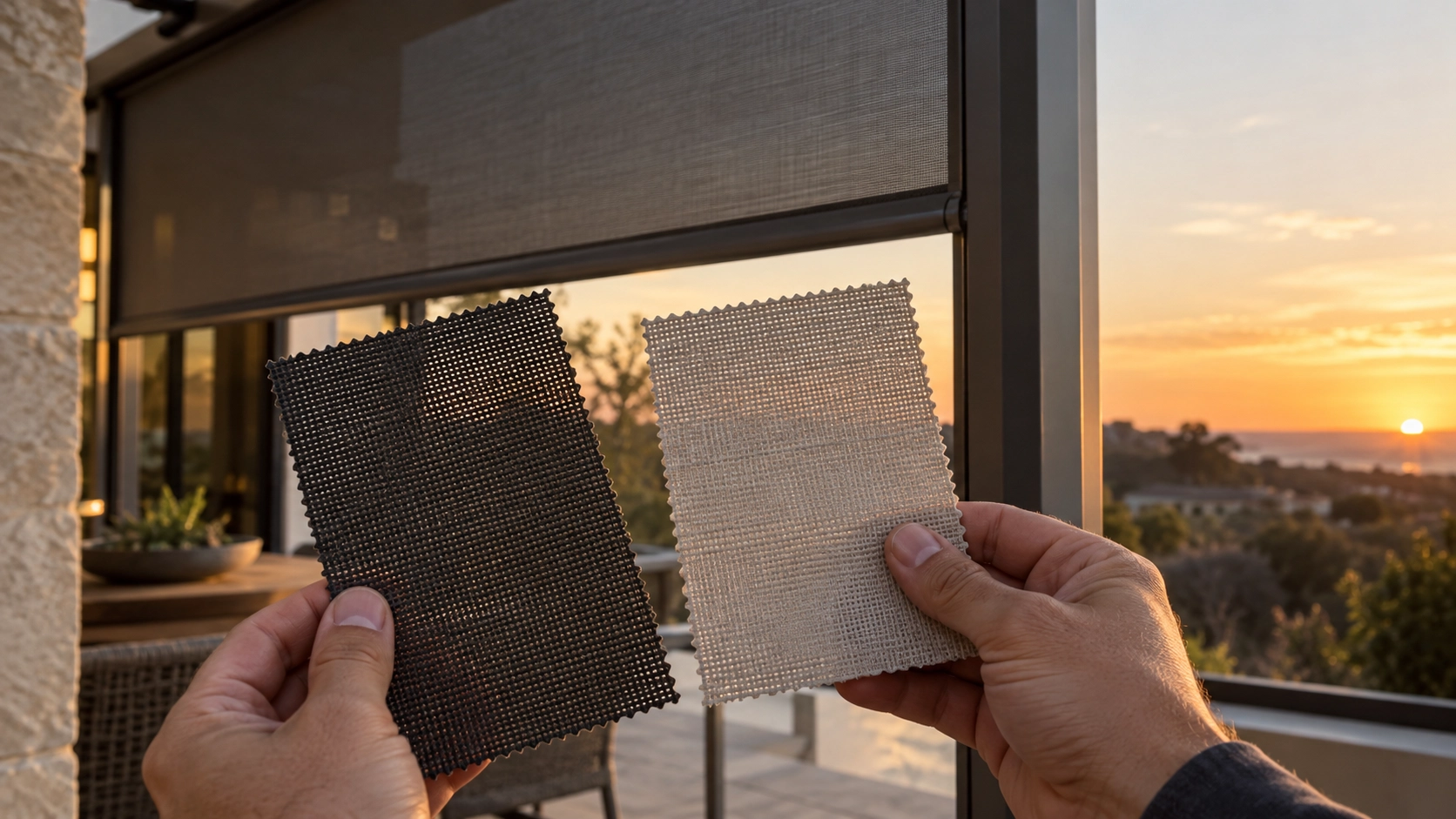
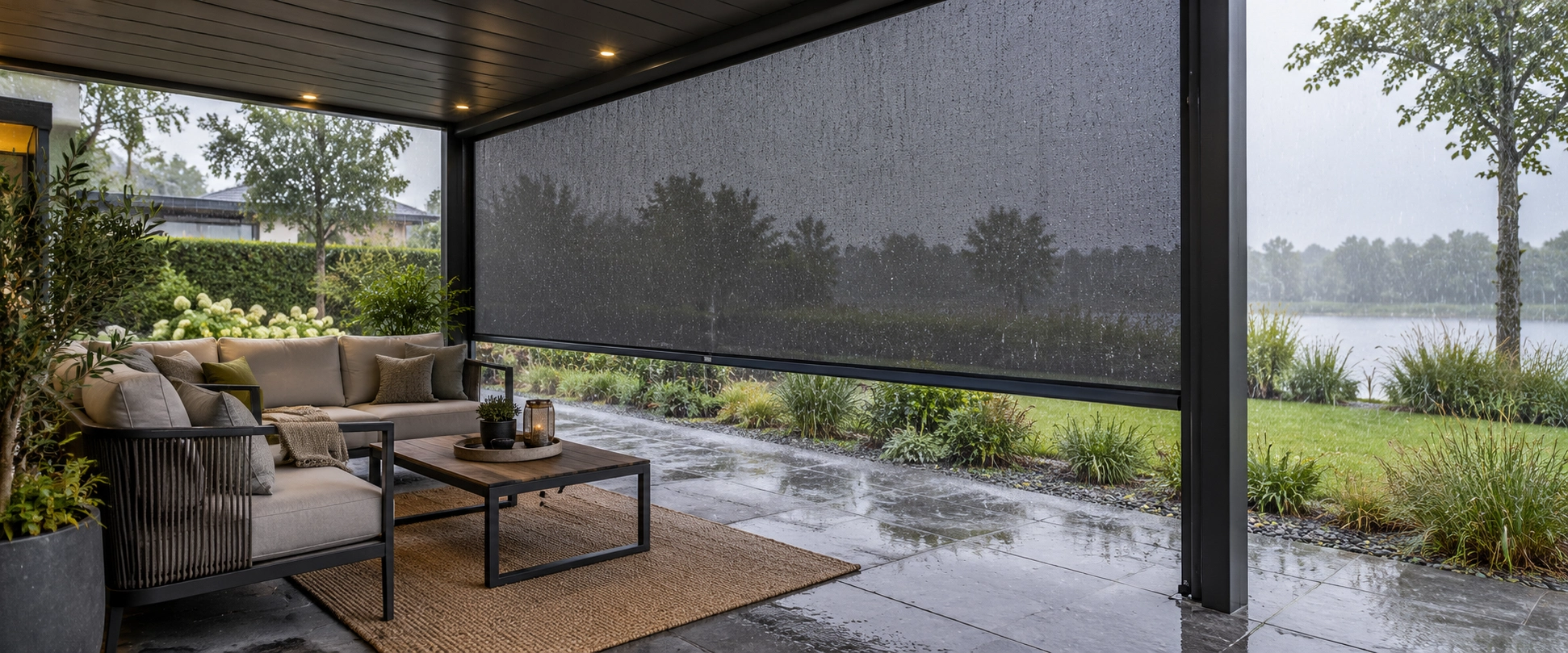
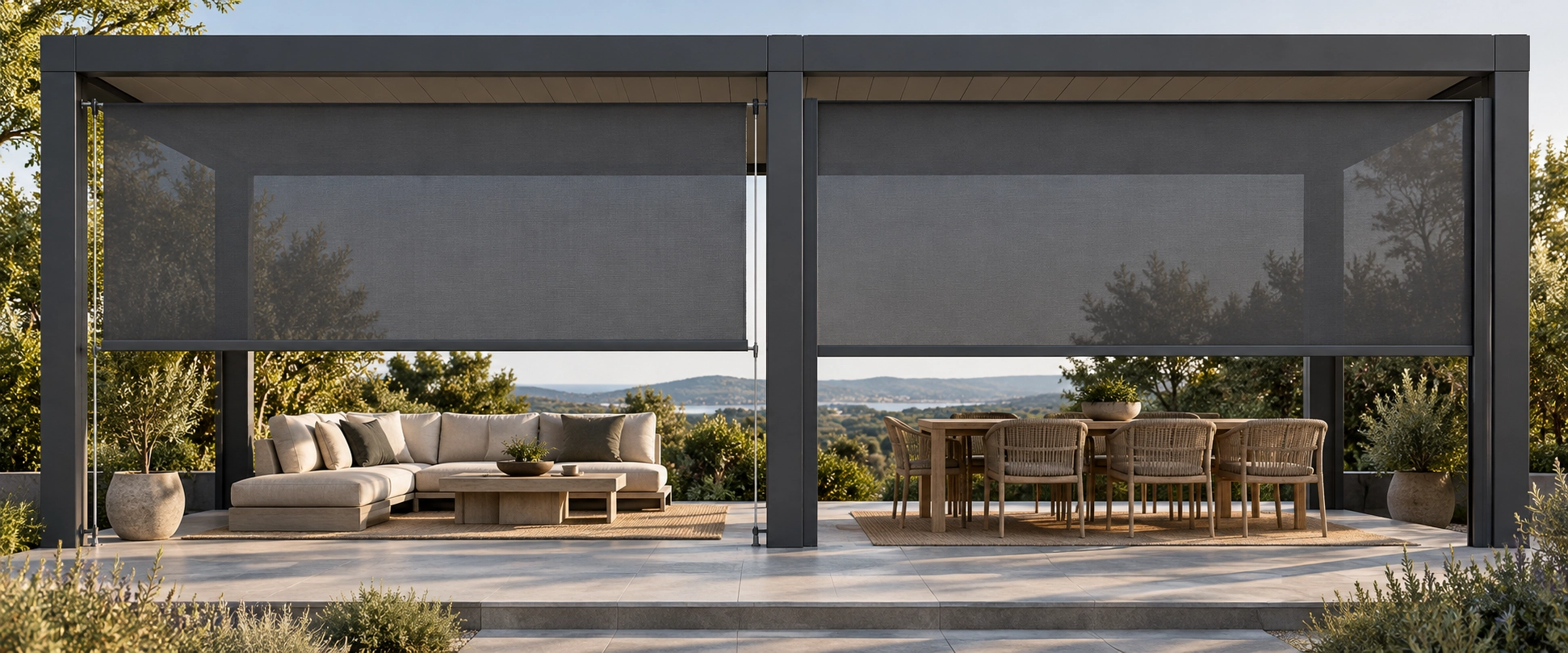
Images are conceptual illustrations of installation situations; they are not technical drawings or photographs of a named NewHoo model. Published third-party cost examples and product-specific motor features should not be applied to an unquoted project.
Outdoor Blinds for Coastal Homes: How to Choose for Salt, Wind and Sea Views
Do ZIP Screens Provide Privacy at Night?
Related Article