ZIP Screens for Restaurant Patios: Keep More Tables Usable
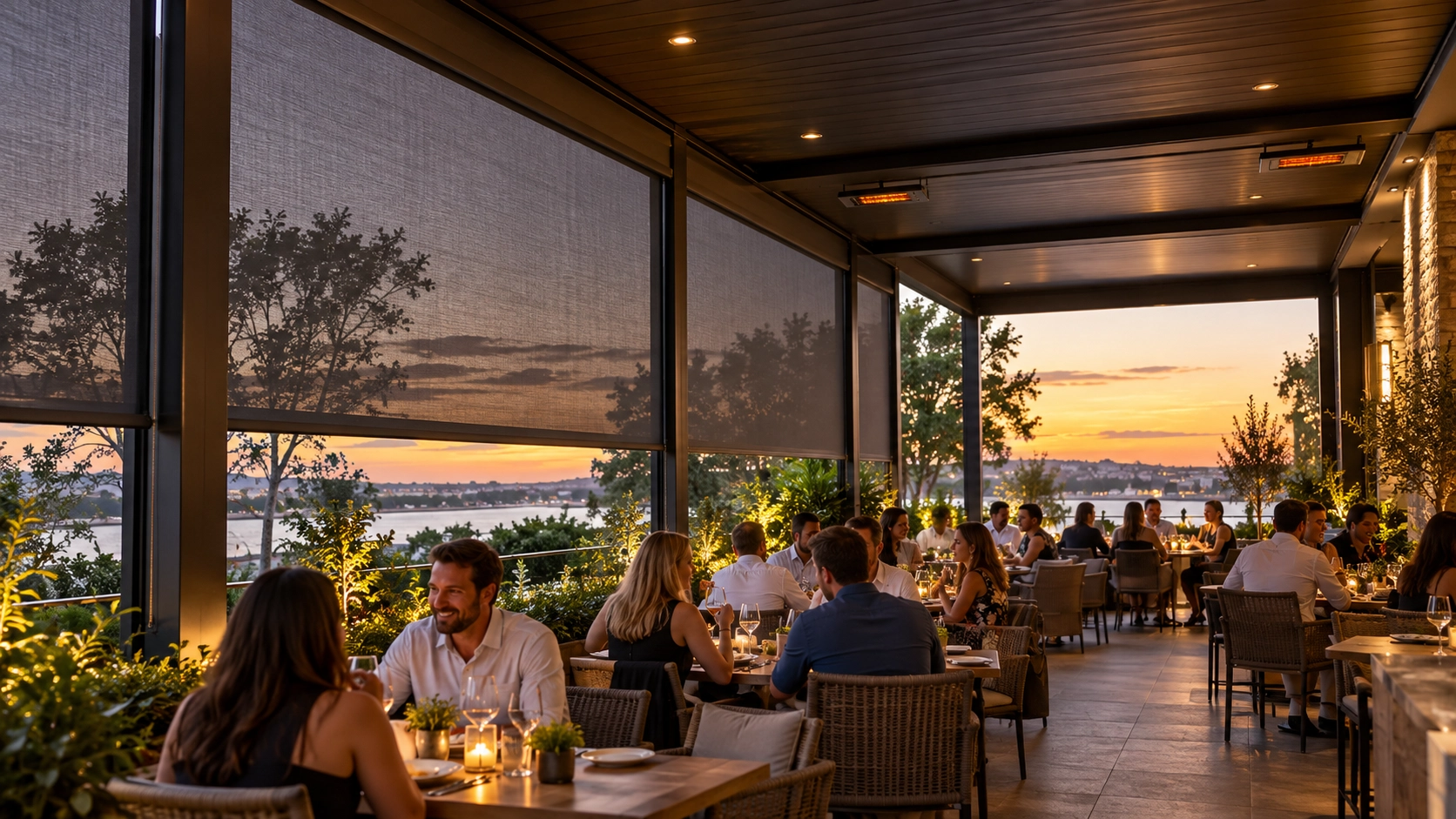
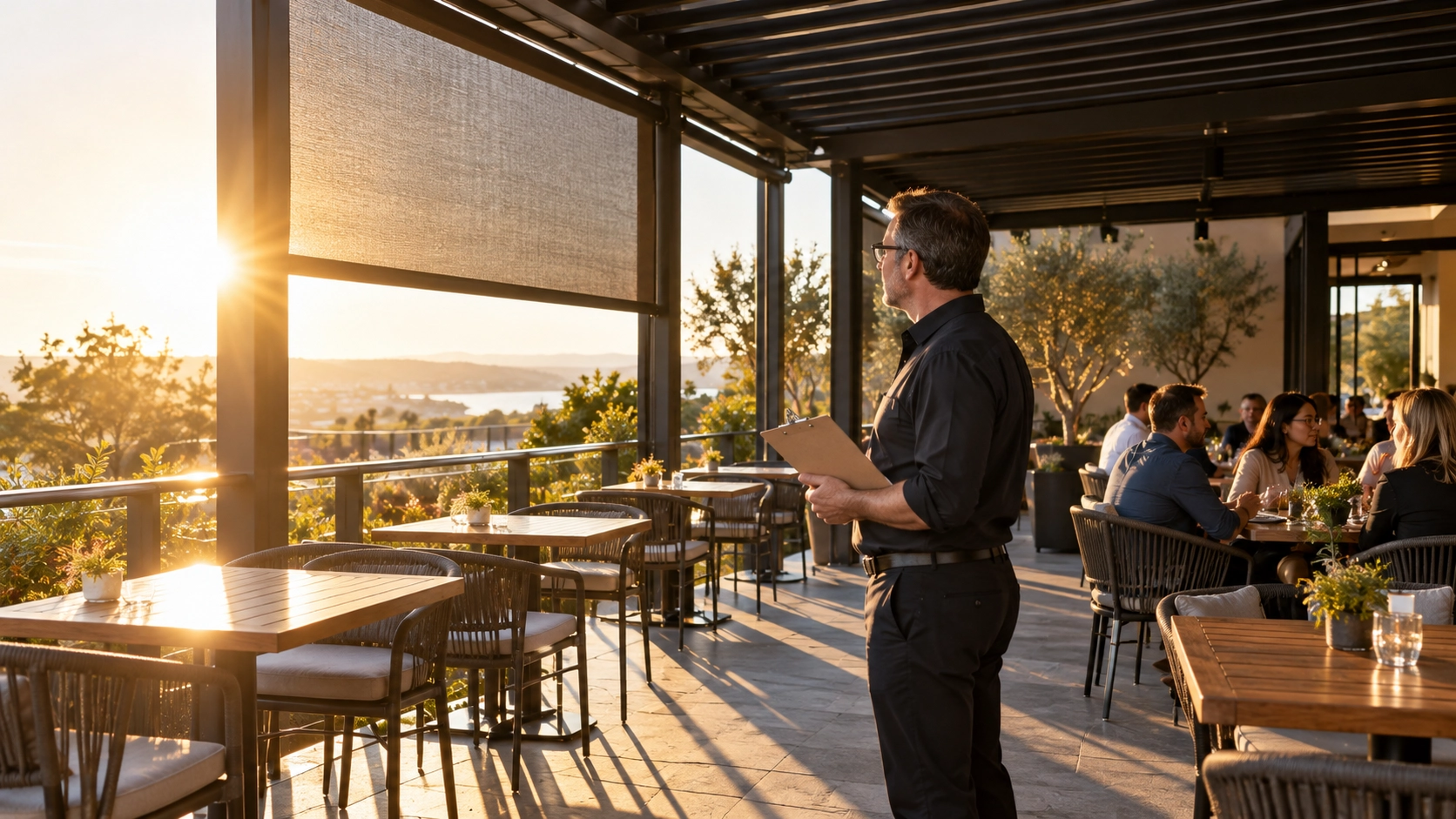
It is Saturday dinner service. The patio is booked, but a steady side breeze makes the outer tables uncomfortable. Guests ask to move indoors; one party leaves rather than wait. The next afternoon, those same tables sit empty because low sun reaches underneath the roof.
A ZIP screen might help you use those seats more consistently. Before covering the entire patio, answer four practical questions: Are you actually losing customers? Which side causes the problem? Can a screen solve it under normal operating conditions? What will the complete installed project cost?
Start With the Tables You Are Losing
You do not need a financial model to begin. For two to four weeks, ask the host team to note three things whenever a patio table cannot be used:
- Which table was affected, and at what time?
- Was the cause sun, routine wind, insects, rain, or something else?
- Did the guest take another available table, wait, or leave?
Reservations and waitlists show when customers wanted a table. Host notes show why a particular table was rejected. POS records tell you what comparable parties actually spend, but POS data alone cannot tell you why an empty table was empty.
The difference matters. Four tables averaging $100 per turn over 30 days represent $12,000 in possible monthly sales if each could gain one turn a day. That is a capacity figure, not a loss figure. A quiet lunch, a guest who moved indoors, and a storm that would close the entire patio should not be counted as sales a side screen could recover.
A simple patio ROI worksheet
Use your records to fill in these five lines:
| Input | Where to get it |
|---|---|
| Additional table turns you could realistically serve each year | Host notes, reservations, walkaways, and weather log |
| Average spend per comparable table turn | POS |
| Food, beverage, fees, and extra labor per added turn | Your operating records |
| Annual screen cleaning and service cost | Staff time and supplier or installer quote |
| Complete installed project cost | Itemized supplier and local contractor quotes |
Annual added contribution = recoverable table turns × (average spend − costs per added turn) − annual screen operating costs
Simple payback = complete installed cost ÷ annual added contribution
Use a low, expected, and busy-year estimate. If you already counted only genuinely lost turns that a screen could help recover, do not reduce that count again with arbitrary percentages. If the answer remains uncertain, install in the highest-impact area first and compare seating records afterward.
Is a ZIP Screen the Fix for Your Problem?
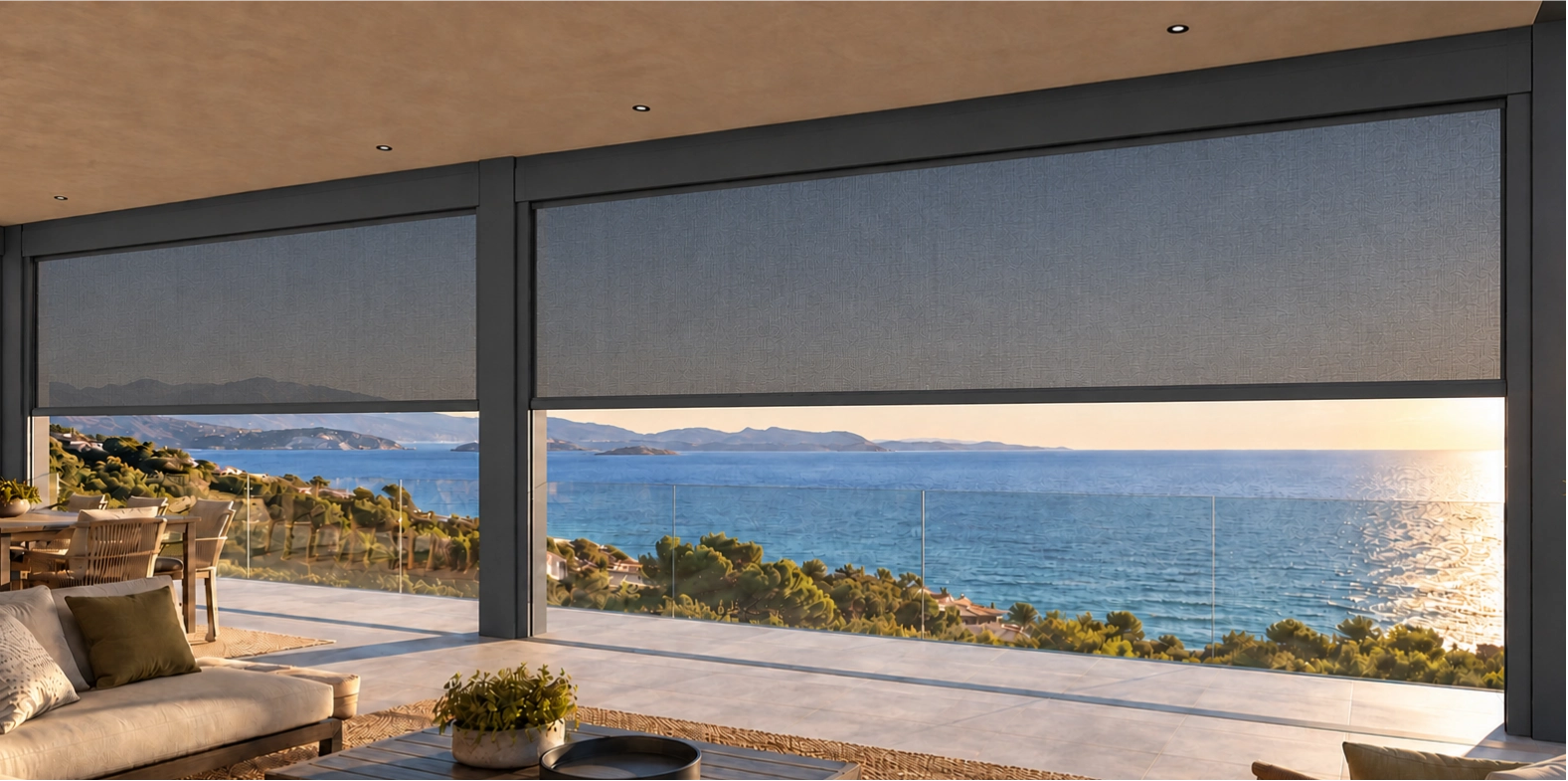
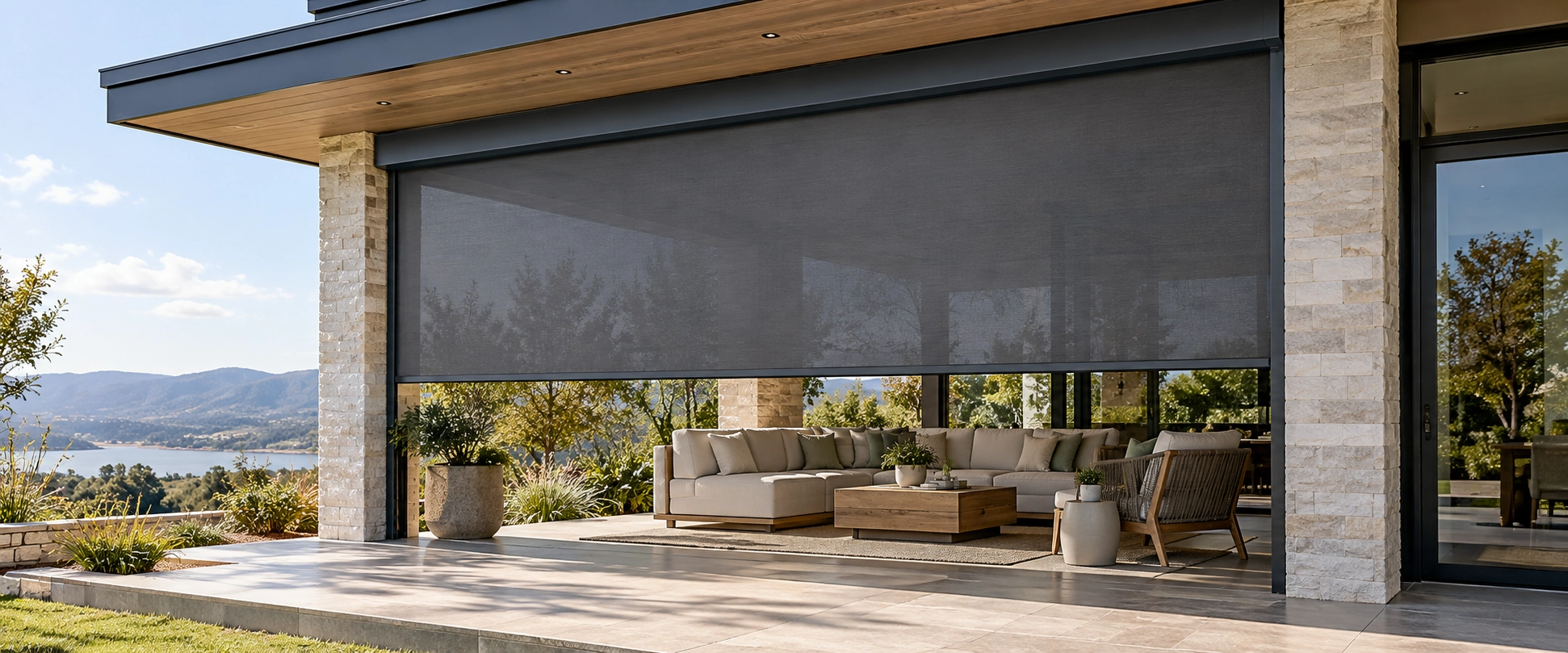
A ZIP screen is a retractable side screen whose fabric edges run within guide tracks. That can make it more controlled than a loose, free-hanging shade. It is still a side screen, not an all-weather room. NewHoo selects patio configurations according to opening size, exposure, mounting structure, and how the screen will be operated.
| What happens on your patio? | Sensible next step |
|---|---|
| Low afternoon sun reaches tables from one side | Assess a screen on that side and test fabric at the affected hour. |
| Frequent side breezes disturb a covered dining area | Assess a ZIP-guided screen and check the opening and supporting posts. |
| Rain drips from the roof onto tables | Repair or redesign the roof detail first. |
| Every table must stay dry during heavy rain | Plan the roof, sides, floor, and drainage together. |
| You want indoor temperatures all year | Evaluate a complete enclosure and ventilation project. |
| Insects enter mainly through the service doorway | Address the door and other entry paths as well as any open side. |
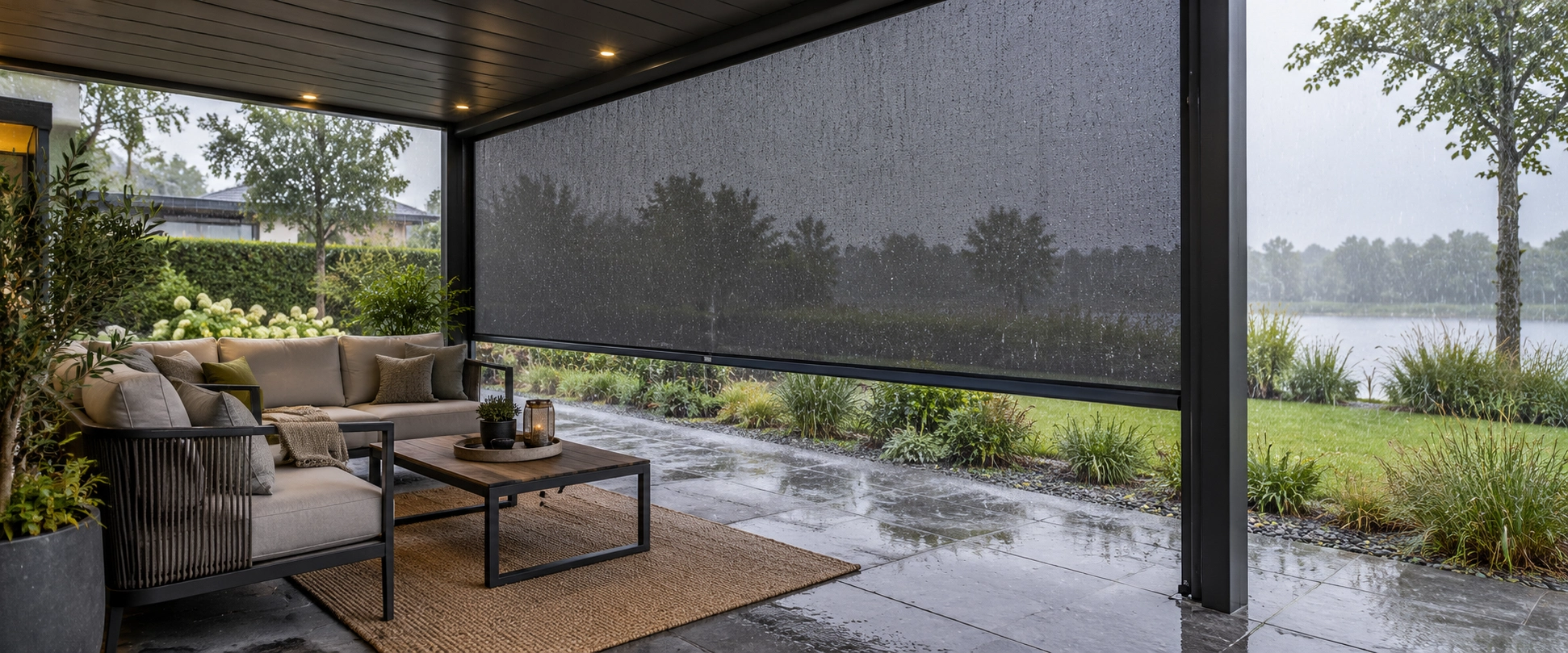
A mesh screen may reduce some sideways spray, but rain can still pass through the weave or enter above, beside, and below the screen. If dry cushions and ready-to-seat tables are essential after a storm, specify that requirement explicitly. NewHoo’s patio rain guide explains why the whole opening matters.
The decision: Assess side screens for side sun and everyday side exposure. Fix water entering from above before buying them. Treat consistently dry or temperature-controlled dining as a larger building project.
Screen the Worst Side First
You do not have to enclose the entire patio in one order. Circle the tables most often lost during busy service and draw an arrow showing where the sun or wind comes from. Include the guest entrance and the route servers use.
If four west-edge tables repeatedly become unusable during a strong lunch service, that side is a more useful starting point than a shaded edge that seldom causes complaints. A first phase can also show whether guests like the view and airflow when the screen is down before you specify the remaining sides.
Phasing does not guarantee a lower total project cost. Separate installation visits, electrical work, or a future support post may add expense. Ask for a price for the first phase and for the completed layout, so you understand that trade-off before starting.
“The menus blow off the tables. Should staff lower the screens?”
Treat moving menus and customer complaints as evidence of where the problem occurs, then plan how the screen should normally be used before the next busy service. Do not instruct staff to move a screen into a sudden strong gust simply because it is windy. Ask for the operating limits of the proposed system and agree on when staff must retract it or leave it unused.
Take a few short videos from the affected tables and note the date and time. Send these with the opening photos. A supplier can use them to understand the location, but a video or weather-app reading cannot establish the strength of your posts or the screen’s safe operating conditions.
If a supplier quotes a wind-test figure, ask what was tested, at what size, how it was fixed, and whether the evidence applies to your proposal. NewHoo publishes a test summary for a 2,500 × 2,500 mm WR120–140 specimen; its result should not be treated as a universal operating limit for a wider restaurant opening. Request the report and the instructions for the system actually offered.
Send Photos First; Leave Final Measuring to the Project Team
For an initial discussion, send NewHoo photographs of the full patio, its roof and posts, each opening you want to screen, and the affected tables. Add approximate opening width and height. You do not need to prepare a fabrication drawing to ask whether the idea is feasible.
Before production, the local installer must verify the precise dimensions, the material behind any decorative finish, the position of the cassette and tracks, and whether the fixing surfaces are sound. They also need to check that the tracks can be installed straight and parallel, that the bottom rail has a suitable landing point, and that the cassette can be opened for future service. An irregular opening may need an adjusted fixing detail or a separate frame; it should not be ignored in the manufacturing dimensions.
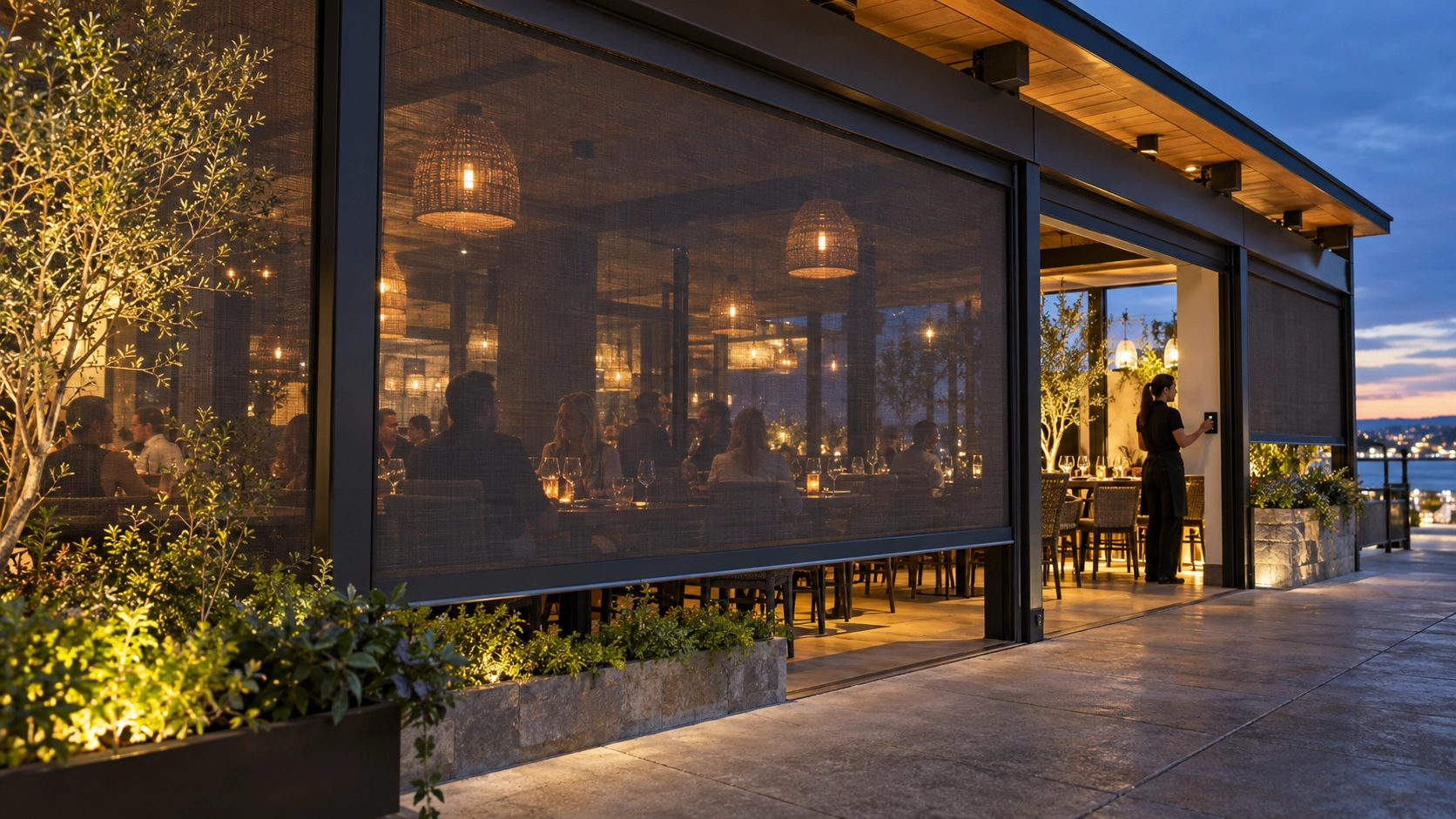
For a renovation, ask to see two simple drawings if the appearance is important: one showing whether the guides sit on the face or within the opening, and one showing whether the cassette is visible or recessed. A concealed cassette can look clean, but it still needs space, a sound water detail, and maintenance access.
NewHoo can recommend a system direction from the project information. The local installer and relevant building professionals must confirm site measurements, fixing design, electrical work, and any required approvals. NewHoo lists WR100, WR110, and WR120-series systems among possible starting points for standard outdoor openings, with other configurations for unusually large spans; the model must follow the actual project conditions.
Choose Fabric for Lunch, Dinner, and Cleanup
Think about the patio in use, not a fabric swatch on a desk.
At lunch: Sit at the affected table while the sun is low. Can guests comfortably read the menu? Does the proposed fabric cut the glare without making the patio feel unnecessarily closed?
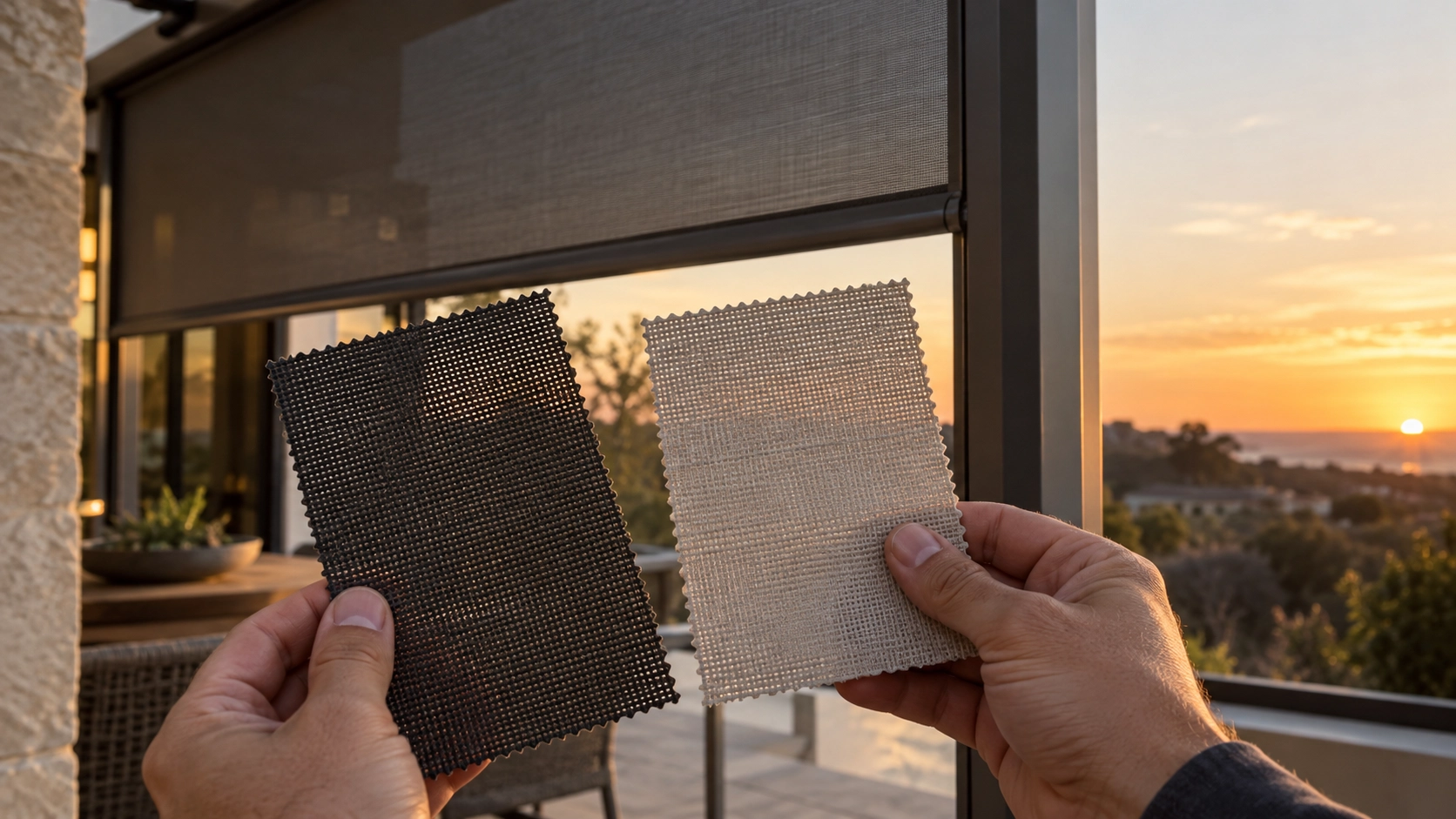
At dinner: Turn on the restaurant’s normal lights and look in from the street. Open-weave fabric that feels private by day may allow a view toward illuminated diners at night. Do not rely on a “1%” or “5%” openness label as a privacy guarantee; test the exact offered fabric and color. Fabric-maker Phifer also notes that nighttime lighting changes visibility through exterior screening.
During cleanup: Consider where kitchen exhaust residue, road dust, drink splashes, and bird droppings will land. Ask for the care instructions for the specific supplied fabric and for the guides and frame. “Easy to clean” should mean your staff know which cleaner is approved, how to reach the material, whether tables must move, and how long the screen needs to dry.
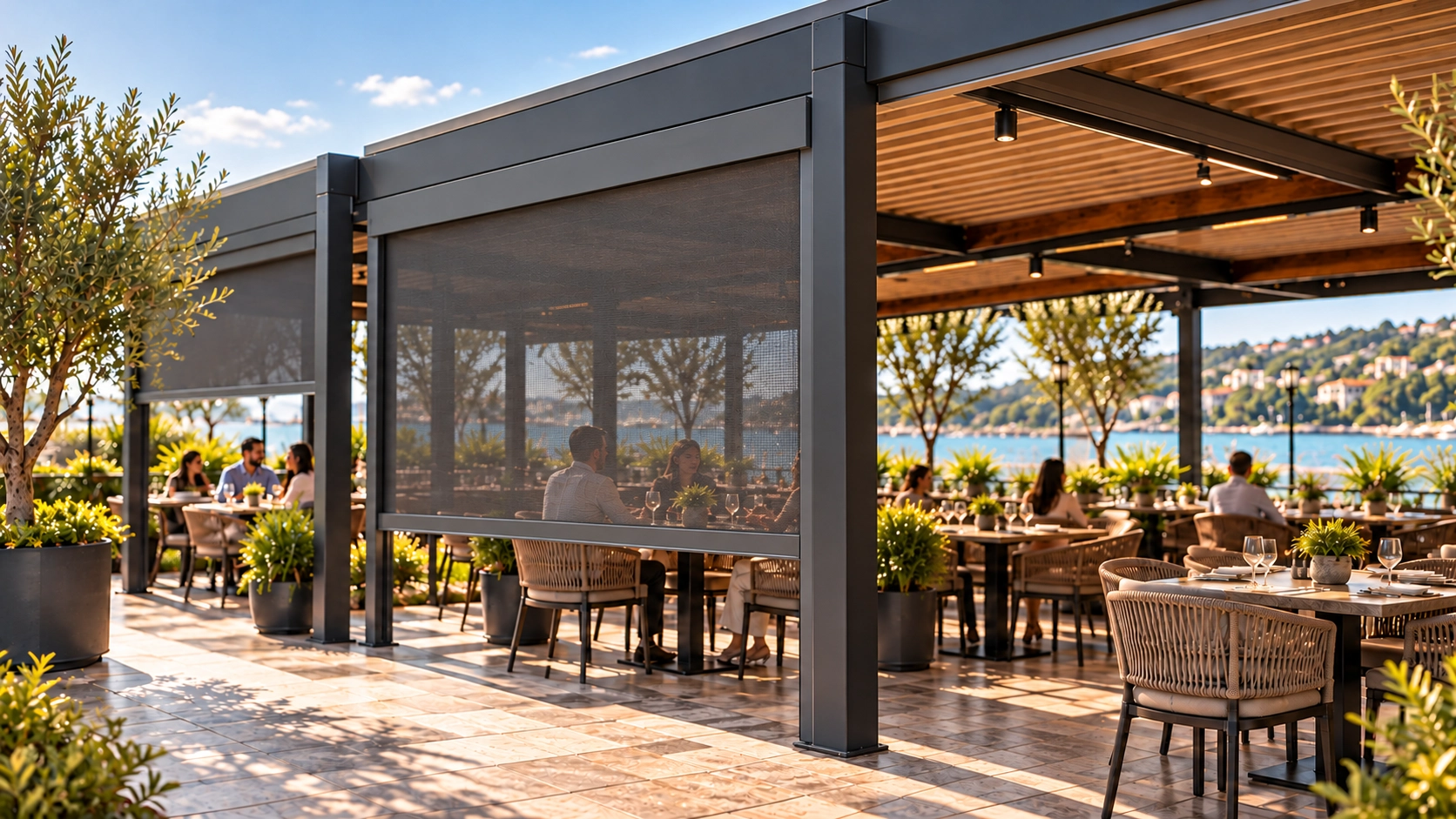
Start with a brief visual check before service, prompt treatment of spills, regular checks for debris in the guides, and a recorded review of full-cleaning time. Adjust the schedule to actual buildup and the supplier’s instructions. The hours spent moving furniture and cleaning screens belong in the ROI worksheet.
Make Operation Easy for Staff
The owner’s question is practical: Can staff control the right screens quickly without closing the whole patio?
Ask for a demonstration of individual and grouped operation. A sun-facing side may need to be down at lunch while the garden side stays open. Agree who operates the screens at opening, during service, and at closing. Keep controls accessible to trained staff and establish what they should do if a unit stops halfway.
If you want automatic weather response, ask which sensor and controller are included, what action they trigger, how the system resets, and what staff must do after a fault or power loss. Do not assume every motorized screen includes wind, sun, or rain sensors. Likewise, a wireless remote describes how a command is sent; it does not establish that the motor requires no power wiring. Specific motor and integration details belong in the project configuration and electrical quote.
The Restaurant Owner’s Quote-Comparison Checklist
Before paying a deposit, make competing suppliers price the same proposed layout. Otherwise, a cheaper screen quote may simply leave the posts, wiring, installation, or commissioning to someone else.
Mark each line included, excluded, or unconfirmed:
| Check | What to confirm |
|---|---|
| Layout | Number of screens, dimensions, and any new intermediate post |
| Screen | Named system, actual fabric, color, guides, cassette, and motor |
| Installation | Who verifies dimensions, supplies fixings, and installs each unit |
| Site work | Structural preparation, electrical work, lifting equipment, and making good |
| Controls | Remote or switch quantities, groups, sensors, and programming |
| Delivery | Packing, destination, unloading, and movement to the patio |
| Handover | Operating test, staff training, cleaning instructions, and limits |
| After-sales | Parts, shipping, local labor, service access, and warranty process |
An unconfirmed item is not included at zero cost. Assign someone to price it before comparing complete totals.
Ask two restaurant-specific questions as well: How many tables must close during installation? If a motor or fabric later needs replacing, how many tables will be out of service and who will perform the local work? NewHoo’s ZIP screen cost guide explains why product price alone does not capture those project costs.
Finally, pause the order if a lowered screen would obstruct an entrance or required route, sit too close to a heater, alter ventilation around exhaust, or occupy a shared or public space without the relevant approval. Ask the local installer and appropriate site professionals to resolve the specific issue before manufacturing begins.
Start With Four Pieces of Information
Your first inquiry can be short. Send NewHoo:
- Where the restaurant is located.
- Which tables you lose, when, and why.
- Clear photos of the patio, roof, posts, and proposed openings.
- Approximate width and height of those openings.
That is enough to begin sorting out whether a side screen is a sensible response and what must be checked next. Formal site dimensions, structural details, fabric selection, electrical scope, and local approvals follow when the project moves toward a final configuration and price.
Outdoor Blinds for Coastal Homes: How to Choose for Salt, Wind and Sea Views
Related Article