How Much Wind Can a ZIP Screen Withstand?
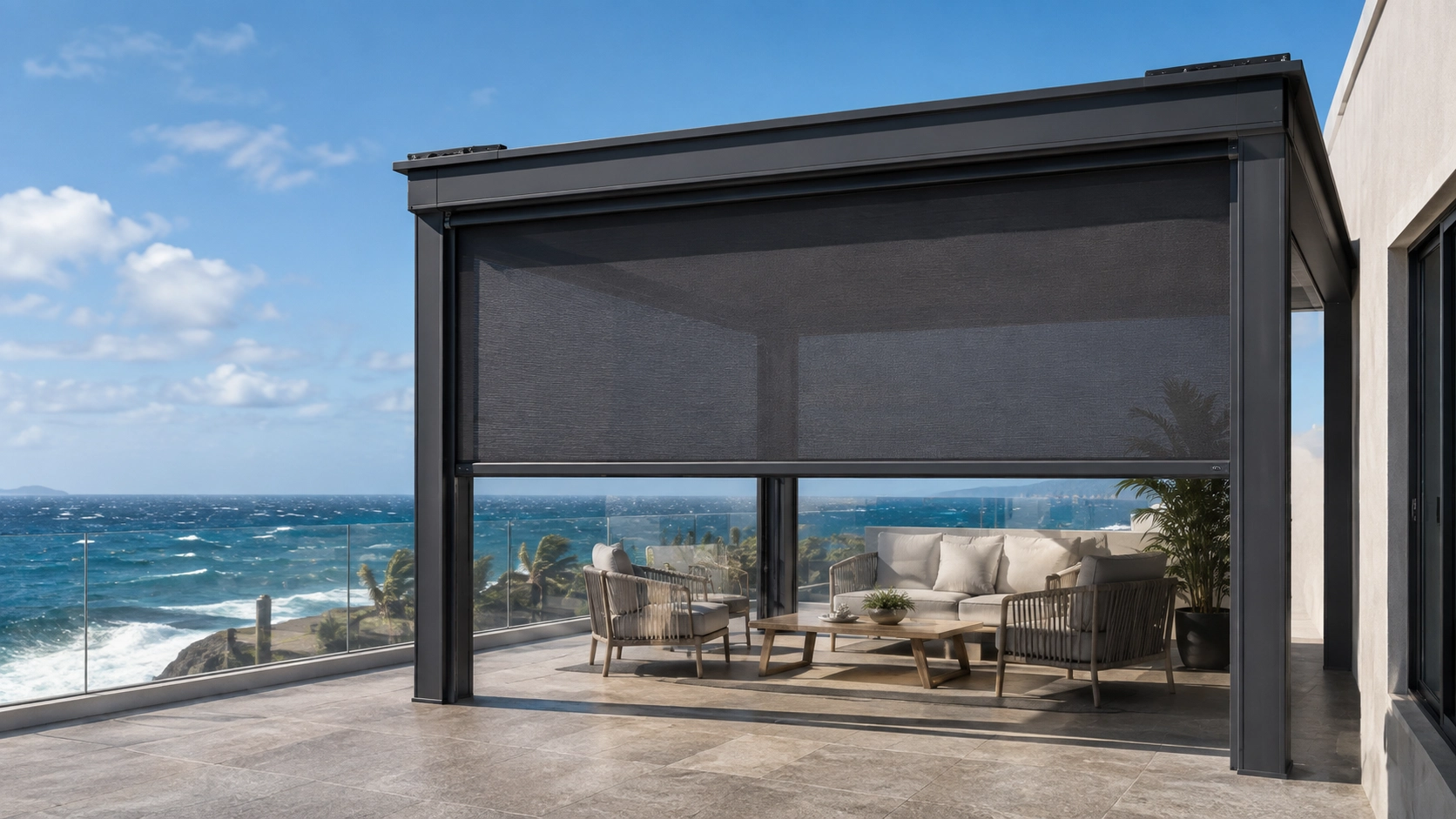
A useful benchmark comes from a third-party structure performance test of a complete WR120-140 ZIP screen specimen measuring 2500 × 2500 mm (6.25 m²).
The specimen was exposed to average wind-speed stages of 25, 30, 35 and 40 m/s, with each stage maintained for five minutes. At the highest test stage—40 m/s, equivalent to 144 km/h or approximately 89 mph—the report recorded the specimen in normal condition, with no damage and no functional impairment to its components.
Verified WR120-140 Wind-Test Benchmark
The WR120-140 specimen was tested by Guangzhou Testing Centre of Construction Quality & Safety Co., Ltd.
| Test Item | Verified Report Data |
|---|---|
| Model | WR120-140 |
| Specimen size | 2500 × 2500 mm |
| Nominal screen area | 6.25 m² |
| Sample quantity | 1 piece |
| Test type | Structure Performance / General Test |
| Test date | October 29, 2024 |
| Report date | November 8, 2024 |
| Report No. | 24J00783-JAALB-2400176 |
| Test equipment | Dynamic wind generator and Swema 3000md anemometer |
| Wind stages | 25 / 30 / 35 / 40 m/s |
| Duration | 5 minutes per stage |
| Highest recorded stage | 40 m/s |
| Condition after highest stage | Normal condition; no functional impairment recorded |
| Final conclusion | Meet the design requirement |
The report identifies the test basis as including GB/T 29907-2013, JG/T 239-2009 — External blinds and shutters — Resistance to wind loads — Test methods, and the manufacturer's windproof roller blind structure performance test procedure.
The tested specimen was a complete screen system incorporating the cassette, roller tube, motor, fabric, zipper device, guide device, bottom rail and side rails. Wind resistance therefore needs to be evaluated as system performance rather than fabric performance alone.
WR120-140 Wind-Test Results
| Average Wind Speed | Equivalent Speed | Duration | Recorded Result |
|---|---|---|---|
| 25 m/s | 90 km/h / 56 mph | 5 min | OK |
| 30 m/s | 108 km/h / 67 mph | 5 min | OK |
| 35 m/s | 126 km/h / 78 mph | 5 min | OK |
| 40 m/s | 144 km/h / 89 mph | 5 min | OK; no functional impairment recorded |
The report associates the four stages with wind-force levels 10, 11, 12 and 13 respectively. Its appendix defines Level 13 as 37.0–41.4 m/s, placing the 40 m/s stage within Level 13 according to the scale used in the report.
What Does 40 m/s Mean in Load Terms?
Wind pressure increases rapidly as wind speed increases. A common engineering relationship used to describe reference dynamic pressure is:
Using an air density of approximately 1.225 kg/m³, a wind velocity of 40 m/s corresponds to a theoretical reference dynamic pressure of approximately:
For the 6.25 m² nominal area of the tested specimen:
The important point is that a large outdoor screen exposed to high wind can transfer substantial force into its guides, fixings and supporting structure. This is why ZIP screen selection cannot be based on fabric strength or motor torque alone.
How Does a ZIP Screen Resist Wind?
A conventional outdoor roller blind normally leaves its fabric edges relatively unrestricted. Under wind, the fabric can move laterally, flap or bow away from the opening.
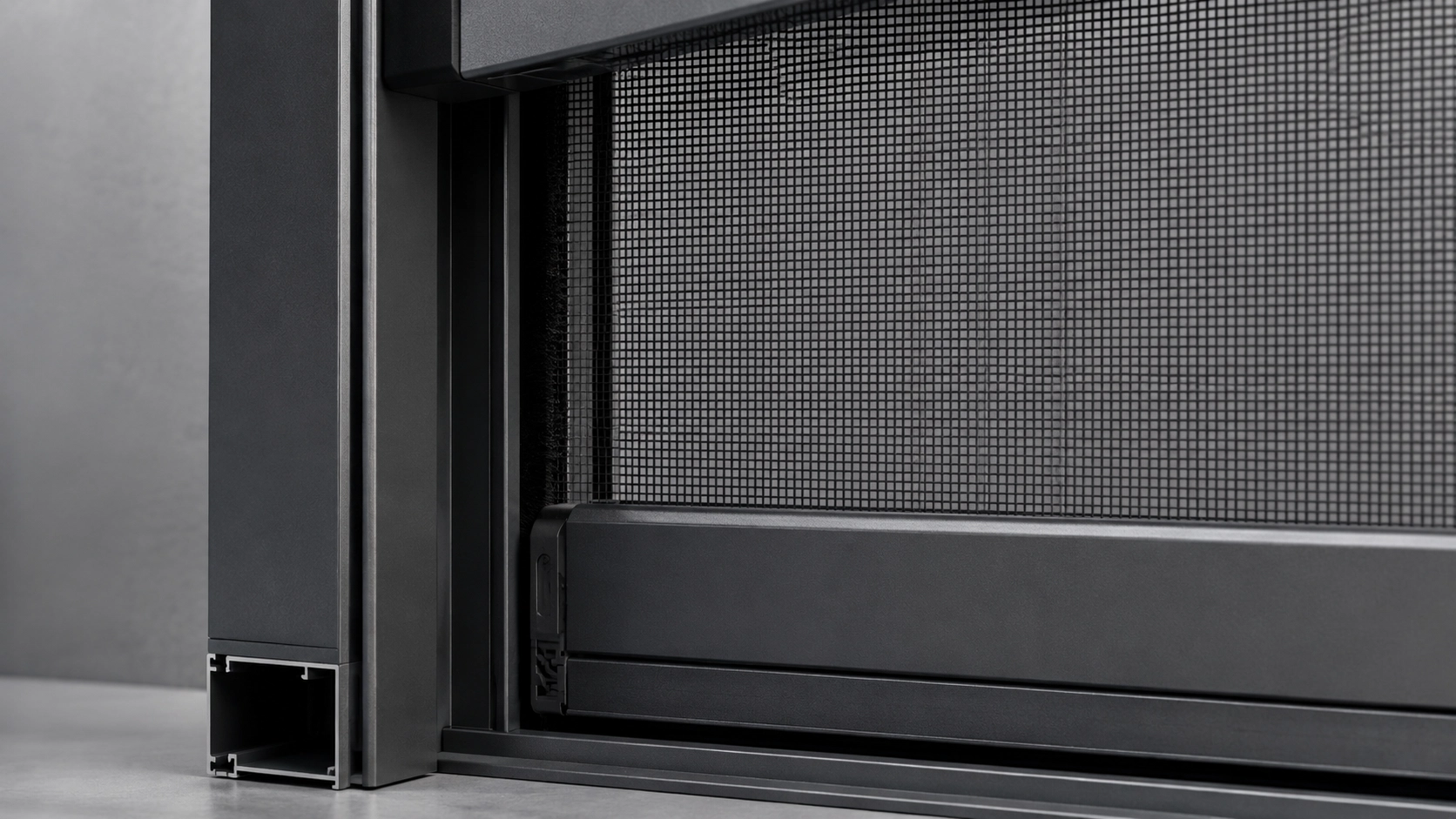
A ZIP screen controls this movement by retaining both fabric edges inside the side guides.
Fabric Retention
The ZIP edge needs to remain engaged with the guide as the fabric deflects under pressure. Continuous side-edge retention is one of the key structural differences between a ZIP screen and a conventional free-hanging roller blind.
Span Control
The roller tube and bottom bar need sufficient stiffness to control the screen across its full width. As the opening becomes wider, span stiffness becomes increasingly important.
Load Transfer
The side guides and fixings ultimately transfer wind-induced forces into the wall, pergola frame or other supporting structure. Wind performance therefore depends on the complete installation rather than one isolated component.
Why Wider ZIP Screens Need a Different Structure
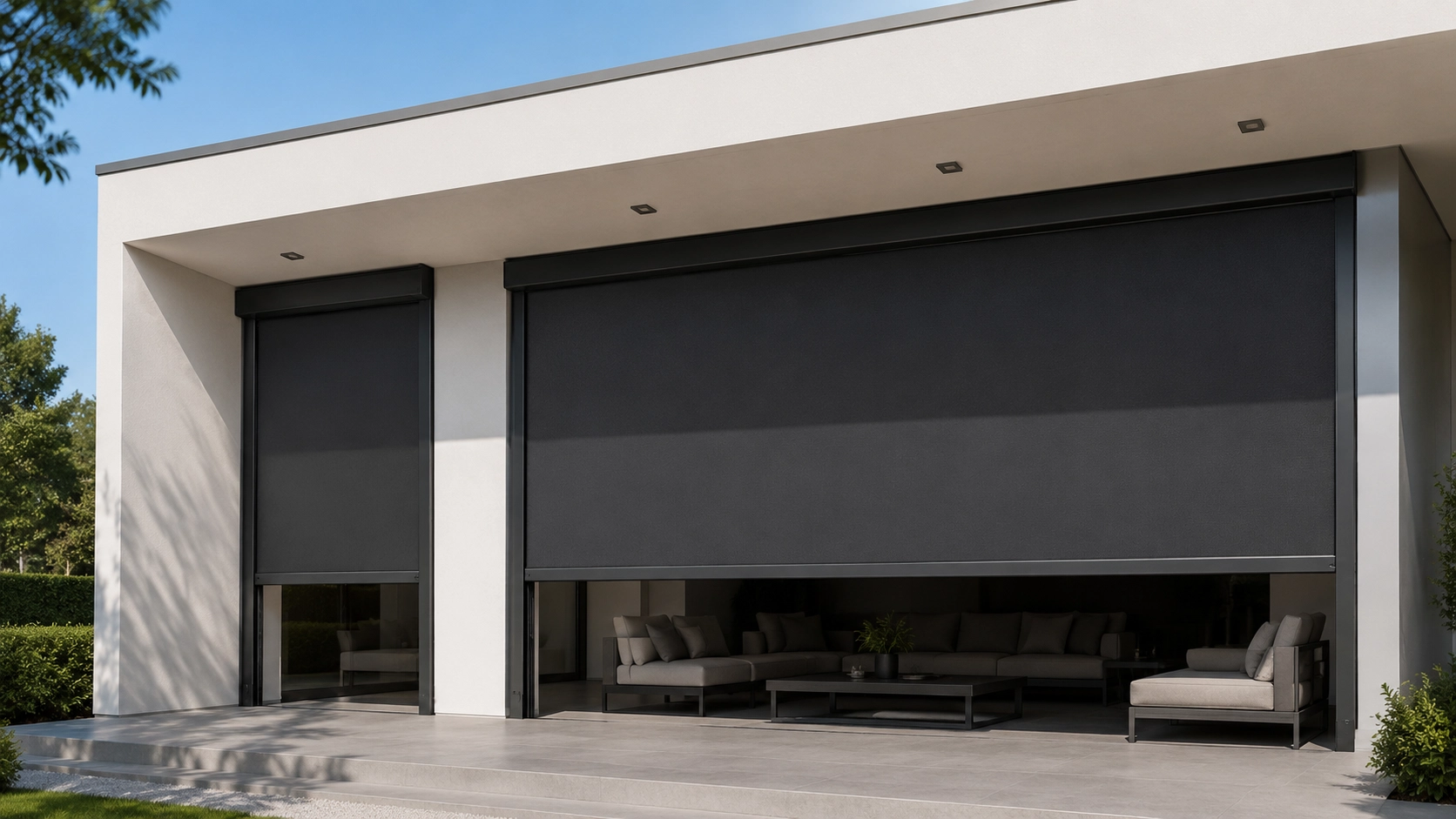
The tested WR120-140 specimen was 2.5 m wide. Compare that with a 4.0 × 2.5 m opening.
| Screen | Dimensions | Nominal Area |
|---|---|---|
| Tested reference | 2.5 × 2.5 m | 6.25 m² |
| Larger opening | 4.0 × 2.5 m | 10 m² |
The larger opening has 60% more nominal fabric area. More importantly, the roller tube now spans 4 metres instead of 2.5 metres.
That longer span makes tube stiffness increasingly important. Excessive tube deflection can affect fabric winding, tension, bottom-bar alignment, guide loading and long-term operation.
| Opening Condition | Main Engineering Issue | Typical Design Direction |
|---|---|---|
| Close to tested width | Closest to documented specimen | Compare site exposure, fabric and mounting |
| Moderately wider opening | Increased area and roller span | Review roller and guide configuration |
| Large single span | Tube deflection and guide demand become more important | Use an approved heavy-duty configuration |
| Extra-wide opening | One screen may become structurally inefficient | Evaluate intermediate support or split bays |
Three Wind-Related Failure Modes Buyers Should Understand
1. ZIP Edge Pull-Out
As wind pressure bows the fabric, tension is transferred toward both side edges. The ZIP retention system needs to keep the fabric engaged with the side guides while the surface deforms.
Poor guide geometry, incorrect fabric tracking or installation misalignment can make edge retention a weak point.
2. Bottom-Bar Deflection and Fabric Ballooning
A deployed screen does not remain perfectly flat under wind. The fabric bows between the roller, guides and bottom bar.
As the opening becomes wider, bottom-bar stiffness becomes increasingly important because the rail needs to remain stable across a longer span.
3. Roller-Tube Deflection
Roller-tube stiffness becomes particularly important on extra-wide openings. Excessive bending can affect fabric tracking, winding consistency and bottom-bar level.
For a wide ZIP screen project, the supplier should be able to explain the roller configuration, approved width × height combination and whether one screen or divided bays are more appropriate.
When Is a Split ZIP Screen Better Than One Oversized Screen?
Consider a 6 m-wide pergola opening.
| Layout | Configuration | Main Consideration |
|---|---|---|
| Single Span | 1 × 6 m ZIP screen | Longer tube span and larger single-screen load |
| Split Bay | 2 × approximately 3 m ZIP screens | Reduced individual span but requires intermediate support |
Dividing the opening reduces the width and screen area handled by each individual roller assembly. This can reduce roller-tube span, the load carried by each guide pair, installation weight and servicing difficulty.
Does Fabric Choice Affect ZIP Screen Wind Resistance?
Yes. Fabric selection affects more than shading, privacy and appearance. It also affects how easily air can pass through the screen.
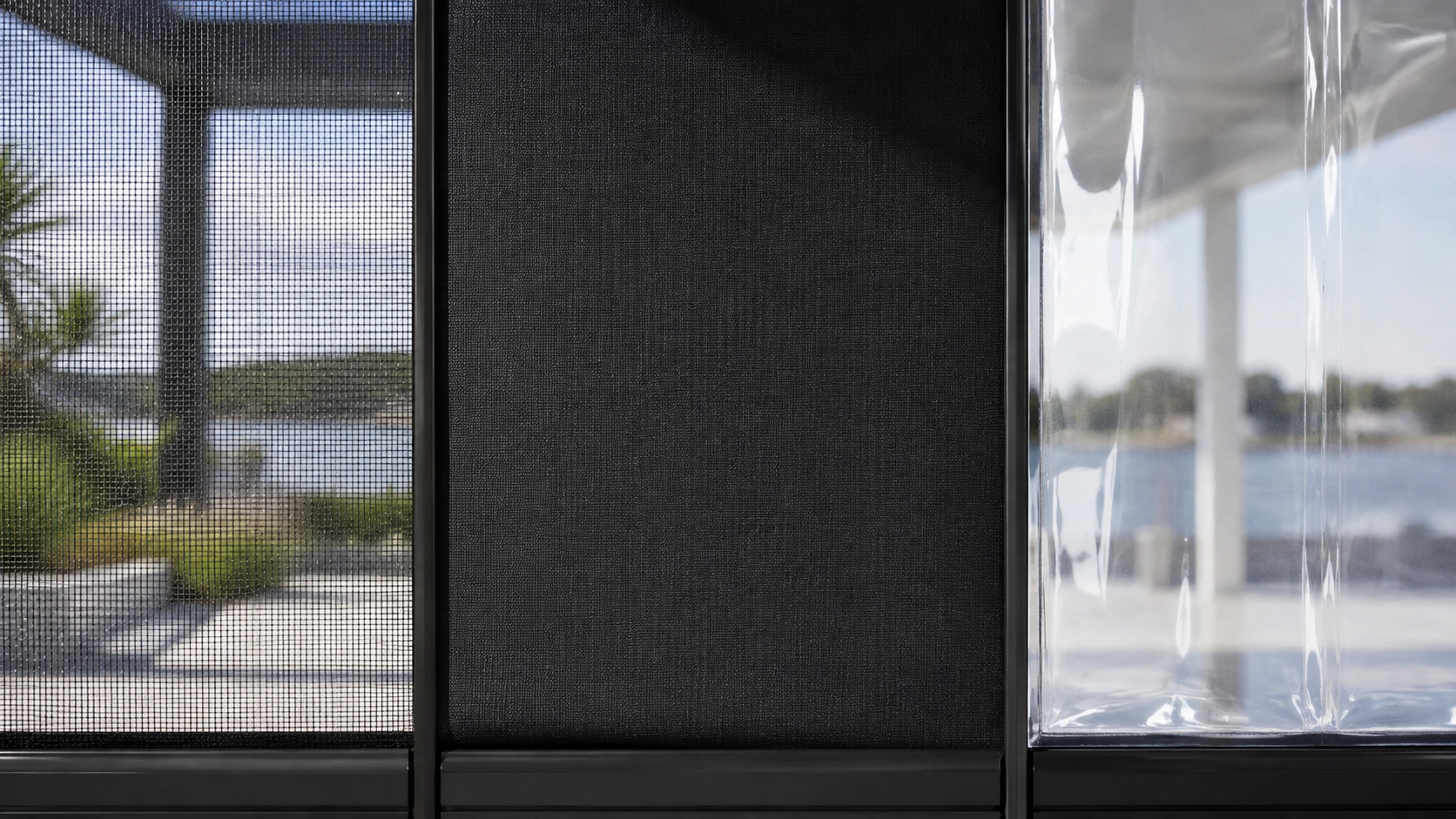
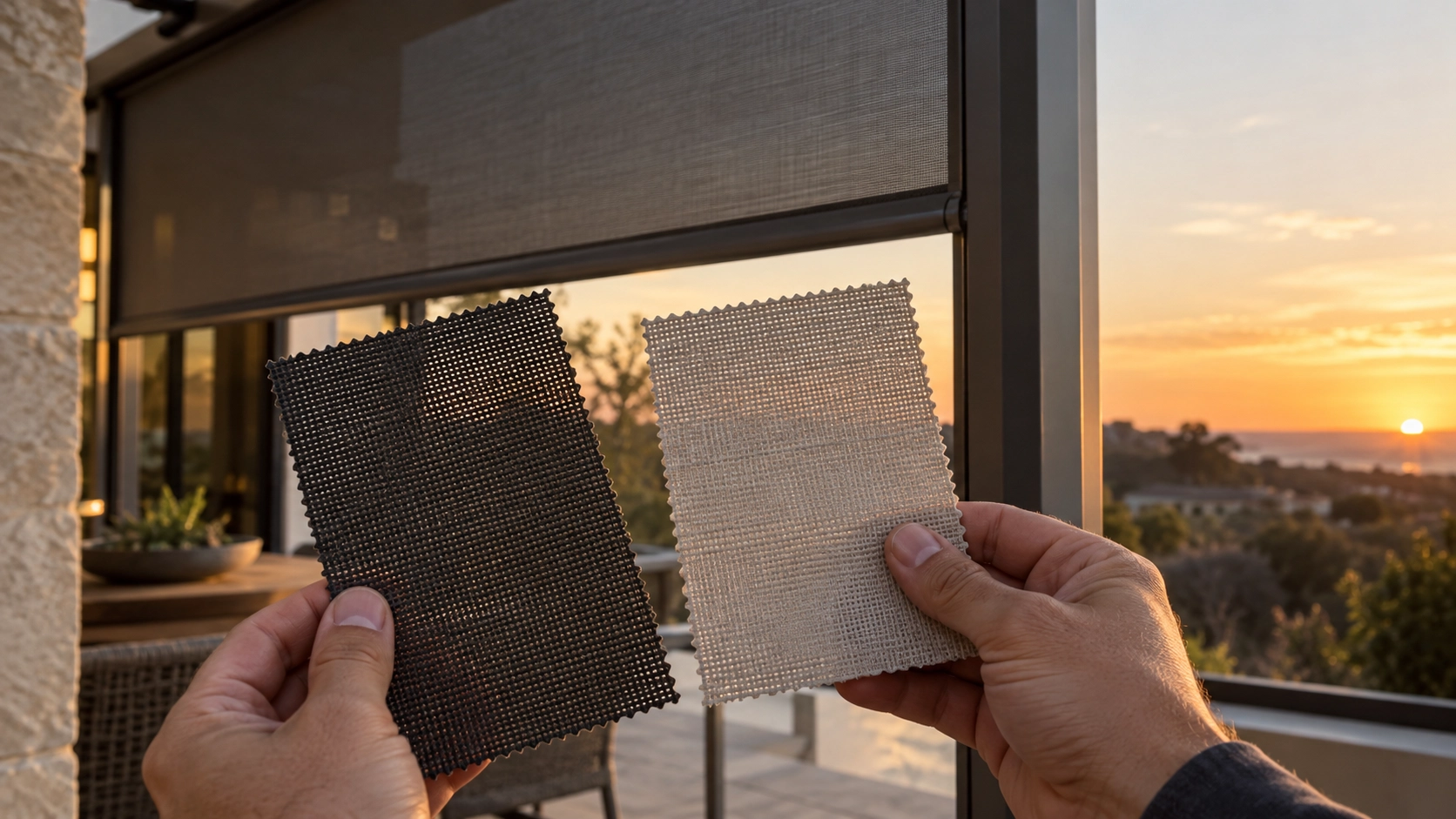
Solar Mesh: 1%, 3% and 5% Openness
The openness factor describes the approximate percentage of open area in a mesh fabric.
- 1% openness — more closed construction
- 3% openness — slightly greater airflow
- 5% openness — greater airflow again
Higher permeability can reduce the pressure difference acting across a porous screen compared with a less permeable surface. However, openness cannot be converted directly into a fixed percentage reduction in wind load.
Actual behaviour also depends on the weave structure, coating, fabric tension and the complete ZIP screen configuration.
Blackout Fabric and Clear PVC
Blackout fabrics and clear PVC allow substantially less airflow through the surface than open mesh. They therefore behave more like low-permeability surfaces.
For the same opening size and site exposure, this can place greater demand on the screen structure than a more permeable mesh configuration.
This becomes especially important for large pergola openings, coastal installations, rooftop terraces and exterior clear-PVC enclosures.
Why Site Exposure Changes the Required ZIP Screen
A ZIP screen installed on a sheltered ground-floor patio and the same-size screen installed on a rooftop do not experience identical wind conditions.
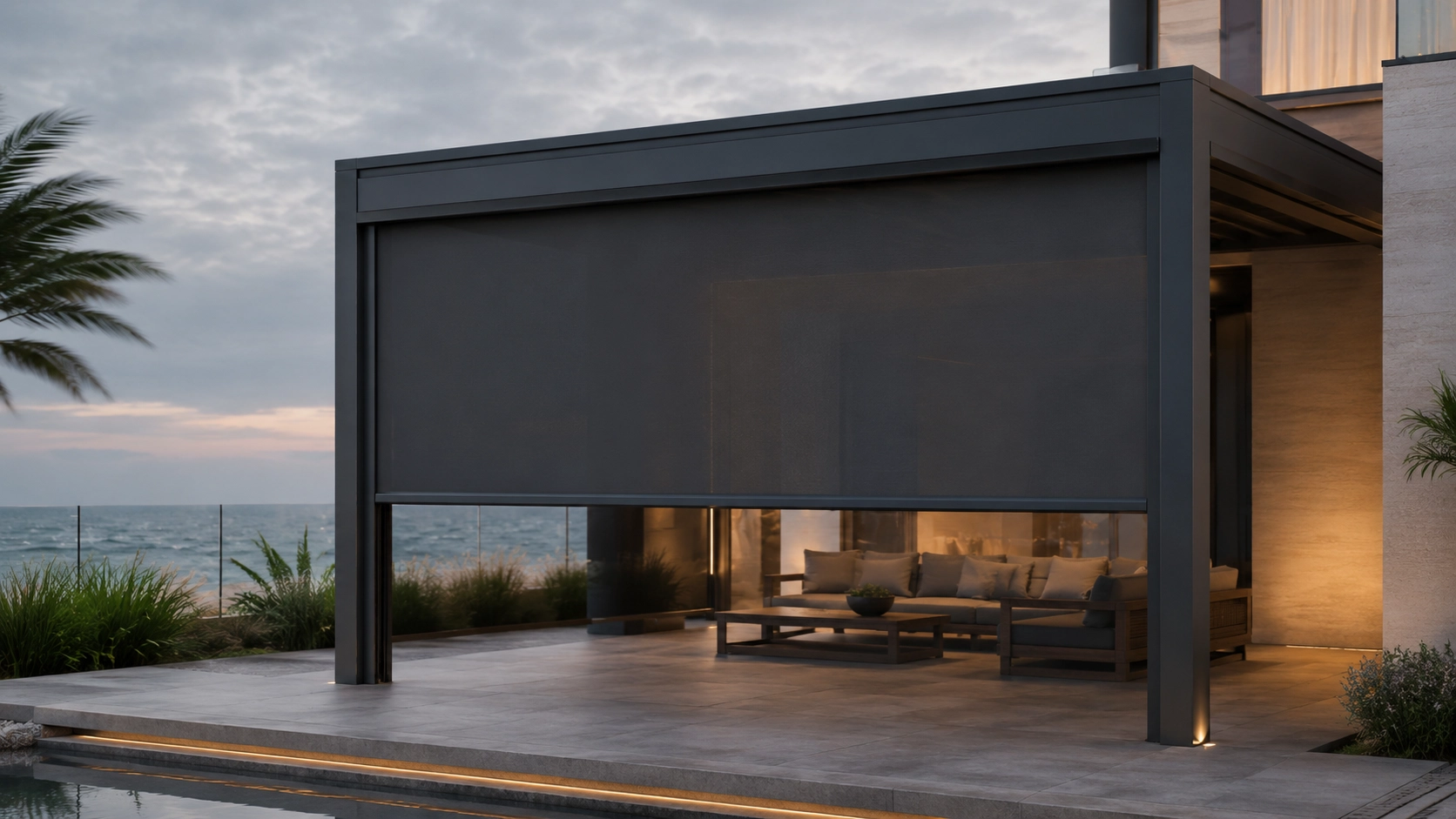
Site exposure is affected by installation height, surrounding buildings, open terrain, coastal conditions, roof edges, building corners and the number of open sides.
| Exposure | Typical Location | Main Selection Concern |
|---|---|---|
| Sheltered | Recessed patio, protected low-rise opening | Size and mounting |
| Semi-exposed | Pergola or terrace with some open sides | Screen size + gust exposure |
| High exposure | Rooftop, coastal, high-rise or building corner | Complete project review |
High-exposure projects deserve particular attention when they are also wide or tall. A 5.5 m coastal ZIP screen presents a very different design problem from a 2.5 m sheltered patio screen, even before the fabric is considered.
Test Strength vs Daily Operation
A structural wind test and everyday screen operation answer different questions.
The test report documents how the 2500 × 2500 mm WR120-140 specimen behaved during defined wind stages. Daily operation introduces additional variables such as gusts, changing wind direction, screen movement while raising or lowering, unattended operation and severe weather.
For exposed installations, project specifications should therefore include both structural configuration and operating guidance.
Where a Wind Sensor Helps
A wind sensor does not make a ZIP screen structurally stronger. Its role is operational.
On a compatible motorized ZIP screen, it can trigger an automatic response when a programmed threshold is reached.
This can be particularly useful for hotels, restaurants, rooftop terraces, coastal properties, second homes and other unattended outdoor areas.
Three Practical ZIP Screen Selection Examples
| Project | Main Concern | Selection Direction |
|---|---|---|
| 2.4 × 2.4 m sheltered patio | Similar size to the tested reference | Check mounting, exposure and fabric |
| 3.8 × 2.8 m open pergola | Wider span + greater exposed area | Review tube, guides and pergola structure |
| 5.5 × 3.0 m coastal opening | Large span + high exposure | Evaluate heavy-duty or split-bay configuration |
The third example shows why an extra-wide outdoor screen cannot be selected using only a headline wind-speed number.
At 5.5 m width, the design review should consider the approved single-span capability, roller configuration, side guides, supporting structure, fabric permeability and whether the opening should be divided into multiple bays.
What Should You Send for a ZIP Screen Wind Review?
| Send | Why It Matters |
|---|---|
| Opening width × height | Establishes span and exposed screen area |
| Site location / exposure | Identifies sheltered or high-wind conditions |
| Mounting structure | Shows how the screen load can be transferred |
| Fabric requirement | Mesh, blackout and clear PVC behave differently |
| Site photo or drawing | Shows the real installation condition |
In return, the supplier should be able to confirm the suitable screen configuration, applicable size range, relevant wind-test evidence, installation requirements, whether a split-bay arrangement is appropriate and the operating guidance for the selected system.
What Should You Check in a ZIP Screen Wind-Test Report?
A buyer does not need to read every page of a laboratory report. Five items provide most of the useful information.
| Check | Question |
|---|---|
| Tested Product | Which exact screen system was tested? |
| Tested Size | What were the width and height? |
| Wind Condition | Was the value an average wind speed, gust or another defined test condition? |
| Duration | How long was the highest stage maintained? |
| Final Condition | Was there damage, disengagement or functional impairment? |
Get a ZIP Screen Recommendation for Your Project
For large, extra-wide or high-wind installations, the screen should be selected according to the actual opening rather than a headline wind-speed figure.
NewHoo can review your project dimensions, fabric requirement, site exposure and supporting structure to recommend an appropriate ZIP screen configuration, including single- or split-screen arrangements where required.
Technical documentation is available for project review.
ZIP Screen Troubleshooting: 7 Common Problems, Causes & Checks
How to Measure for ZIP Screens Before Ordering
Related Article