Motorized Outdoor ZIP Screen Cost: What Cheap Quotes Leave Out
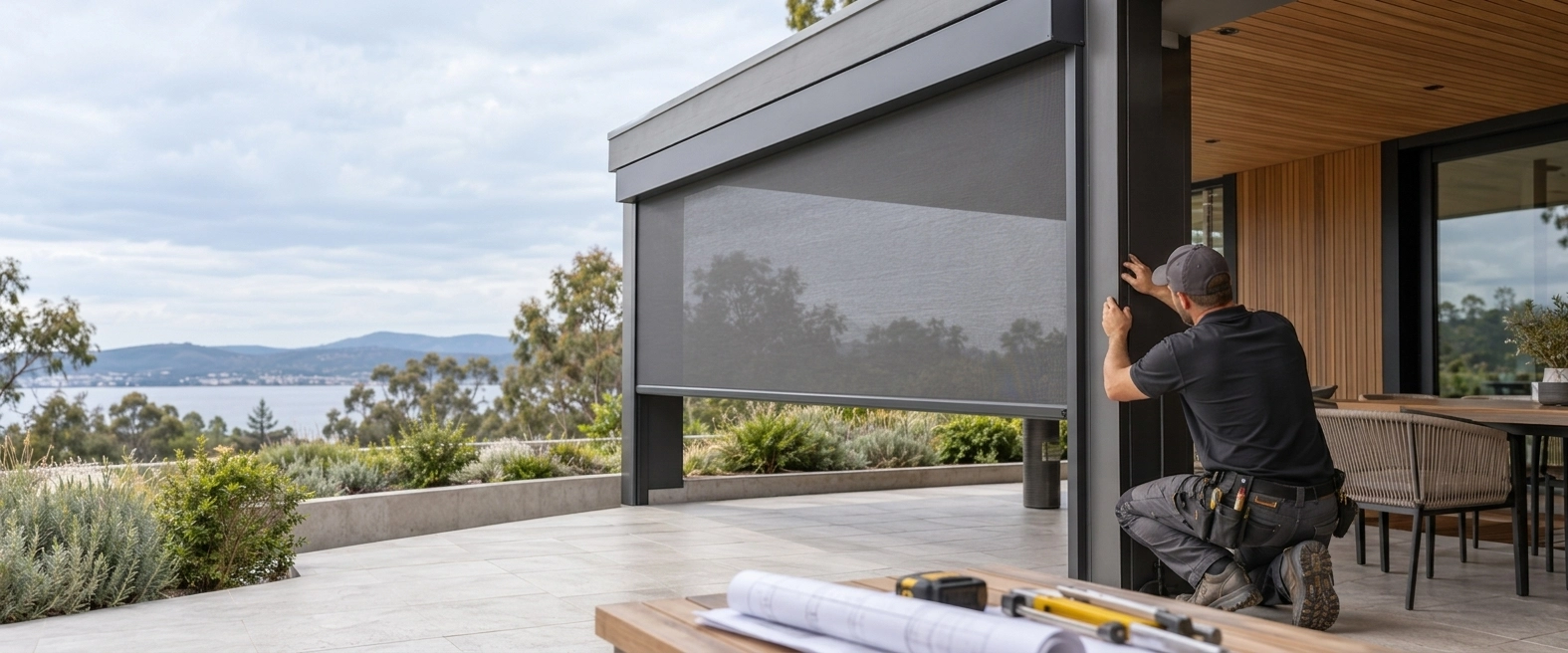
Imagine a buyer comparing two quotes for an 18 m² terrace opening. One total is lower, so the buyer is ready to approve it. Then the installer asks two questions: Where will the centre guide be fixed? Who is bringing power to the motor? The lower quote specifies two screens but does not include a suitable centre support or site wiring. Before anyone can know whether it is the better deal, those missing tasks need designs, owners and prices. This is an illustrative scenario, not a claimed customer case or a claim that every divided opening needs additional structural work.
The sticker price is only one part of the decision. What does each proposal deliver, why does the system suit the opening, and what will it cost to make the screens operational at the site? A cheaper quote can still be the right choice. It becomes expensive when required equipment or work has been left outside the comparison.
1. Put Both Quotations on the Same Basis
Before examining components, check whether the suppliers understood the same job. A measurement marked “6 m wide” might refer to the structural opening, the distance between proposed fixing points or the finished product width. Those are not interchangeable instructions for manufacturing. Confirm the measurement reference, required coverage and proposed mounting position on a drawing or marked-up site photo.
For each opening, establish the number of screens, the finished width and drop of each screen, and where the cassette and side guides will attach. Also confirm that both suppliers received the same information about fabric, intended use, wind exposure, power availability and delivery location. A quotation based only on rough dimensions should identify what remains subject to final measurement or site review.
Then define the scope. One price may cover factory supply; another may include packing and transport to a named destination; a third may include specific installation or commissioning services. An overseas product supplier should not be assumed to provide local electrical or installation labour unless that service is expressly listed.
Mark every significant item included, excluded or provisional. “Provisional” is important: a price that depends on an unverified fixing surface or final screen size is not yet directly comparable with a fully specified proposal. Give both suppliers the same project brief and resolve these differences before negotiating the total.
2. Equal Area Does Not Mean Equal System Cost
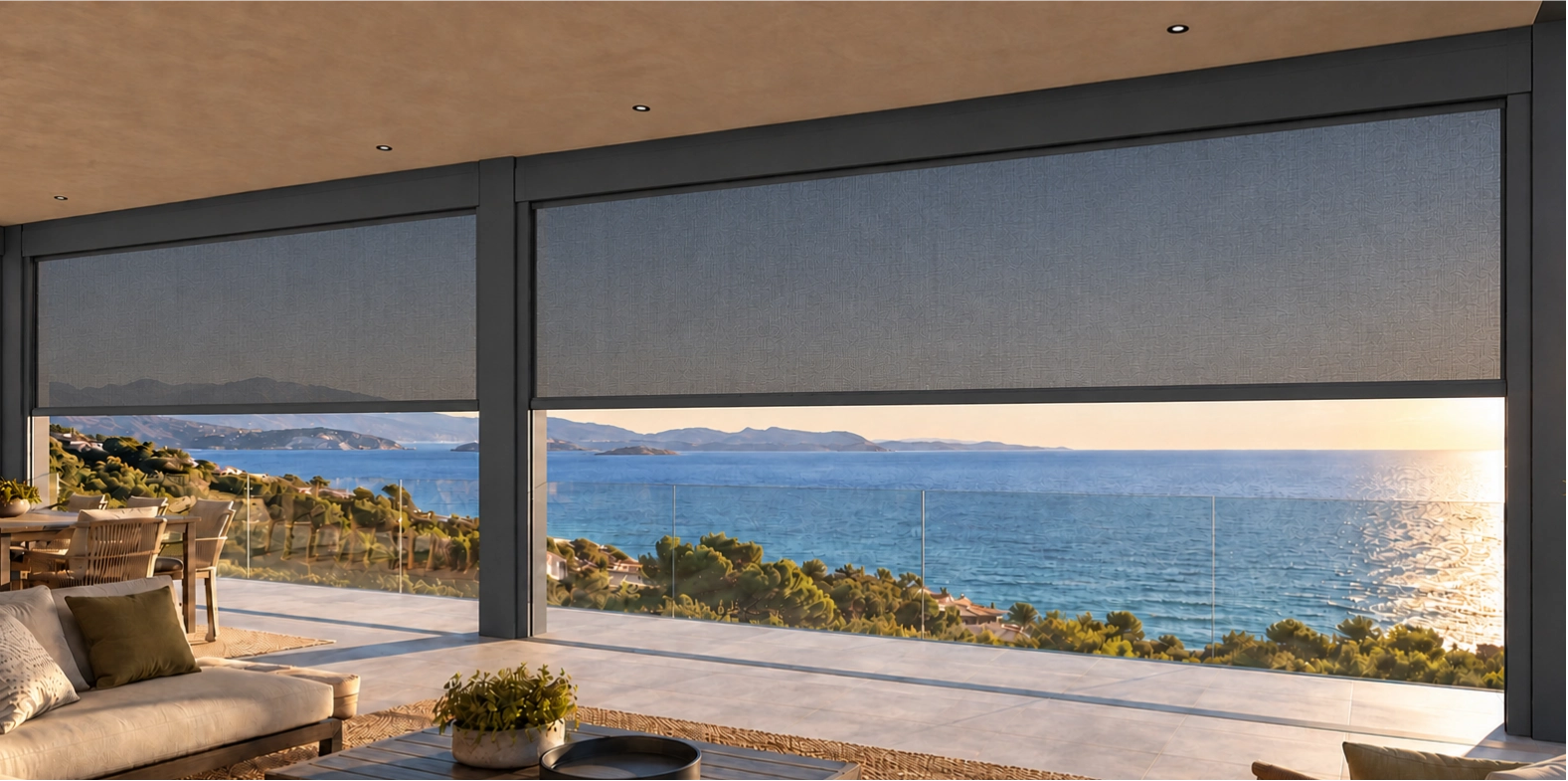
Consider a hypothetical 6 m × 3 m opening. Supplier A proposes one 6 m × 3 m screen. Supplier B proposes two 3 m × 3 m screens. Both arrangements cover 18 m² on paper. That calculation says nothing about whether either arrangement is suitable for the site, or which costs less.
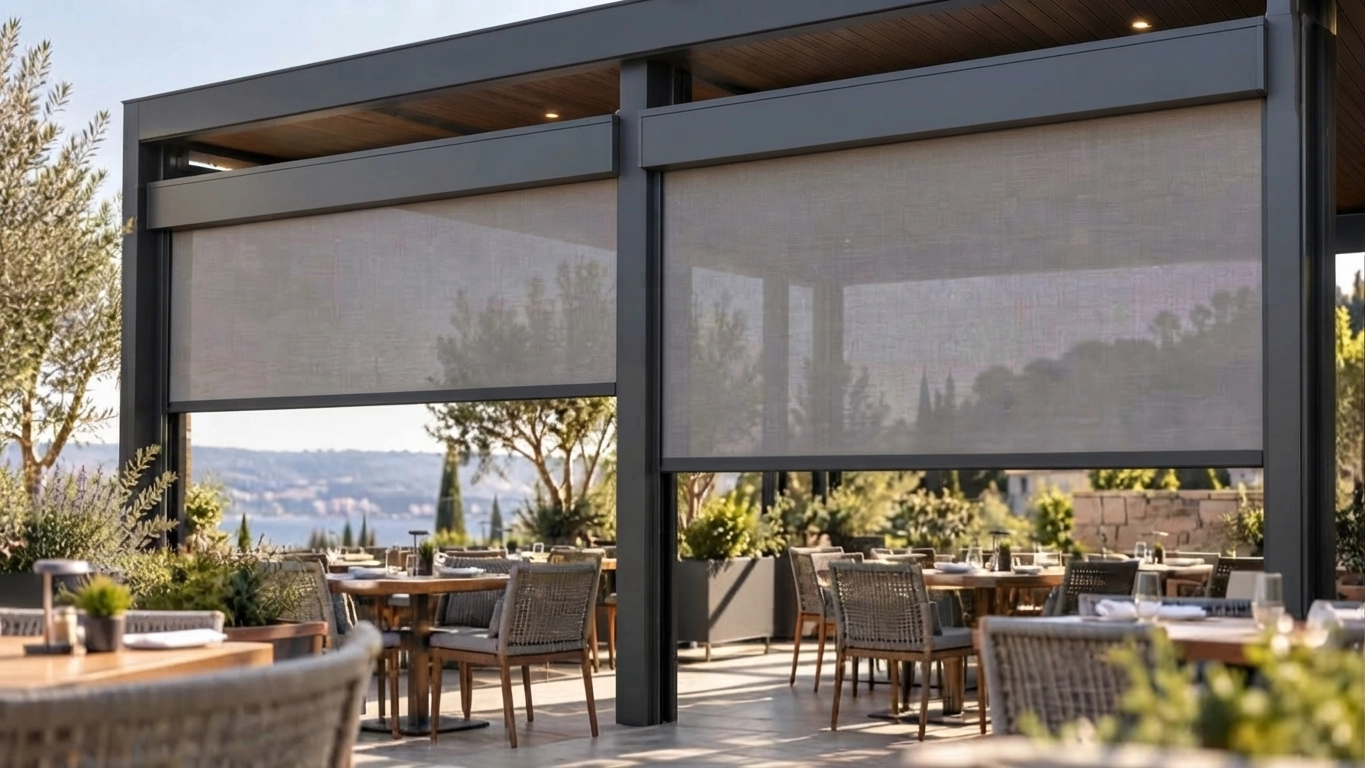
The price can change through four different mechanisms, and they should not be confused:
Quantity changes. If each half is a separately motorized screen, the divided design contains two motors and two screen assemblies rather than one of each. It may also need additional controls or a different arrangement of guides. That does not mean its total must be higher: it establishes that the bill of materials is different. Ask for the quantities in each quote, not only the covered area.
System specifications change. A single wide span may require a different tube, cassette, bottom bar or other matched configuration from either smaller screen. The supplier must establish what actually suits the selected fabric, width, drop and fixing method. NewHoo’s oversized ZIP-screen guidance identifies support structure, fabric weight, cassette capacity and transport restrictions among the selection conditions. Other manufacturers’ system reference guides also document specific hardware combinations rather than a universal construction. Do not assume the wide proposal needs a particular upgrade before its supplier confirms it.
Site work changes. Two screens may need a central fixing point. If the opening has no suitable support there, an additional structure may have to be assessed, supplied and installed. One long unit may raise different access, lifting or handling questions. These are potential project costs even when they do not appear on a factory product quote. Obtain the fixing drawing and ask the local installer to price the work each alternative requires.
Service scope changes. One supplier may include special packing, delivery or setup for its design while the other quotes factory supply only. That difference changes the quoted total without necessarily changing the screen itself. Put both proposals on the same delivery and service basis before attributing the gap to product quality.
The divided design also changes the view and may permit separate operation. Those differences can be useful in a restaurant terrace or undesirable across a continuous opening. Request two complete alternatives if the layout is undecided, with equipment quantities, system selection, site work, operation and delivery scope stated for each. Neither design should be declared feasible or cheaper from screen count alone.
This is why a price per square metre is useful as an early budget reference but weak as a final procurement test. Area does not identify how many functioning screens must be built or what the installation site must provide.
3. Find Out Which Specifications Earn Their Place in the Quote
Screen structure: require a project-specific reason
The roller tube, cassette, guides, bottom bar, motor and fixings work as a system. Ask the supplier to name the proposed model and explain how it was selected for the finished dimensions, fabric, installation position and site conditions. If one quote uses a larger cassette or a different tube, the useful explanation is what constraint or function that change addresses—not that the product is “premium” or “heavy-duty.”
For a concrete example of a model-specific change, NewHoo lists a 63 mm tube for standard WR110 pergola openings under 4 m wide and a 78 mm double-layer tube for selected wider configurations up to 5.4 m. Those figures describe that particular product family; they do not establish that the hypothetical 6 m single screen in this article can use WR110. They show why a buyer needs the proposed model and configuration, not just an area figure.
Make the consequence visible: for a wide opening, an underspecified tube can deflect across its span, contributing to fabric waves and uneven winding. If a finished screen then needs correction, the buyer may face another site visit, access equipment, replacement components and interruption to the project. Those are possible consequences to investigate, not a prediction that every smaller tube will fail. There is no universal “over 4 m” failure threshold: the WR110 figures apply to WR110 configurations, while suitability also depends on the complete system and project conditions. NewHoo's large-opening guidance explains the deflection and winding risks as the span increases.

Ask for the applicable system information and any conditions attached to a performance claim. For example, a wind-test result obtained with a particular screen size, substrate and fastening method cannot automatically be applied to every building opening. Rollease Acmeda’s wind-test flyer identifies the tested installation and explicitly distinguishes controlled test results from all real-world conditions. It is an example of why buyers should ask what a claim actually covers; it is not a performance rating for a NewHoo screen or for this hypothetical opening.
The right buyer question is: “Why does this complete configuration suit our opening and fixing method, and what changes if we alter the layout or fabric?” A larger component or higher motor rating, on its own, does not answer that question.
Use the supplier's response to decide whether the quote is ready for comparison:
What the buyer should do: Ask for the model, actual configuration and the reason for recommending it.
What the buyer should do: Treat suitability as unconfirmed; request the project-specific selection basis.
What the buyer should do: Compare its equipment and total project scope with the alternative.
What the buyer should do: Keep the installation method and any affected cost provisional until the site information is reviewed.
A complete-sounding product label cannot resolve an unknown fixing condition. Conversely, a provisional site item need not halt all comparison: it must remain visible, with a stated way to confirm it before approval.
This is also where NewHoo can set a concrete expectation for its own proposals. Its published WR110 information identifies model-specific tube options and asks for opening dimensions, frame structure, installation location, power, fabric requirements and project quantity; photos or drawings help with wider or exposed openings. Buyers should expect a final project proposal to connect the chosen configuration to that information. Where fixing or exposure details are still unknown, the affected selection and costs should be identified as provisional rather than presented as settled.
Fabric: compare identified products and a defined purpose
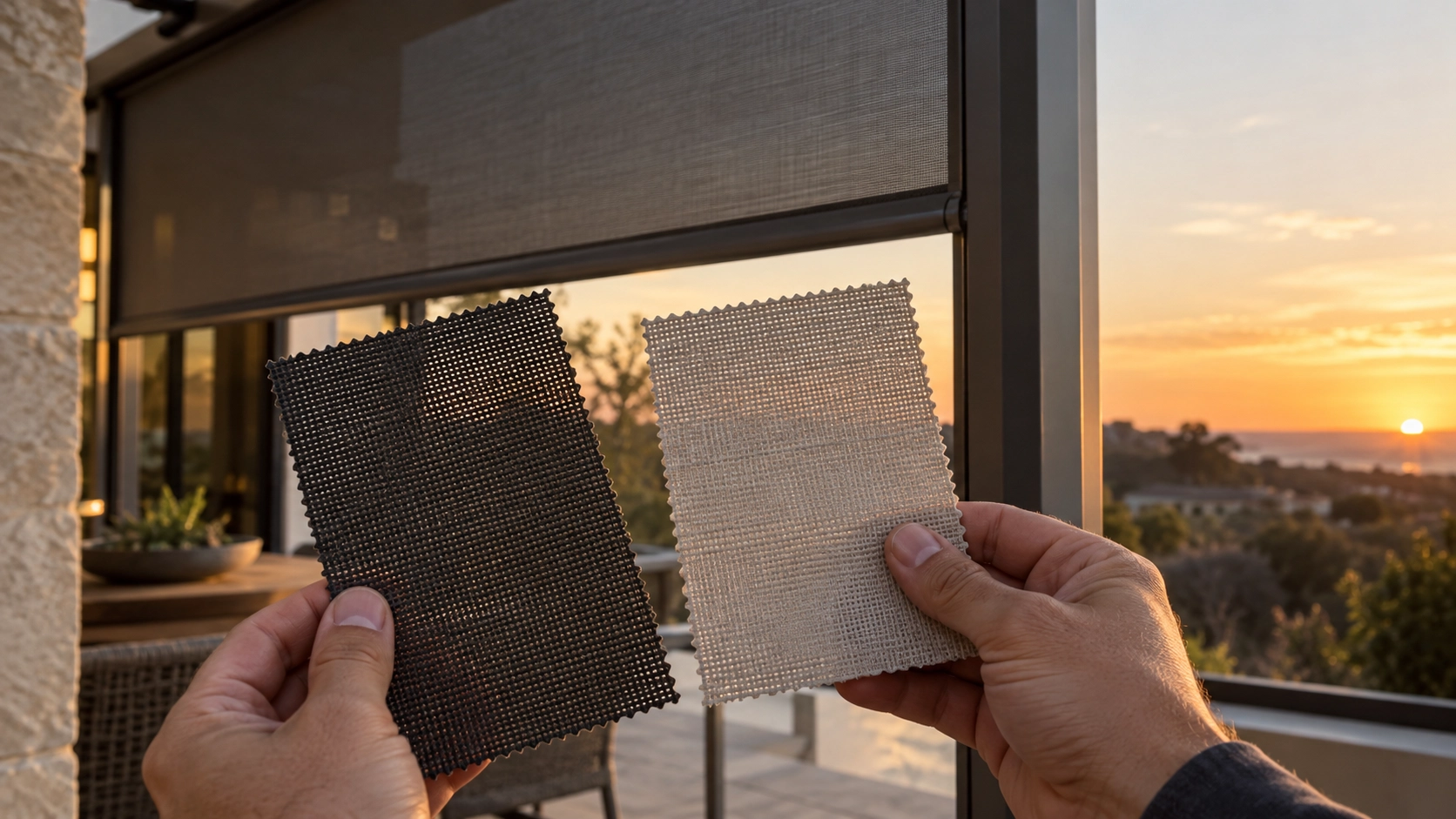
“5% sunscreen fabric” does not fully identify a fabric. Request the manufacturer and product designation, colour, openness factor, relevant technical sheet and warranty terms. If two suppliers quote different fabrics, ask which project requirement each recommendation serves.
Suppose the screen faces a low afternoon sun. The buyer wants less glare at seating level but still wants an outward view. Ask the supplier to show samples in the proposed colours and explain the trade-off for that position. Fabric choice cannot be reduced to openness alone: Phifer notes that outward visibility depends on openness, colour and the contrast between indoor and outdoor light; night-time visibility can change when the interior is lit. Mermet’s fabric-selection guidance also treats glare control and view as distinct performance questions.
A more expensive fabric is justified when its documented characteristics address a real project need. A brand name, a thicker material or a lower openness figure is not sufficient evidence by itself. Request a physical sample and application information before approving a substitution, especially when multiple screens must match across one façade.
Motor and controls: specify the working package
First establish what is needed for the proposed screens to operate: the selected motor, compatible power arrangement and basic control equipment. The buyer should not select a motor from torque alone; the supplier must confirm that it suits the screen and its intended operation.
Next describe how people will use the installation. Does a terrace manager need one group command at closing time? Must occupants adjust separate bays independently? How many remotes or switches are needed, and who will configure them? Group control can require a different set of devices and setup responsibilities from simple individual control. Somfy’s building-control range illustrates that motors, controllers, local controls, sensors and accessories are distinct elements of a control solution.
Finally, separate optional integration from essential operation. “Smart-home compatible” does not establish that a gateway, sensor, interface, programming and commissioning are included in the price. Ask the supplier to identify every item and task needed to deliver the requested function. If the project does not need it, request a revised basic-control proposal—and written confirmation that the remaining package is complete.
4. Identify Costs That Have Not Reached the Product Quote
An attractive factory price can leave substantial site work to the buyer. The purpose of this check is not to assume every project needs every service; it is to assign the necessary work to a responsible party before ordering.
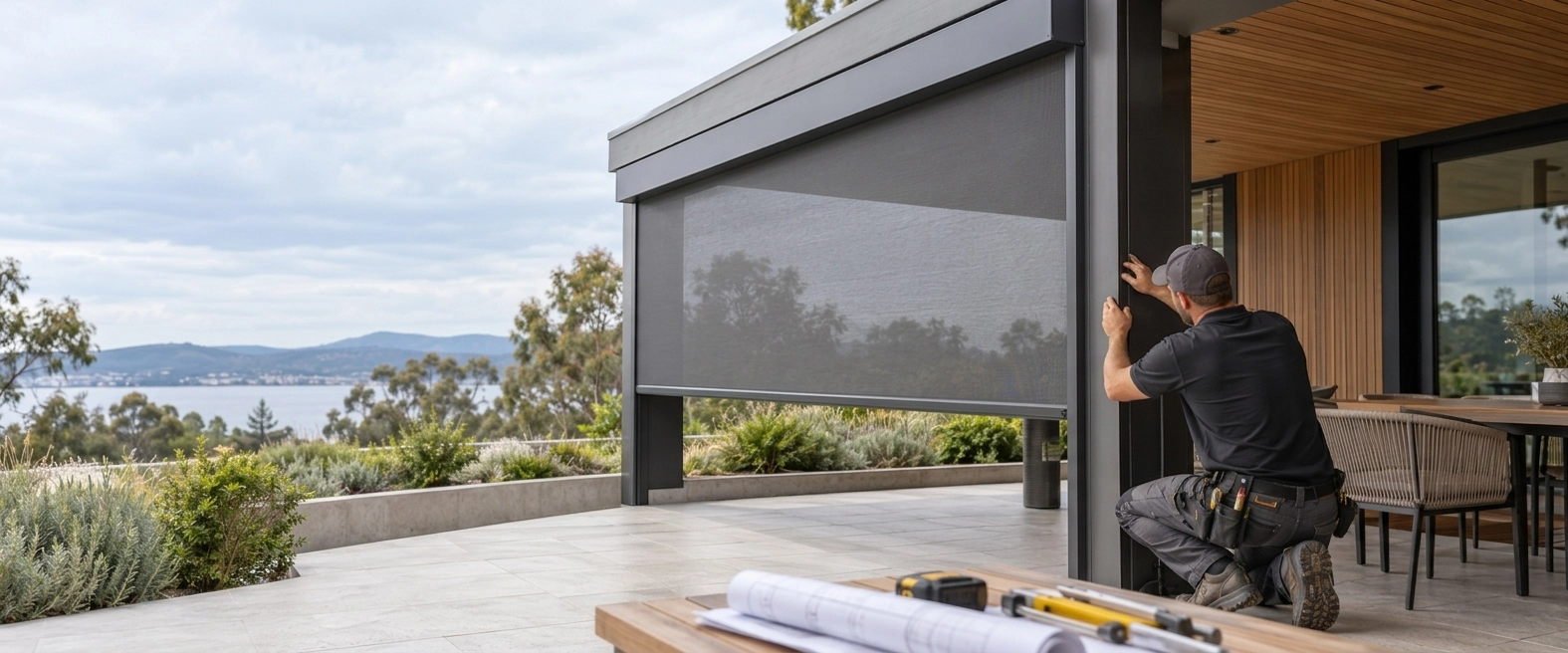
Start at the opening. Who verifies the final dimensions and the fixing substrate? If a proposal depends on an intermediate post, support or prepared fixing surface, who supplies and installs it? Who provides access equipment for a high mounting position, lifts the goods from the unloading point, installs the screens and sets their travel limits? Ask the local installer to price each excluded task against the supplier’s actual drawings, rather than a generic screen description.
Do the same for power. “Motor included” does not mean a supply point exists at the cassette, site wiring is installed, electrical connections are completed, or a group-control system is commissioned. Confirm the required voltage and connection arrangement with the supplier and assign the electrical work to a qualified local party where applicable.
For international orders, specify the packing method, shipping mode and delivery point. Put the agreed Incoterms® 2020 rule and named place in the quotation, then clarify unloading, import formalities and movement from that point to the installation area. The International Chamber of Commerce explains that Incoterms allocate delivery tasks, costs and risks; the named place matters. “Freight included” alone does not tell a site team what happens when the shipment arrives.
Lastly, list provisional items. If a final measurement, fixing detail or access plan has not been approved, ask the supplier which lines could change, what information would settle them, and when the final price becomes firm. A low quote with unresolved assumptions should be compared with a complete quote only after those assumptions have been priced or expressly accepted.
For an internal comparison, place each supplier's quoted supply and delivery price alongside the separately obtained prices for required local work and any buyer-paid logistics or import items. Keep unpriced provisional work visible as unresolved, rather than silently assigning it a value of zero. This gives procurement a more honest project-cost picture without pretending that every item can be estimated from screen area.
Red Flags vs. Green Flags in a ZIP Screen Quote
Green flag: ready to evaluate: Each screen's manufacturing dimensions and fixing position are identified.
Green flag: ready to evaluate: The supplier explains the selected system and how it matches the opening, exposure and fixing method.
Green flag: ready to evaluate: The drawing shows how each guide is supported and who supplies any required structure.
Green flag: ready to evaluate: Motors, basic controls, optional devices and setup responsibility are listed separately.
Green flag: ready to evaluate: Packing, delivery terms, destination, unloading and buyer responsibilities are stated.
Green flag: ready to evaluate: The fault process, replacement scope, freight and site work are described in writing.
Green flag: ready to evaluate: Provisional items state what will confirm them and when the price will be finalized.
5. Decide Which Differences Are Worth Paying For
Once the proposals describe the same requirements, classify each remaining difference by its effect on the project.
Retain a necessary configuration when the supplier can explain it. A particular system, fixing arrangement or control device may be essential to the proposed layout. Ask for the selection basis and the conditions under which the proposal remains valid. Do not remove a component merely because its purpose is unclear; get the explanation first.
Challenge an unexplained premium and an unexplained omission equally. For the higher quote, identify the additional specification, service or responsibility. For the lower quote, look for missing equipment, installation prerequisites, shorter delivery scope or provisional costs. An answer such as “ours is stronger” is not enough; nor is a low total when the supplier cannot say what is included.
The immediate decision is whether a difference is required and supported, optional and useful, or unexplained. The first stays in the proposal. The second should be priced separately. The third calls for clarification before either price can be judged.
6. Adjust the Budget Without Removing a Required Function
When a complete quote exceeds the budget, request alternatives in the right order. The goal is an updated, suitable proposal, not a list of parts removed from the original total.
Ask for separately priced operating and appearance options first. If the project only needs a wall switch or basic remote, request a version without unused app integration, extra control devices or aesthetic customization. Specify the operation that must remain. The supplier can then quote the simpler complete control package, rather than removing a gateway while leaving a requested function impossible to deliver. No saving should be assumed until the revised quote is issued.
Send layout, fabric and system changes back for selection. Dividing an opening, changing fabric or asking for a smaller cassette may alter the motor, guides, roll capacity, fixing method or appearance. Describe the desired change and ask the supplier for a new configuration, its suitability explanation and any new site requirements. For the 6 m example, compare an approved one-screen design with an approved two-screen design only after the central fixing and local work have been accounted for.
Do not delete a component whose purpose is unclear. A guide, support, controller or specified accessory may be needed for the chosen design or operation. Ask whether it is essential, conditional or optional. If the supplier removes it, request confirmation that the remaining system still meets the agreed requirements and update the drawings, accessory list and exclusions.
Budget adjustment is complete only when the buyer has a revised full quote. Compare that document with the original project brief; a lower product total that transfers unpriced work to the site is not an established project saving.
7. Check What Happens After a Fault
Warranty years alone do not describe the service a distributor or installer can deliver. Walk a realistic fault through the entire chain before choosing between otherwise similar proposals.
1. Reporting: Who receives the fault report? Agree on the product identification, photos, videos, installation records or operating information needed, and who will collect them from the site.
2. Diagnosis: Does the supplier guide a local check, assess the evidence remotely or require a part to be returned? Identify who decides whether the problem concerns the product, installation, power supply or control setup. Do not assume a replacement will be approved before that assessment.
3. Remedy: Clarify whether the stated coverage provides a part, a complete replacement product, repair instructions or technical assistance, and which circumstances or items are excluded. Make sure the installer can identify and order the correct spare part.
4. Delivery: Who pays and arranges shipping for a replacement, and to what location? Confirm what happens when the project is overseas or the original order was supplied under a different delivery term.
5. Site completion: Who pays for access equipment, removal, fitting the replacement and recommissioning? A replacement component supplied at no charge does not automatically include these local services.
Ask the supplier to state the responsibilities in writing. This turns an abstract warranty promise into a support process the buyer can actually operate.
A Project Brief You Can Send to Every Supplier
To obtain comparable quotations, send each supplier the same information:
- Opening width and height for every bay, with the measurement points identified.
- Photos or drawings showing cassette and guide fixing positions, substrate and access.
- Project location, installation height and relevant exposure or use conditions.
- Required fabric function and priorities, such as glare reduction, outward view or privacy.
- Available power, individual or group operation, and any integration requirements.
- Quantity, preferred layout if known, delivery destination and the party arranging installation.
Request a response that states the finished screen dimensions and layout; system and selection reason; exact fabric; motor and included controls; mounting requirements; separately priced options; packaging and delivery terms; exclusions and provisional items; and warranty and spare-part responsibilities. If the supplier proposes a different layout, ask for its practical effect on operation, appearance and site work.
Before You Approve the Order
Use this as an approval gate, not as another round of general questions. The order should be released when:
- The layout, number of screens and finished manufacturing dimensions have been confirmed against the openings.
- The supplier has explained why the named system and configuration suit the project, including any conditions attached to its use.
- Essential equipment, accessories, control devices and their quantities appear in the final quote.
- Fixing preparation, installation, electrical work and commissioning have assigned local responsibilities and prices where required.
- The trade term, named delivery place, packing, unloading and subsequent site movement are clear.
- Provisional items have either been resolved or have an agreed method, owner and timing for final confirmation before the price or design is locked.
- Fault reporting, remedies, replacement freight, local labour and spare-part support are recorded in writing.
If a condition remains open, identify its owner and resolution date rather than treating the current quotation as a fixed, fully comparable offer.
Conclusion
The most useful ZIP screen quotation is one you can verify. It shows what will be built, why the complete system is appropriate for the opening, what the price includes and which tasks the buyer must arrange. A cheaper proposal may be right for the project; a more expensive one may be justified. Neither conclusion follows from screen area or the final number alone.
Send NewHoo your opening dimensions, site photos, operating requirements and delivery location to request an itemized, project-specific outdoor ZIP screen proposal. Ask for required configurations, optional features and exclusions to be shown separately so the decision can be made on a complete basis.
ZIP Screens vs Cable-Guided Outdoor Blinds: Which Fits Your Project?
How to Reduce Heat and Glare Under a Glass Roof
Related Article