How to Order ZIP Screens from a Manufacturer: A Buyer's Checklist
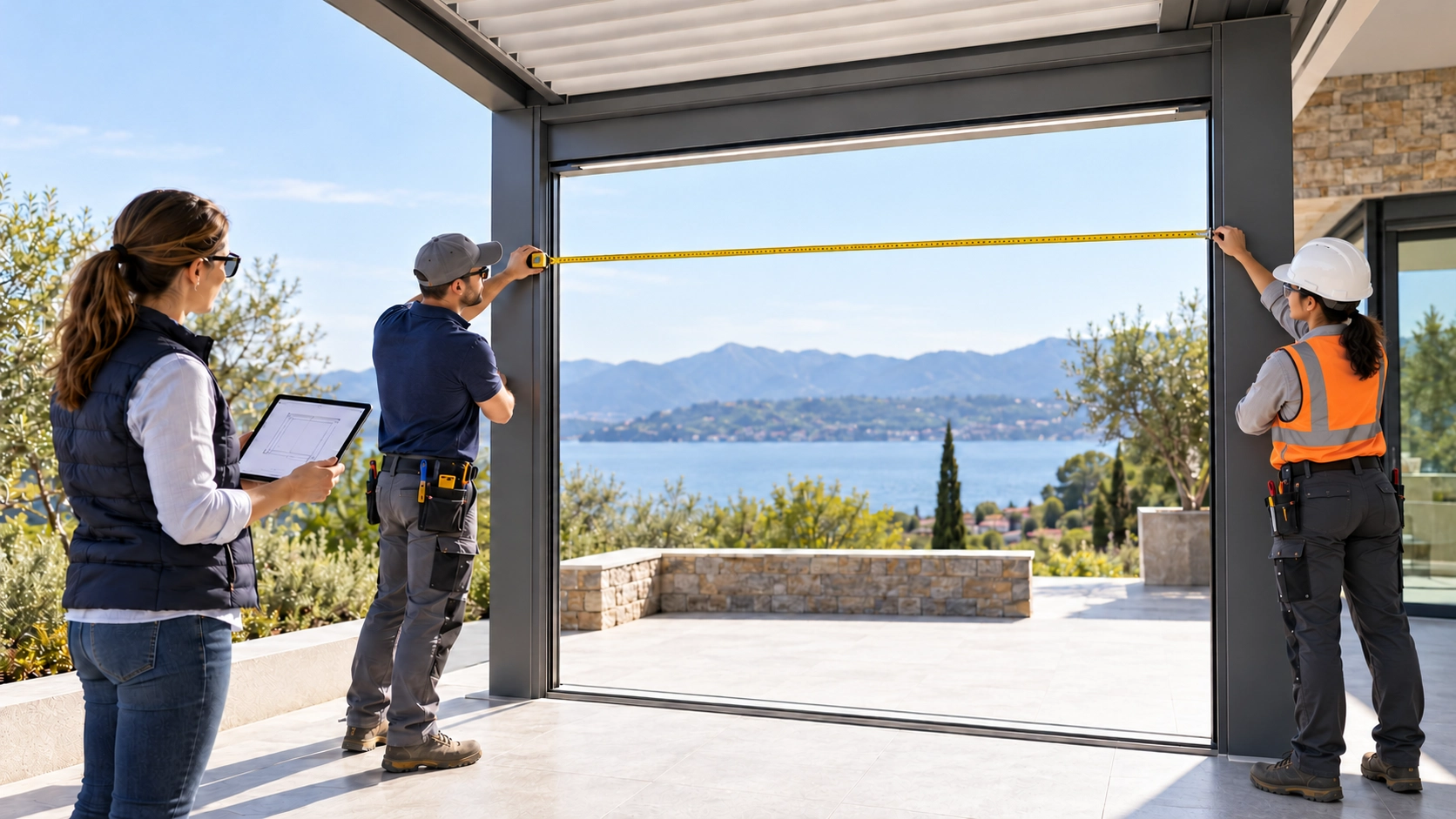
Imagine receiving a remarkably low quote for 20 motorized ZIP screens. After the shipment crosses an ocean, a long side rail arrives bent, one finished screen is 5 mm wider than its available installation space, and the motor cable exits on the wrong side. The 5 mm matters because the required clearance was not confirmed, not because every screen has the same tolerance. This is a hypothetical order, but each mistake points to a purchasing control: packing design, approved dimensions, and an opening-specific BOM.
Consider that 20-screen pergola order. Opening P07 measures 5.2 m wide by 3.6 m high; its motor must be on the left because of the planned power route. Follow P07 through three decisions: compare the quote before paying, approve the drawing before production, and check the labeled goods and packing before shipment.
1. Give Every Opening an ID and Request the Same Quote Scope
A total quantity and approximate size range are enough for an early budget discussion, but not for a production quote. Send an opening schedule that each supplier must answer against:
| RFQ field | What the buyer should provide |
|---|---|
| Opening ID and quantity | P07, one unit; group only genuinely identical openings |
| Width × height | 5,200 × 3,600 mm, marked as site opening, not finished size |
| Mounting conditions | Inside or outside mount; fixing material, cassette and rail space, bottom landing |
| Operation | Motorized or manual; for P07, left motor and planned power route |
| Exposure | Location, wind exposure, and any unusual environmental conditions |
| Supporting files | Site photos, elevation or survey, and delivery country |
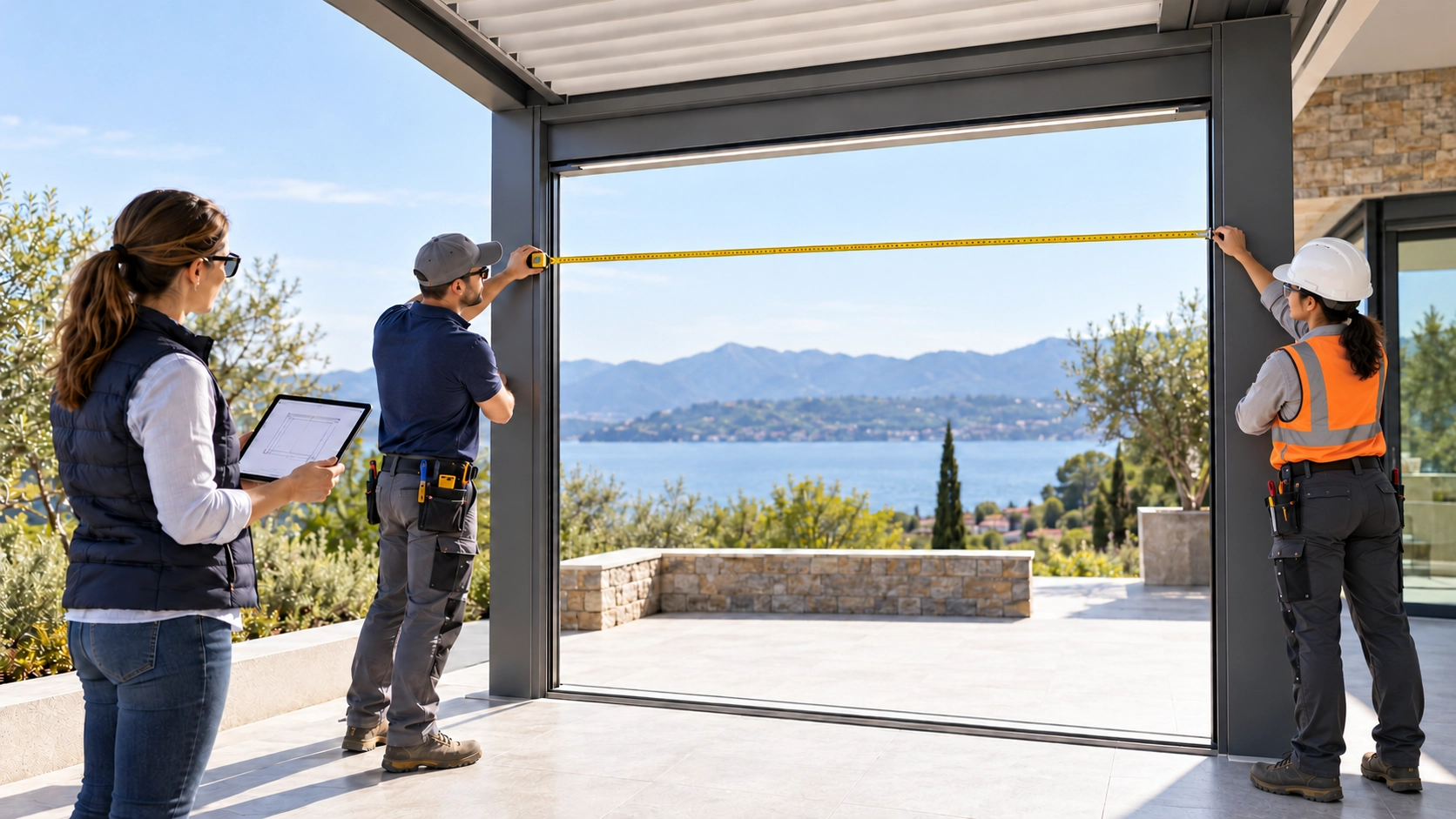
For an uneven opening, measure widths and heights at several points and record diagonals. Agree who verifies the survey and who converts it into production dimensions. Photos should show the top and side fixing surfaces, bottom landing, and electrical route.
Choose the supply path at the RFQ stage. The same inspection request does not suit both:
Finished screens
Factory: assemble, label and test each unit.
Buyer checks: finished dimensions, motor side, controls, operation and long-part protection.
Kits or components
Factory: cut or preassemble only as agreed.
Buyer checks: part codes and quantities by opening, interfaces, local work and assembly instructions.
State who supplies fasteners, performs wiring and commissioning, and owns any local fabrication. List OEM packaging or branding separately.
Mark unresolved items in a budget quote. A production-ready quote should identify its proposed systems, configuration, exclusions, quantities, and delivery scope. Two offers can then be compared item by item rather than by “price per set.”
2. Confirm the System for the Actual Width and Height
Maximum width and maximum height are not automatically achievable together. Width changes the tube span; height changes the deployed fabric area and the amount of fabric stored in the cassette. Motor, guides, fixings, and supporting structure must suit the combination.
At NewHoo, our published specifications are a starting point for checking both dimensions together. The WR110 pergola guide lists a motorized configuration over 4 m and up to 5.4 m wide with a 78 mm double-layer tube and a height of up to 2.8 m. P07 fits the published width but exceeds that height at 3.6 m. Its area is 18.72 m², compared with 14.56 m² at 5.2 × 2.8 m—about 29% more deployed area. That percentage is not a wind-load rating or a motor specification. It establishes that the published WR110 configuration does not qualify P07 on width alone. Request another system proposal instead of approving it by assumption. Our oversized-system guidance likewise warns against combining maximum dimensions without assessment.
For P07, the factory must state the proposed system and version; supported width, height, and area; cassette, tube, rails, bottom bar, fabric, and motor; fixing requirements; and whether one screen or divided units are proposed. Ask which test or engineering evidence applies. A wind claim is useful only with its tested specimen, fabric, mounting, and operating conditions.
The production-approval gate: manufacturing capability alone does not establish site fit. If measured geometry, cassette and rail clearance, fixing substrate, bottom-bar landing, motor-side power route, maintenance access, or the junction between adjacent screens remains unresolved, the supplier can quote an assumption-based budget. Neither party should approve P07 for manufacture until a drawing and the responsible site party resolve those interfaces. Where a multi-screen scheme needs intermediate posts, their location and supplier must also be identified.
If using a live video call, ask only: Is this the proposed system? How does its size and configuration differ from P07? What remains unproven? Record the answers. The call is supporting evidence, not a factory audit or proof of full-size performance.
3. Put the BOM and Approved Drawings in the Purchase Agreement
“Motorized ZIP screen, 20 sets” leaves too much open to substitution or misunderstanding. The proforma invoice (PI) or purchase agreement should reference an Opening Schedule, bill of materials (BOM), and Production Drawings, each with a revision number. The order trail should work in both directions: from P07's approved specification to the delivered package, and from a disputed part back to the agreed order.
If a profile thickness matters, specify the profile and measurement location, nominal value, tolerance, and inspection method. A blanket “2.0 mm aluminum” description is ambiguous; thickness alone does not establish the installed screen's strength.
The drawing for P07 must distinguish measured site opening, finished overall screen, and fabric dimensions. It should locate the cassette, side rails, motor side, cable exit, mounting points, and required clearances against the surveyed structure. The chosen system's rules determine dimensional allowances; there is no universal ZIP screen deduction.
Approve P07 Drawing Rev C against BOM Rev B and record the approval date. The drawing shows the left motor, cable exit, and bottom landing. If the post needs a subframe or adjustable rail, identify the solution and responsible supplier there. Do not leave the installer to resolve an unrecorded fit problem.
Require a written request before substituting fabric, motor, key profiles, or controls. It should identify the old and new items and any effect on performance evidence, price, or lead time. A dimensional change after approval also needs a new drawing and confirmation of whether materials have already been ordered or cut.
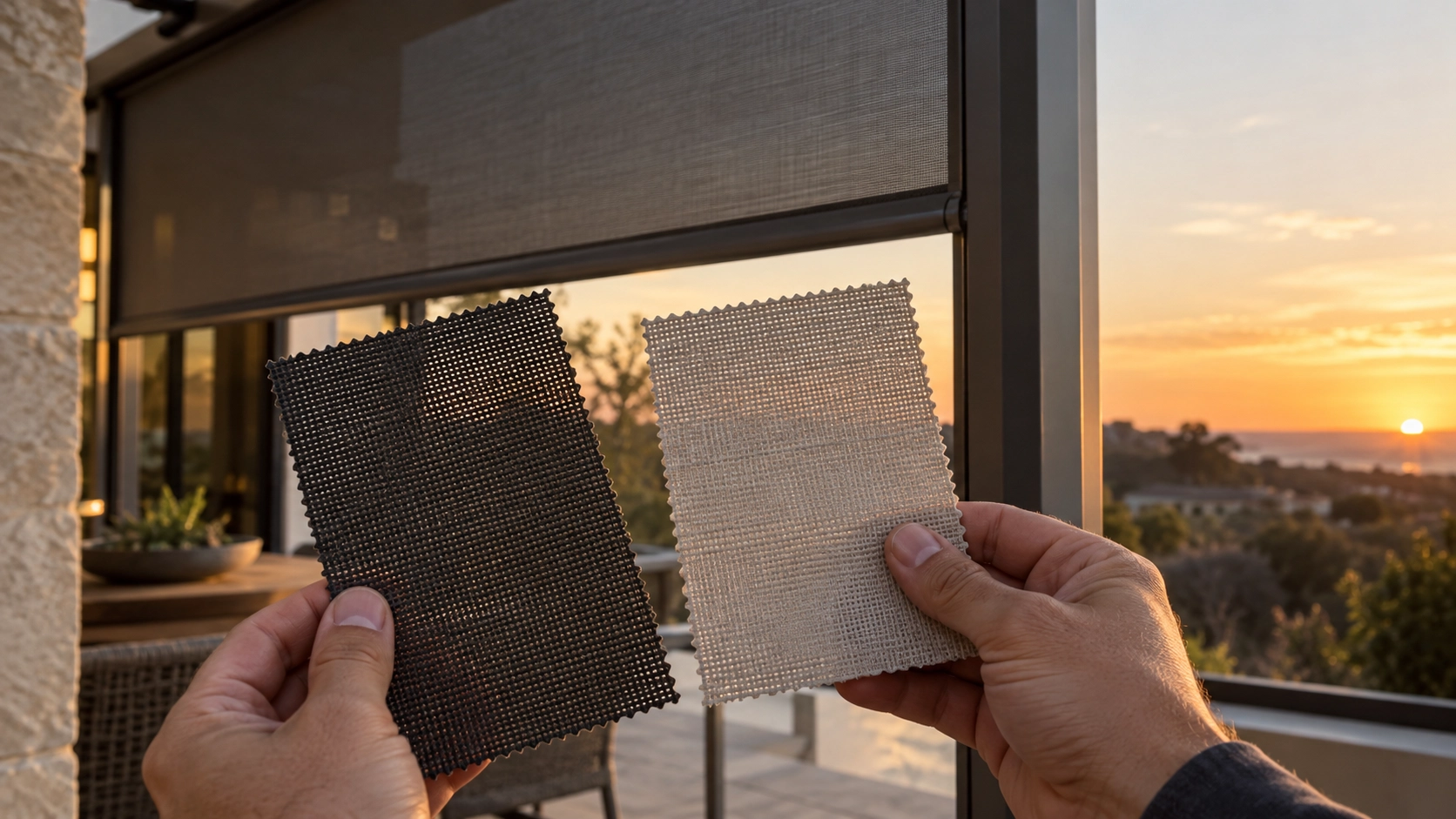
Record a sample's approved characteristic and unverified scope, not merely “sample approved”:
| Sample | What remains unverified for P07 |
|---|---|
| Fabric swatch | Full-size winding and appearance across the opening |
| Profile piece | Complete rail alignment and site fixing |
| Working unit | Operation at P07's actual size and configuration |
Keep sample IDs and any differences from the bulk order. For component traceability, the order should connect approved part codes to this batch's labels, quantities, and inspection records. A supplier invoice can supplement that trail; it cannot by itself prove which part was installed in P07.
4. Compare Delivered Cost and Define Payment Milestones
For long rails and cassettes, the cheapest factory-gate quote can leave the buyer arranging collection, loading, export handling, and inland transport before the goods ever reach a vessel. Ask for a quote at a named handover point, with a separate packing line and the Incoterms® 2020 rule clearly stated. Compare the same delivered scope rather than treating unit price as project cost.
| Term | Question for the buyer |
|---|---|
| EXW, named place | Can you manage collection, loading arrangements, export formalities, and the first inland leg? |
| FCA, named place | Is handover at the factory or a specified terminal, and who arranges transport to that point? |
| FOB, named loading port | Does the seller actually deliver on board the nominated vessel? |
| DDP, named destination | Can the seller clear the goods for import and pay duties; who unloads? |
For a first international order of long profiles, do not accept EXW just because its unit price is lowest. Price the first inland leg and decide who can manage it. FCA at a named terminal can keep that leg in the seller's delivery scope; FCA at the factory does not. FOB requires actual on-board delivery by sea or inland waterway. ICC points to FCA for containers handed over at a terminal. A trade term allocates risk; it does not prevent a rail bending. ICC checklist; U.S. trade guide.
Compare product, controls, packing, origin and destination charges, transport, delivery, unloading, and insurance. Require photos of internal supports before closure and the sealed plywood crate or other approved package. Specify the packing design for the route; a crate alone does not guarantee protection. Incoterms do not set payment or quality acceptance terms.
One possible negotiation: pay a deposit after approving drawings and terms, then the balance after pre-shipment inspection passes and defects are closed, before dispatch. Agree on percentages, when lead time begins, and the effect of changes. Payment against an on-board bill of lading copy is a different, post-loading milestone requiring separate document-control and deadline terms. A video is inspection evidence, not payment security. U.S. payment guidance.
5. Inspect the Order and Its Packing Before Shipment
Agree inspection criteria before production. For finished screens, check opening ID, quantity, dimensions, approved components, finish, motor side, accessories, and operation. For kits or components, check part codes and counts by opening, interface dimensions, preassembly work, and the completeness of assembly instructions. Specify which units or parts are checked and what requires correction; a running-test video is not applicable to an unassembled kit.
For a finished P07, record a measurement against Drawing Rev C, the left motor position, and its model label against BOM Rev B. For a kit, account for rails, cassette parts, drive, controls, and interfaces. Resolve discrepancies through correction, recheck, and buyer release. Video does not replace performance testing or site acceptance.
“Export packing” is not a packing design for long rails and cassettes. Obtain the longest packed length, weight, support locations, separation between finished profiles, restraints against movement, and handling or stacking limits. Reinforced cartons, plywood crates, and EPE cushioning may each have a place; no packaging material alone guarantees protection. Distribution can expose packages to shock, vibration, compression, and handling hazards, as reflected in ISTA's test categories.
Check the approved packing photos, sealed-package labels, and opening-based packing list. Compare packed dimensions with unloading equipment, doors, lifts, stairs, and storage. For restricted access, ask whether a connectable arrangement exists for the selected system; NewHoo describes such components as one possible solution, not a feature of every model.
6. Make Claims and Replacement Costs Executable
On delivery, record package count, labels, and exterior condition before unpacking. If P07's side rail is missing, report P07 / package number / rail part code against the packing list and approved BOM. That trail identifies the item for replacement without treating an unrelated factory photo or purchase invoice as proof of this shipment. Preserve photos and damaged packing where relevant.
The agreement should separate manufacturing mismatch, transit damage, and installation error. For each, state the evidence required, the contact and notification process, how the cause will be assessed, and who pays for replacement parts, international freight, removal, reinstallation, and site labor. A warranty period alone does not settle those costs. Keep drawings, BOM versions, motor and fabric codes, and part numbers for repairs or repeat orders.
Send NewHoo Your Opening Schedule
Send your opening sizes, quantities, mounting photos or drawings, operation preference, and delivery country. NewHoo's project quotation process uses this information to assess the system direction and identify what is still needed for a final quote. For an opening outside a published configuration, request the proposed model, its applicable limits, and an opening-specific drawing before production approval.
Send project details →
ZIP Screens for Restaurant Patios: Keep More Tables Usable
Related Article