ZIP Screen Fabric Openness: 1% vs 3% vs 5% vs 10% — Which Should You Choose?
Choosing ZIP screen fabric looks easy when a sample book gives you four numbers: 1%, 3%, 5% and 10%.
Lower numbers mean a tighter weave. Higher numbers mean more open space. That makes it tempting to choose 1% for stronger screening, 5% for a clearer view, and assume the rest of the result will follow automatically.
That is where many fabric selections go wrong.
A 3% fabric can look suitable on a specification sheet and feel noticeably different once it is stretched across a west-facing patio. The openness percentage has not changed. What changed is the light hitting the yarn, the fabric color, the brightness of the background and the lighting relationship between the two sides of the screen.
The practical selection rule is simple: use openness to narrow the functional range first. Then compare colors and physical samples under the real installation conditions. If the result shifts too far toward glare, privacy or view, move one openness level and test again.
Start With the Problem, Not the Percentage
Before comparing colors, identify the problem the ZIP screen must solve. Openness is useful only when it is tied to a real requirement.
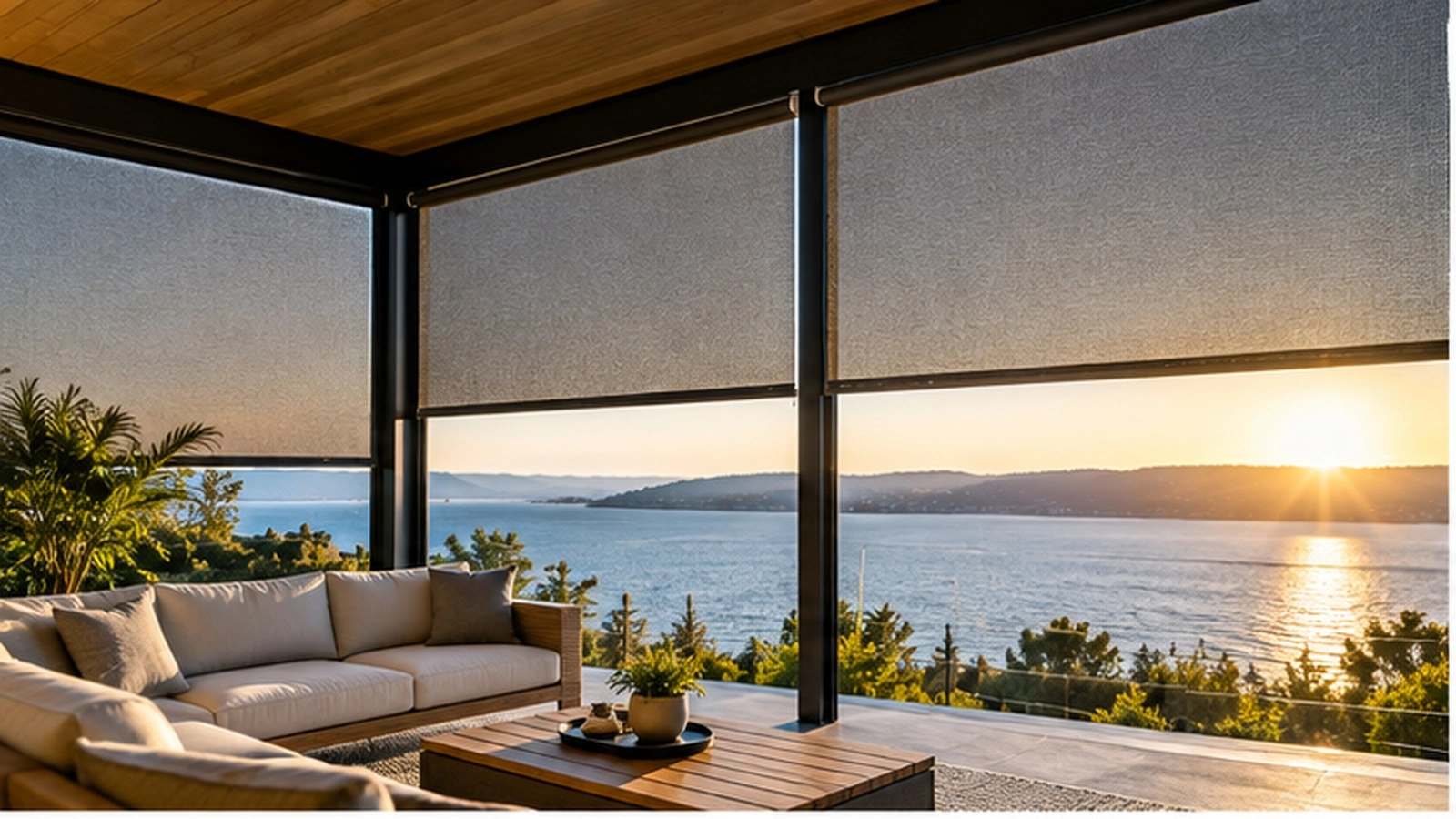
| Main Priority | Useful Starting Range | Main Benefit | Main Compromise |
|---|---|---|---|
| Severe glare and stronger daytime screening | 1–3% | More screening and glare control | Less daylight and outward view |
| Balanced shade, privacy and view | Around 3% | Balanced starting point | No extreme advantage in one direction |
| Garden, pool or landscape view | 3–5% | Better outward visibility | Less screening |
| Covered or heavily shaded opening | 5–10% | More openness and daylight | Lower privacy and glare control |
| Reliable nighttime privacy | OF alone is not enough | — | An opaque privacy layer is normally required |
These are selection starting points rather than guaranteed performance ratings. Actual performance depends on the specific textile, color and optical data. Manufacturer guidance also treats openness, visible-light transmission and view-through as related but separate considerations.[2][3]
The table is not meant to make the final choice. It is meant to eliminate percentages that solve the wrong problem.
If low-angle western sun is the reason the screen is being installed, the useful comparison is normally 1% versus 3%, not 1% versus 10%. If the opening faces a pool or landscaped garden and preserving the view matters, 3% versus 5% becomes more relevant. For a roof-covered pergola where most overhead sun is already controlled, 5% versus 10% may finally become a sensible comparison.
What Does Openness Factor Actually Measure?
Openness Factor, usually abbreviated as OF, describes the proportion of open area in the textile structure. EN 14501 defines the openness coefficient as the ratio between the area of the openings and the total area of the fabric.[1]
A 1% fabric therefore has less open area than a 3%, 5% or 10% fabric. But openness is a geometric property. It is not a complete brightness, glare or heat-performance rating.
A common mistake: assuming that a 3% fabric transmits exactly three times as much visible light as a 1% fabric. It does not work that way. Visible-light transmission is measured separately.
Openness Factor and Visible-Light Transmittance Are Different
Openness Factor (OF) describes the physical open area of the weave.
Visible-Light Transmittance (Tv) describes how much visible light passes through a fabric under defined test conditions. Mermet, for example, publishes OF, Tv, UV blockage and solar reflectance as separate specifications rather than treating openness as a substitute for the other values.[3]
This distinction explains why two products labeled “3% openness” do not automatically produce identical visual results.
Color Does Not Change the Openness Geometry
For otherwise identical fabrics that differ only in color, EN 14501 treats the openness coefficient as independent of color.[1]
Changing from grey to charcoal therefore does not turn a 3% weave into a different openness factor.
What can change are measurable optical properties such as visible transmittance, solar transmittance, reflectance and absorptance. Those changes can then affect the way the screen looks to a person sitting behind it.
Openness defines the structure. Optical properties and lighting determine how that structure is experienced.
Why Can Two Fabrics With the Same Openness Look Different?
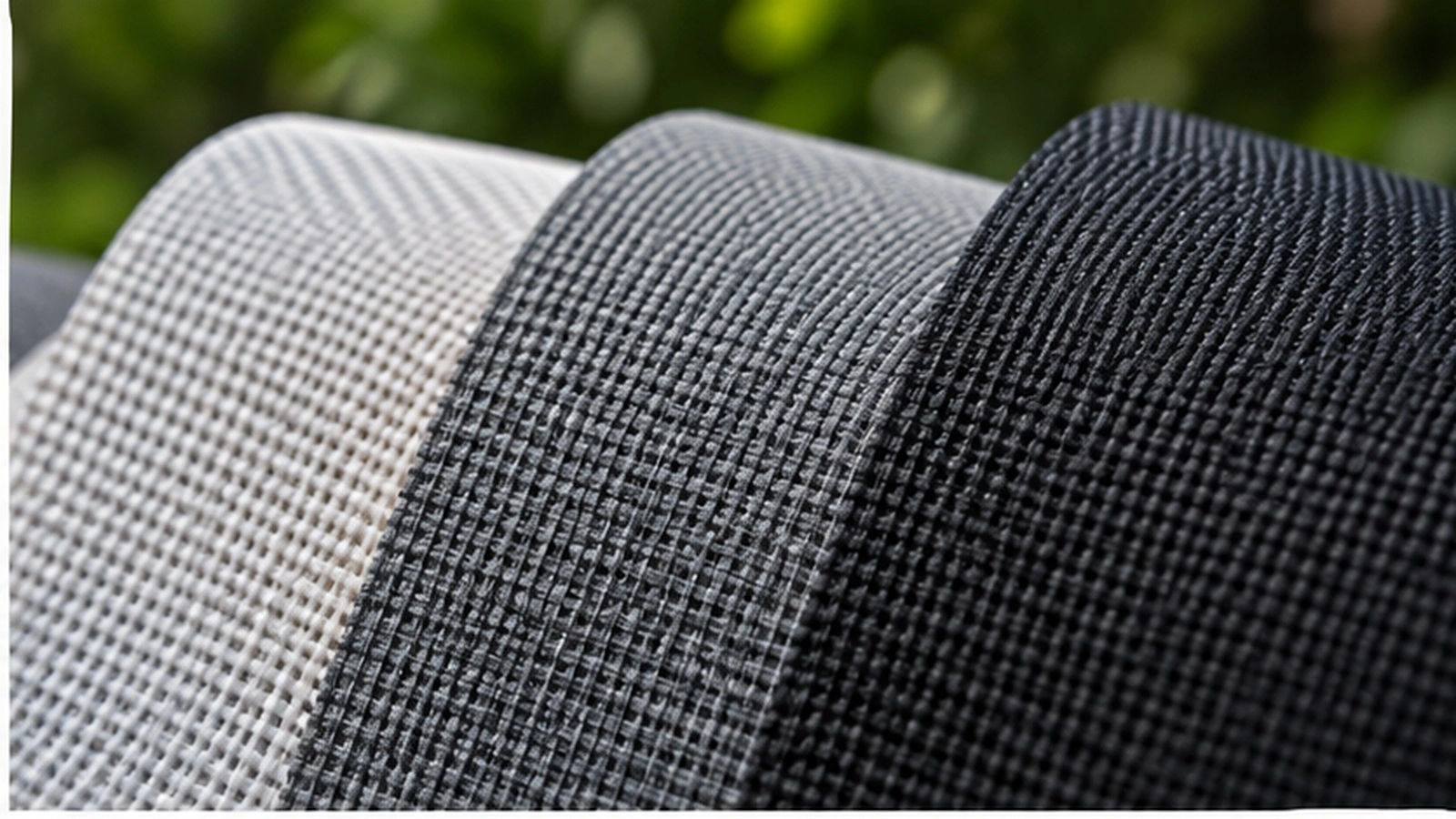
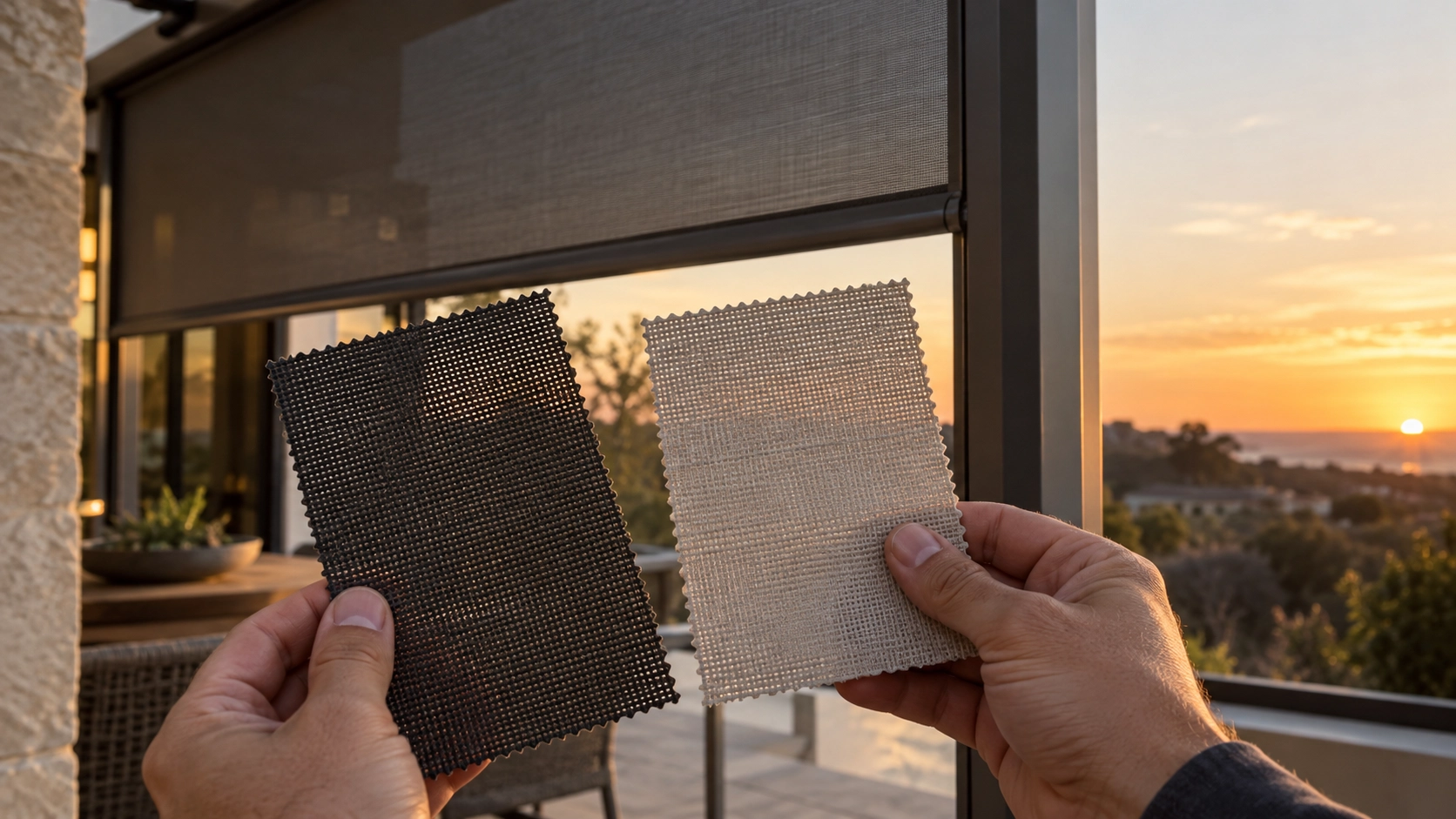
Take two 3% samples—one charcoal and one pale grey—and hold them in front of the same bright garden. The physical open area may be similar, yet the view can feel different.
Darker Fabrics Often Recede From the View
When you look through a darker mesh toward a bright outdoor scene, the dark yarn tends to compete less visually with the background. Your attention follows the garden, building edge, pool or skyline beyond the screen rather than the fabric surface itself.
This is consistent with solar-screen specification guidance that recommends dark colors and higher openness when a crisp outward view is a priority. The same guidance treats visible-light transmittance and visible reflection as important to view-through and glare control.[2]
Lighter Fabrics Can Make the Screen Surface More Noticeable
A light-colored yarn can reflect more visible light toward the viewer. Under strong daylight, that may make the mesh surface more noticeable and reduce perceived contrast with the scene beyond it.
That does not make a light fabric a poor choice. A lighter color may suit the architecture better and can have different solar-reflectance characteristics. The important point is that it creates a different visual result even when the nominal openness remains the same.
Can a Dark 5% Fabric Look Clearer Than a Light 3% Fabric?
It can under some viewing conditions.
The 5% fabric still has more physical opening. Color has not “cancelled” openness. Instead, the openness and the optical behavior of the yarn are influencing the view at the same time.
That is why the percentage should set the initial range, while color and real-world testing determine whether that range is still correct.
The Selection Loop: Choose the Range, Test the Color, Then Recheck
Suppose a patio has moderate afternoon sun and the first reasonable choice is 3%.
Do not immediately order a charcoal 3% fabric because “dark is better.” Compare several 3% samples first.
A charcoal 3% sample may already provide enough outward clarity that moving to 5% becomes unnecessary. Conversely, if every 3% sample still feels too visually closed, then testing 5% is justified.
This is the point where fabric selection becomes a feedback loop rather than a one-way decision.
1% vs 3%: When Glare Is the Main Problem
The 1% versus 3% decision normally appears when solar screening, glare reduction or stronger daytime privacy is already a priority.
Move toward 1% when low-angle sunlight is the main reason for installing the screen, when the user accepts a visibly denser fabric, and when stronger screening matters more than preserving the clearest possible view.
Move toward 3% when glare still matters but daylight and the visual connection with the exterior remain important.
For a west-facing patio, one useful test is to compare a dark 3% sample before automatically moving to 1%. If the 3% sample already reduces glare to an acceptable level, choosing 1% may add screening that the project no longer needs while sacrificing more daylight and view.
3% vs 5%: Where the Real Compromise Usually Happens
For many balconies, patios and outdoor living spaces, 3% versus 5% is the more difficult choice because both can preserve some visual connection with the exterior.
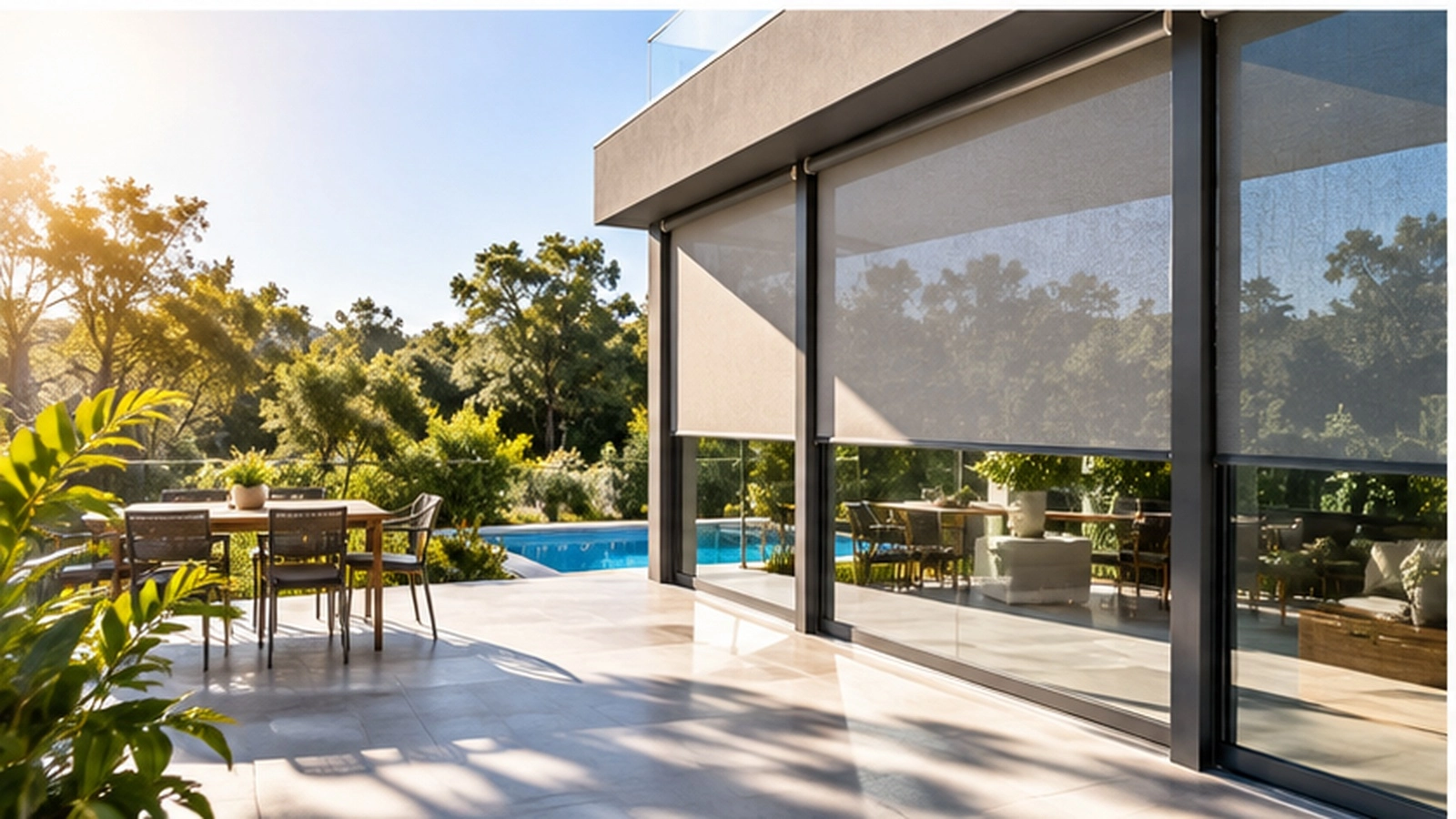
Move toward 3% when glare remains important, daytime privacy matters at shorter viewing distances, or the opening still receives meaningful direct sunlight.
Move toward 5% when the garden, pool or landscape is part of the value of the space and outward visibility has higher priority.
If the patio faces a pool or garden, do not ask only, “Is 5% clearer?” Ask, “Is the additional view worth the screening I give up?”
Before moving from 3% to 5%, compare a dark 3% fabric in the real opening. The color change may provide enough perceived view-through to keep the tighter openness. If it does not, then 5% becomes the more defensible choice.
5% vs 10%: When Does More Openness Actually Help?
A 10% fabric should not be treated as simply a clearer or more premium version of 5%. It is appropriate when the project priorities have shifted.
Move toward 5% when some direct side sun still enters the space, moderate daytime privacy is useful, or the side screen still needs to provide meaningful screening.
Move toward 10% when a roof or building structure already provides most of the shade, privacy is secondary, and maintaining an open visual connection is more important than tightening the enclosure.
This is particularly relevant around covered pergolas. One elevation may receive strong low-angle western sun and justify a tighter fabric, while another shaded garden-facing side can use a more open weave.
If you cannot clearly explain what moving from 5% to 10% is supposed to improve, stay with 5% until a physical sample proves otherwise.
Privacy Changes as the Light Changes
Privacy is not a permanent property created by the openness percentage alone. The same fabric can behave very differently at midday, dusk and night because the brightness relationship between the two sides is changing.
Bright Daylight
When the exterior is much brighter than the space behind the screen, interior details are generally harder to resolve from outside. Lower openness normally increases the screening effect, but the result still depends on distance, color and interior brightness.
Dusk
As outdoor light falls, the brightness difference becomes smaller. Shapes that were difficult to see during bright daylight may become easier to identify. A deeply shaded patio can reach this condition before sunset.
Night With the Lights On
After dark, the relationship can reverse. A brightly illuminated interior behind an open-weave solar screen can reveal silhouettes and movement to an outside observer.
If reliable nighttime privacy is a hard requirement, continuing to reduce the openness factor is not the same as adding an opaque privacy layer. In that situation, consider a second privacy or blackout layer. NewHoo's Dual-Layer Guided Roller Blinds are designed around two independently usable fabric functions, including combinations such as daylight + blackout or solar control + privacy.
What Happens When Wind and Rain Arrive?
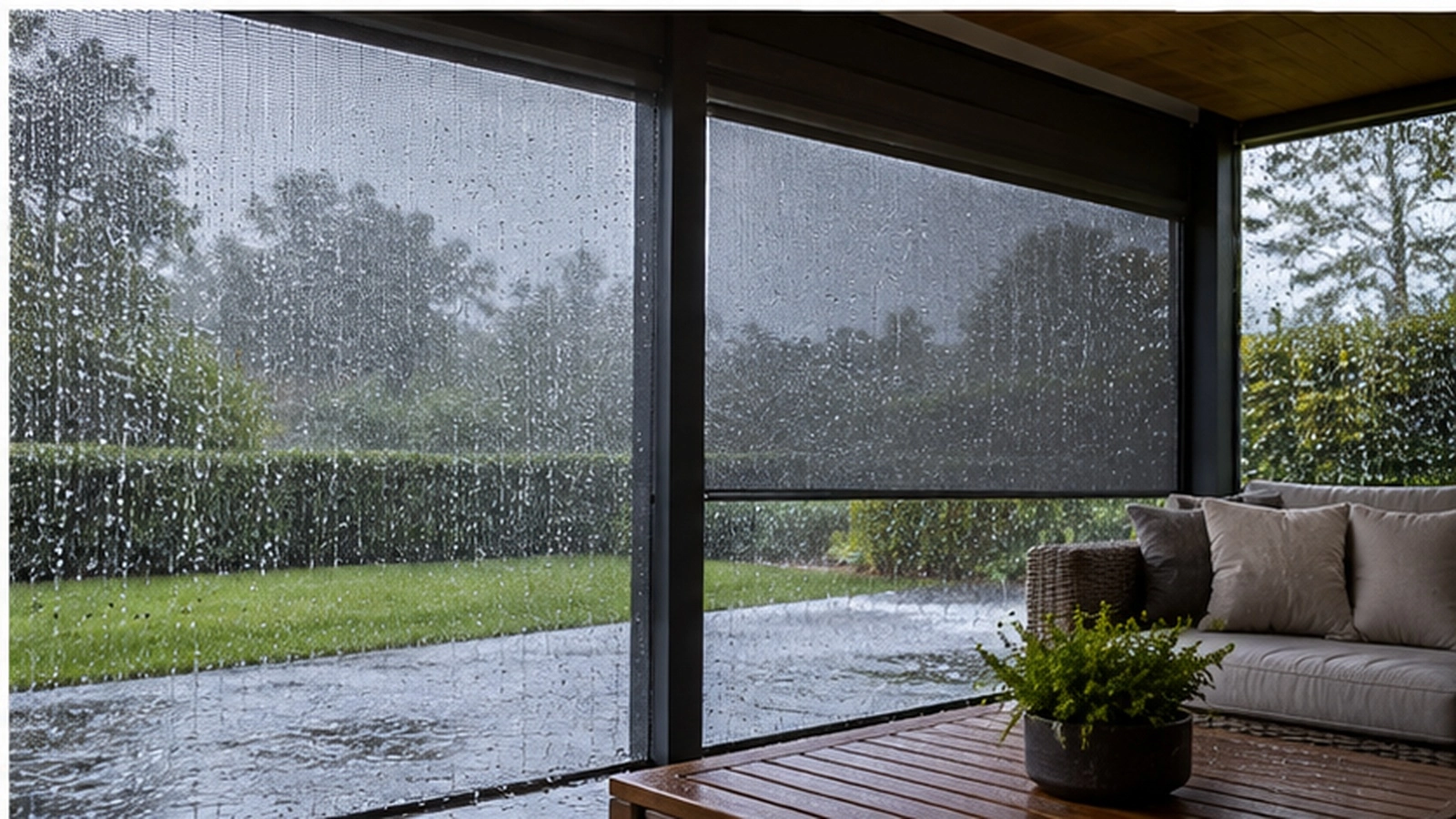
Openness affects how porous a mesh fabric is, but this is where the percentage must not be asked to solve a completely different engineering problem.
A Tighter Mesh Is Still Not a Waterproof Wall
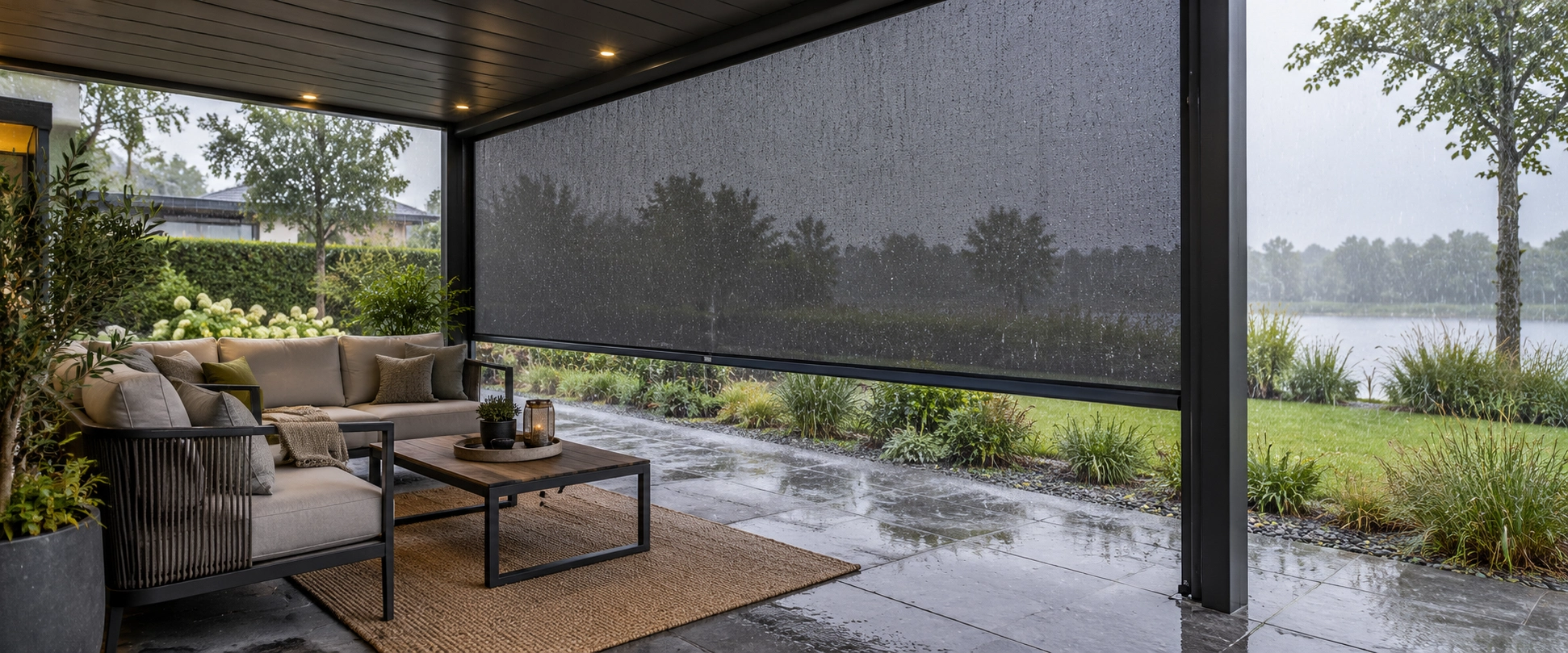
A lower-openness fabric has less open area and may reduce light spray or wind-driven droplets compared with a more open mesh. It should still not be treated as a watertight enclosure unless the specific fabric and complete system have been tested and rated for that purpose.
Commercial screen-shade guidance makes the same distinction: exterior screen shades can reduce rain exposure, but standard screen products do not necessarily block moisture completely.[4]
Rain penetration also depends on the fabric construction, coating, tension, rain angle, wind pressure and gaps in the complete assembly. Driving rain is therefore a different condition from calm vertical rainfall.
Project rule: if keeping furniture dry during storms is a hard requirement, ask for tested rain-performance data for the specific fabric and system. Do not assume that choosing 1% automatically creates a waterproof enclosure.
Wind Resistance Is a Complete-System Question
A 1% fabric does not automatically create a more wind-resistant ZIP screen than a 5% fabric. Structural wind performance depends on fabric retention, side guides, bottom rail, dimensions, fixing points and the supporting structure.
If wind exposure is the main design problem, move from fabric selection to the complete Outdoor ZIP Screen system specification rather than trying to solve the problem with openness alone.
Fabric Spec Sheet Cheat Sheet
Once the fabric shortlist is small, stop relying on phrases such as “high heat blocking” or “excellent privacy.” Ask for the actual technical sheet.
| What You Want to Know | What to Look For | What It Tells You |
|---|---|---|
| How open is the weave? | Openness Factor / OF | Physical open area of the textile |
| How much visible light passes through? | Visible-Light Transmittance / Tv | Visible-light transmission |
| How much solar radiation passes through the fabric? | Solar Transmittance | Solar energy transmitted through the material |
| How much solar radiation is reflected? | Solar Reflectance | Solar energy reflected by the material |
| How much solar radiation is absorbed? | Solar Absorptance | Solar energy absorbed by the material |
| How does glazing + shading affect total solar gain? | gtot | Combined glazing and solar-protection performance |
| How much UV is blocked? | Tested UV blockage / transmission | UV performance; do not infer it only from OF |
| How well does the fabric control glare? | Relevant glare classification and visible-light data | More useful than judging glare from OF alone |
One detail matters especially for B2B buyers: gtot is not simply a property of a piece of fabric. EN 14501 defines it as the solar factor of the combination of glazing and a solar-protection device; the glazing and test method therefore matter when the value is reported.[1]
If a ZIP screen is installed in front of glazing, gtot can be useful when the test conditions and glazing configuration are known. If the screen is closing the open side of a pergola, treating a glazing-based gtot number as an intrinsic property of the mesh would be misleading.
Test the Fabric Where It Will Actually Be Used
A PDF swatch can help shortlist colors. It cannot reproduce transmitted daylight, surface reflection or the real background behind the screen.
Test 1 — Use the Sun That Is Actually Causing the Problem
If west sun is the problem, test the fabric when west sun is actually hitting the opening. Do not approve it after looking at the sample only in morning light.
Stand at the normal seating or viewing position and compare glare, outdoor detail, brightness and how noticeable the mesh itself becomes.
Test 2 — Repeat the Privacy Test at Three Lighting Stages
Use three real conditions rather than one artificial test.
Have another person stand at the real viewing distance—the neighboring window, walkway, street or garden boundary. The clock time is only an example; the changing inside/outside light ratio is what matters.
Test 3 — Keep the Openness Constant and Change the Color
Compare, for example, a light grey 3%, medium grey 3% and charcoal 3% sample in the same opening.
If the preferred 3% color already gives enough outward clarity, stop. If every 3% option still feels too visually closed, move to 5% and repeat the test.
This prevents the common mistake of changing two variables—openness and color—at the same time and then not knowing which change actually improved the result.
Frequently Asked Questions
Can two 3% ZIP screen fabrics look different?
Yes. The nominal openness can be similar while yarn construction, color, visible-light transmission and reflection differ. OF describes only one part of the fabric's behavior.[2][3]
Is openness factor the same as visible-light transmittance?
No. Openness describes the physical open area of the weave, while Tv describes measured visible-light transmission. Manufacturers publish these as separate specifications.[3]
Does changing fabric color change the openness factor?
Not when the underlying textile construction remains the same. EN 14501 treats the openness coefficient of otherwise identical fabrics as independent of color.[1]
Does lower openness automatically mean better UV protection?
Do not infer UV performance from openness alone. Use the manufacturer's tested UV blockage or transmission data. Current solar-screen product specifications list UV performance separately from OF.[3]
Can rain pass through a 1% ZIP screen?
Yes, depending on the specific textile and weather conditions. Lower openness does not turn an open-weave mesh into a guaranteed watertight barrier. Screen-shade manufacturers distinguish rain reduction from full waterproofing.[4]
Does 1% openness make the ZIP screen more wind-resistant?
Not automatically. Wind resistance is a property of the complete system, including side retention, tracks, bottom rail, dimensions, fixings and supporting structure.
Can different sides of the same pergola use different openness factors?
Yes. A west-facing side may need stronger screening while a shaded garden-facing side can prioritize outward visibility. Using one openness specification on every elevation is not always the best project decision.
Should I select the final fabric from an online color chart?
Use digital swatches to create a shortlist, then verify the final choice with physical samples under the real lighting conditions whenever possible.
Final Decision: Choose the Trade-Off, Then Verify It
There is no universal “best” ZIP screen openness.
If severe glare and daytime screening dominate, compare 1% and 3%. If the project needs a balanced result, start around 3%. If the view is becoming more important, compare 3% and 5%. If the opening is already heavily shaded and privacy is secondary, 5% versus 10% becomes more relevant.
Then stop looking at the percentage for a moment.
Compare colors. Test the samples in the real sun. Look through them from the position where the user will actually sit. Check privacy as daylight changes.
Only move one openness level higher or lower when the physical sample proves that the current range cannot produce the required balance.
And when the problem turns out to be nighttime blackout, storm-level rain protection or structural wind resistance, stop changing the openness factor. You are no longer solving an openness problem—you are solving a system-design problem.
Share your opening dimensions, orientation, sun exposure, privacy requirement and view priority with NewHoo. We can help narrow the suitable fabric openness, color and ZIP screen configuration for your project.
How to Choose ZIP Screens for High-Rise Balconies
ZIP Screen Troubleshooting: 7 Common Problems, Causes & Checks
Related Article