How to Choose Windproof Roller Blinds for Balconies and Patios
Balconies and patios are useful outdoor spaces. You can use them for relaxing, dining, working, or receiving guests. But these areas also face sunlight, wind, dust, rain, and changing weather.
This is why many homeowners, hotels, restaurants, cafés, villas, and commercial buildings choose windproof roller blinds. The right system can reduce glare, improve privacy, block strong sunlight, and make the outdoor space more comfortable.
However, windproof roller blinds are different from normal indoor blinds. Do not choose them only by color, appearance, or price. For balconies and patios, the system must be strong enough for outdoor use. If the structure is weak, the fabric may shake, make noise, come out of the side rails, fade, or wear too quickly.
This guide explains how to choose windproof roller blinds for balconies and patios. It covers the main points buyers should check before ordering.
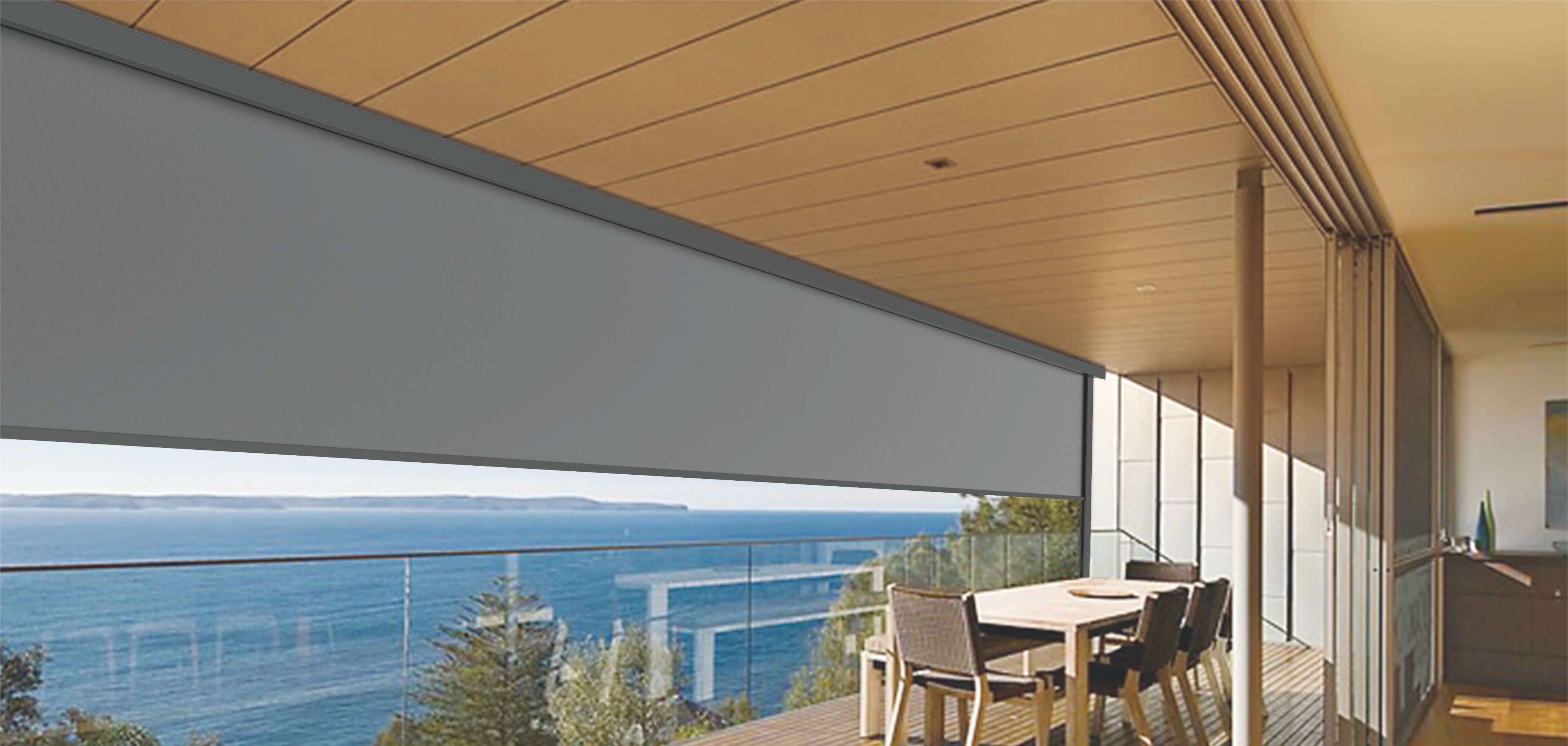
Why Balconies and Patios Need Windproof Roller Blinds
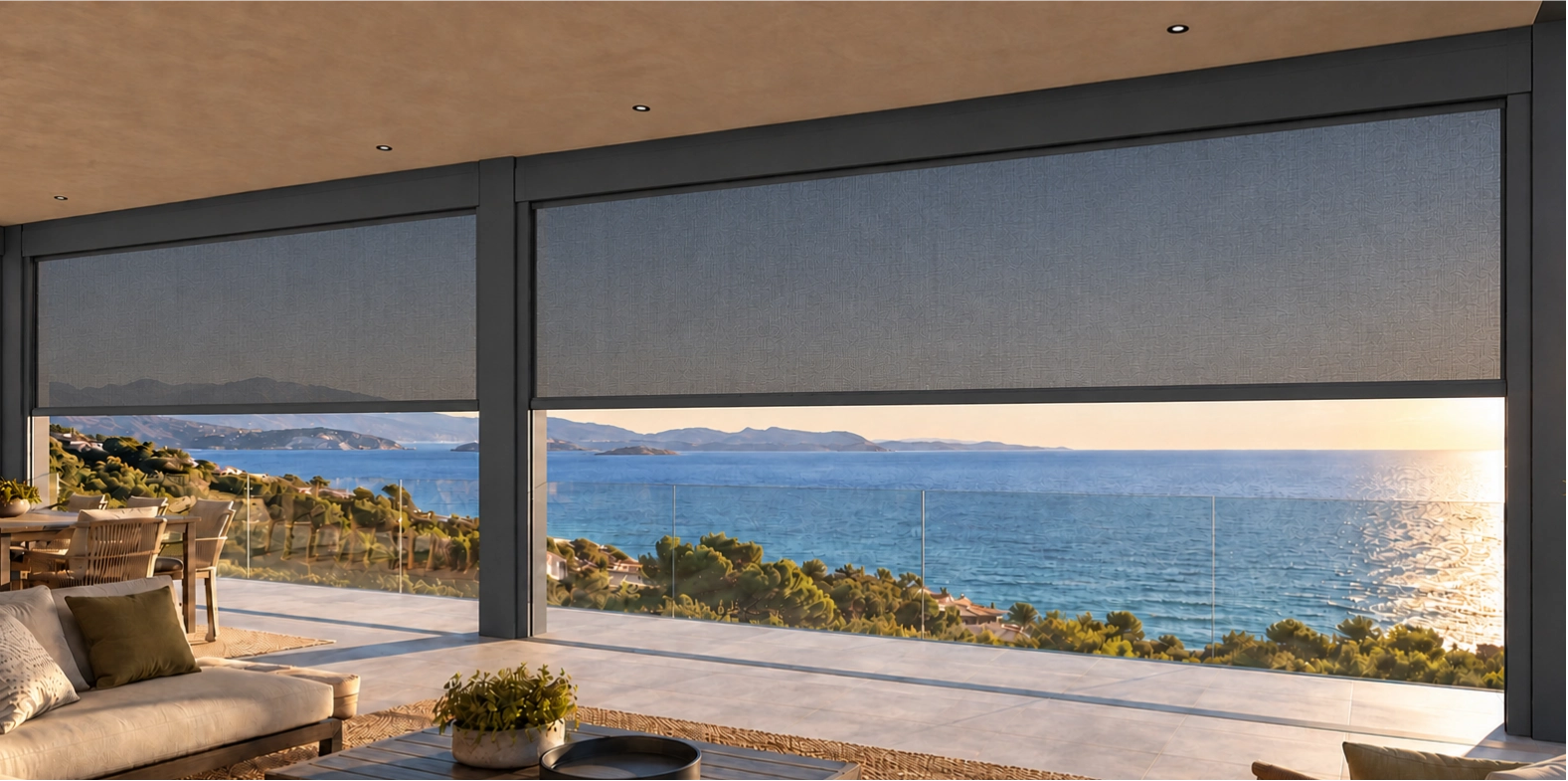
Balconies and patios are usually open or semi-open spaces. Wind can come from the front, side, or corner. Even if the wind is not very strong, loose fabric can still move, flap, and create noise.
Normal outdoor shades may provide sun protection, but they may not control the fabric well in windy conditions. For daily outdoor use, you need a more stable system.
Windproof roller blinds use side rails to guide the fabric. In a zip-guided system, zipper strips connect the fabric edges. These zipper edges move inside the side rails and help keep the fabric in place.
For balconies and patios, this design can help:
Reduce fabric shaking
Lower the risk of fabric derailment
Improve privacy
Reduce side gaps
Create a cleaner appearance
Improve daily comfort
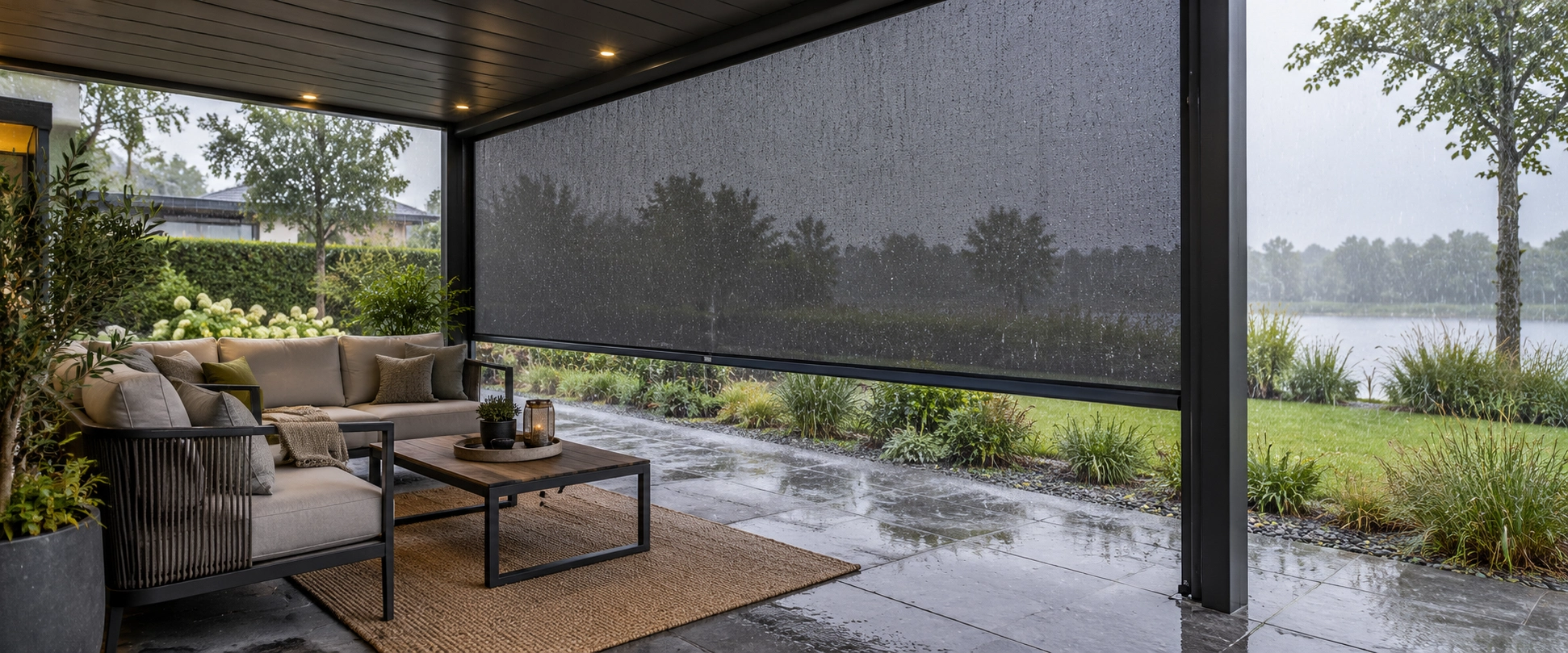
Help block sun, dust, and light rain
A strong windproof roller blind is not only about fabric. It is a complete system. The cassette, roller tube, fabric, zipper edges, side rails, bottom rail, motor, fixing points, and installation all affect performance.
1. Check the Outdoor Environment First
Before choosing a model, buyers should first check the real installation environment.
A small apartment balcony is different from a restaurant patio. A covered villa terrace is different from an open pergola. Even if the width and height are similar, the required system may not be the same.
Before ordering, confirm these details:
Is the space fully open or partly covered?
Does the area face strong side wind?
Is the project near the sea or in a humid area?
Is the blind installed under a roof, pergola, beam, or open wall?
What are the opening width and height?
Is there a strong wall, column, beam, or frame for fixing?
Is power available near the installation area?
Do you need remote control, wall switch, app control, or group control?
These details help the supplier choose the right cassette, side rails, fabric, motor, bottom rail, and installation method.
For example, a small covered patio may use a standard outdoor windproof roller blind. A restaurant terrace with several large openings may need motorized group control. A balcony without power may need a solar motorized system or a manual option.
2. Choose a Zip-Guided System for Better Stability
For balconies and patios, the side rail structure is very important.
A zip-guided outdoor blind uses zipper edges on both sides of the fabric. The zipper edges move inside the aluminum side rails. This helps keep the fabric stable and reduces movement in the wind.
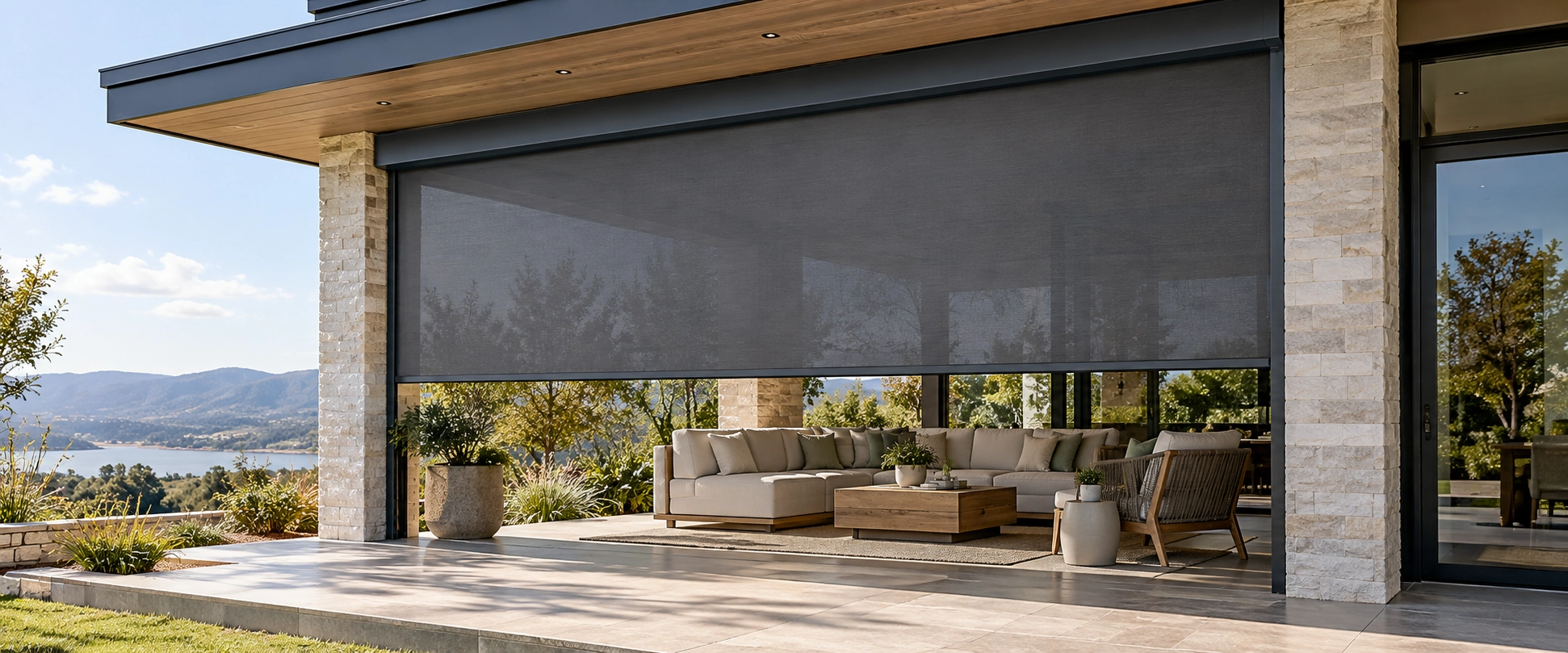
Compared with loose outdoor shades, zip-guided outdoor blinds provide better fabric control. They are especially useful for balconies, terraces, pergolas, restaurants, cafés, and outdoor seating areas.
When checking a zip-guided system, buyers should look at:
Side rail material
Side rail depth
Profile thickness
Zipper and fabric edge design
Cassette strength
Roller tube size
Bottom rail weight
Drainage design
Maintenance space
The side rails must be strong and properly aligned. If the side rails are weak or not straight, the fabric may not move smoothly. It may also create noise or wear faster.
3. Select Outdoor-Grade Fabric
Fabric affects sunlight control, privacy, heat reduction, visibility, and durability.
For balconies and patios, use outdoor-grade fabric. Indoor fabric is not suitable for long-term sun, rain, humidity, and wind exposure. It may fade, deform, or lose strength faster.
When choosing fabric, buyers should check:
UV resistance
Color fastness
Tear resistance
Tensile strength
Weather resistance
Fire-retardant performance
Cleaning convenience
Openness factor
The openness factor is important.
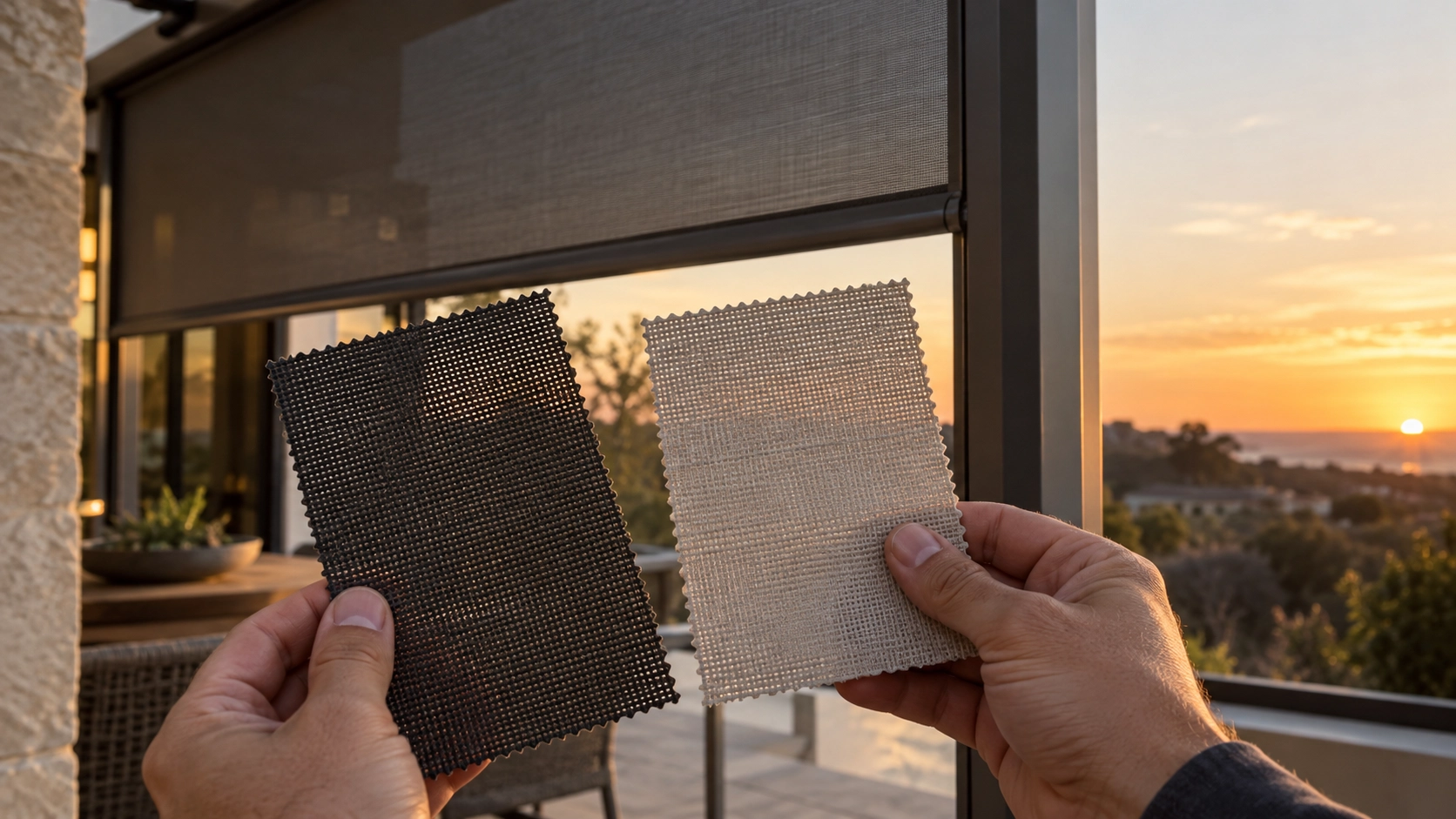
A lower openness factor, such as 1% to 3%, gives stronger shading and better privacy. It is suitable for west-facing balconies, apartments near other buildings, or spaces with strong afternoon sunlight.
A higher openness factor, such as 5% to 10%, allows better outside views and softer daylight. It is suitable for patios, cafés, restaurants, resorts, and outdoor seating areas where people still want to see the view.
For commercial projects, choose fabric that matches the design style. Consider how easy it is to clean. Make sure it meets local safety rules. Pick fabric that keeps its color over time.
4. Match the Blind Size With the Right Structure
Balcony and patio openings can be very different in size. Some are small residential openings. Others are wide restaurant terraces or pergola openings.
As the blind becomes wider or taller, the system needs stronger support. The roller tube must reduce bending. The motor must provide enough torque. The side rails must keep the fabric stable. The bottom rail must help the fabric move smoothly.
Before ordering, buyers should confirm:
Opening width and height
Finished blind size
Installation method
Fabric type and weight
Roller tube recommendation
Motor torque
Side rail type
Bottom rail configuration
Wind condition
Do not choose a system only because it fits the size on paper. For outdoor use, size and environment must be considered together.
A protected patio and an open balcony may need different systems, even when the width is the same.
5. Decide the Operation Method
Different projects need different operation methods.
Manual operation can work for small openings. It is simple and cost-effective.
Motorized windproof roller blinds are better for larger blinds, frequent use, villas, hotels, restaurants, and commercial spaces. They are easier to control and better for multiple units.
Common control options include:
Remote control
Wall switch
App control
Group control
Smart home integration
Wind sensor linkage
Sun sensor linkage
For restaurants, cafés, and hotels, group control can save time. Several outdoor roller shades can open or close together. This also keeps the building appearance neat.
Before production, buyers should confirm voltage, wiring method, motor side, control method, and smart system compatibility.
6. What If There Is No Power Supply?
Some balconies, patios, pergolas, and renovation projects do not have power points near the installation area. Wiring may be difficult or may damage finished walls and ceilings.
In this case, buyers can consider:
Solar motorized windproof roller blinds
Manual operation
Cordless spring-assisted lift system for compact blinds
Bead-chain operation for small openings
Solar motorized systems are useful for outdoor spaces where wiring is not convenient. Before choosing a solar system, buyers should confirm sunlight exposure, blind size, battery capacity, usage frequency, and control method.
Cordless spring-assisted lift systems and bead-chain systems are more suitable for small and compact applications.
7. Measure the Opening Correctly
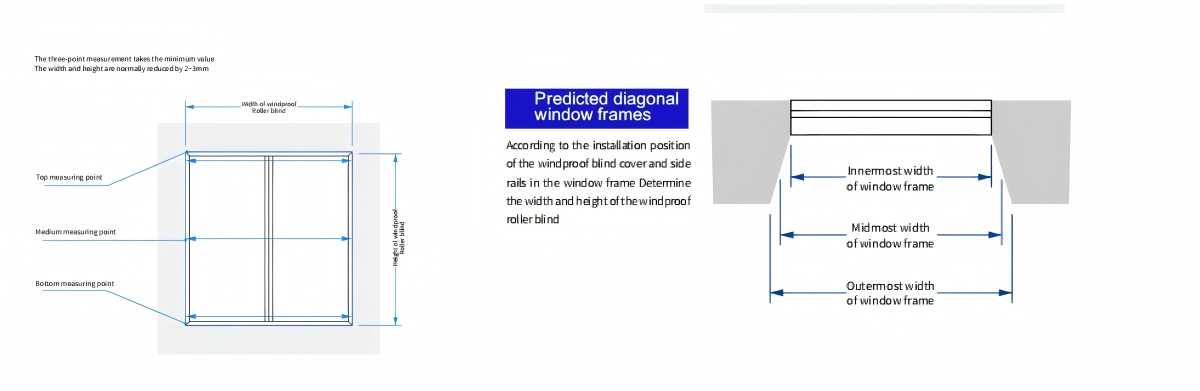
Accurate measurement is very important for customized windproof roller blinds. Do not measure only one width and one height.
Balconies, patios, pergolas, and renovated buildings may not be perfectly square. The top, middle, and bottom widths may be different. The left, center, and right heights may also be different.
Recommended measuring method:
Measure width at the top, middle, and bottom.
Measure height on the left, center, and right.
Check whether the wall or frame is level.
Confirm inside mount, outside mount, or wall mount.
Check space for the cassette and side rails.
Confirm the finished size with the supplier.
Good measurement helps reduce size errors. It also helps the side rails align better during installation.
8. Check the Installation Surface
Even a good windproof roller blind may not work well if the installation surface is weak or uneven.
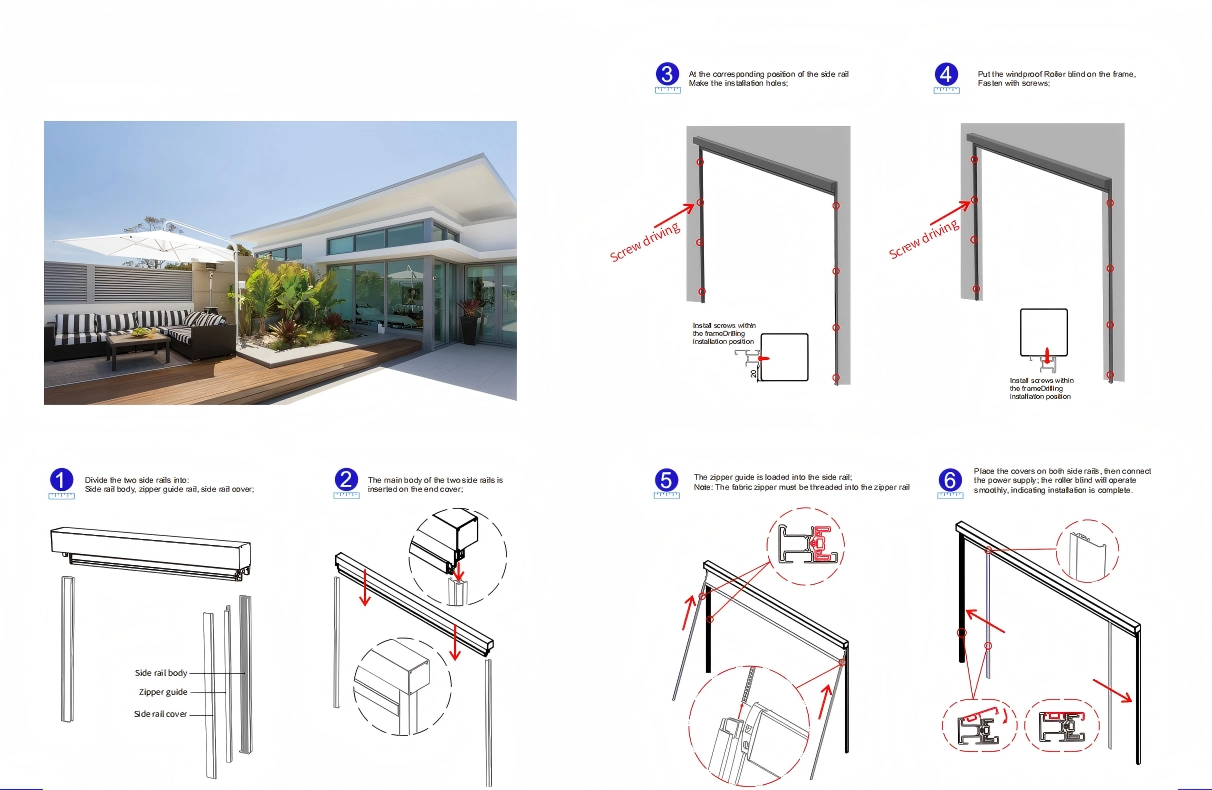
Balconies and patios may have concrete walls, aluminum frames, steel columns, pergola beams, or slightly uneven surfaces. The fixing points must be strong enough. The cassette must be level. The side rails must be straight.
Before installation, confirm:
Wall or frame strength
Cassette position
Side rail alignment
Motor direction
Power supply position
Drainage direction
Maintenance space
Fastener strength
Final operation testing
If the wall is slightly uneven, adjustable side rail solutions may help improve the fit and reduce visible gaps.
For project orders, site photos and installation drawings should be checked before production.
Common Mistakes to Avoid
Choosing Indoor Fabric for Outdoor Use
Indoor fabric is not made for long-term exposure to sun, rain, humidity, and wind. Outdoor fabric should be used for balcony and patio blinds.
Ignoring Side Wind
Side wind can cause fabric shaking and derailment. A zip-guided system with strong side rails is better for outdoor use.
Choosing Only by Price
A low-price system may use thinner profiles, weaker side rails, lower-quality fabric, or an underpowered motor. This can increase repair and maintenance costs later.
Not Checking the Installation Surface
A strong blind still needs a strong fixing surface. Weak walls or poor fixing points can reduce system performance.
Treating Windproof Blinds as Storm Protection
Windproof roller blinds are shading systems. They are not hurricane shutters, storm shutters, or security products. Use them within the recommended safety range.
How NewHoo Supports Balcony and Patio Projects
NewHoo provides outdoor windproof roller blind systems for balconies, patios, pergolas, restaurants, hotels, villas, and commercial outdoor spaces.
For balcony and patio projects, NewHoo focuses on complete system matching. This includes cassette structure, zip-guided side rails, outdoor fabric, motorized operation, smart control options, installation adaptability, and project customization.
NewHoo’s Smart Balancer technology helps the zipper enter the guide rail more vertically. This improves fabric stability and helps reduce zipper wear during operation.
For projects without a convenient power supply, NewHoo can provide solar motorized options. For projects with uneven walls or irregular surfaces, adjustable side rails can improve fit and reduce gaps.
With a 20,000 m² production base, annual windproof roller blind capacity of 100,000 sets, more than 20 years of team R&D and production experience, and 118+ patents, NewHoo can support standard supply, OEM/ODM cooperation, and customized project requirements.
Conclusion
Choosing windproof roller blinds for balconies and patios requires more than comparing appearance and price. Buyers should check the outdoor environment, wind conditions, fabric, side rail structure, operation method, measurement, and installation surface.
For most balcony and patio projects, zip-guided outdoor blinds are a practical choice. They help improve fabric stability, reduce derailment risk, and create a more comfortable shaded outdoor space.
A good selection starts with clear project information. It ends with a system that fits the real outdoor environment.
Need Help Choosing Windproof Roller Blinds for Your Balcony or Patio?
Send NewHoo your project size, site photos, wind condition, fabric requirement, operation method, and control preference.
Our team can help you match the right windproof roller blind system for your balcony, patio, pergola, restaurant terrace, or outdoor commercial space.
Indoor Guided Roller Blinds for Windows and Enclosed Balconies
Related Article