Office Roller Blinds with Side Tracks: How the WR85 Keeps Indoor Shades Neat and Stable
A compact 85 mm cassette, slim side tracks and flexible controls for refined office, hotel and commercial interiors.
Guided Shading Designed for Refined Interiors
Small indoor windows can be surprisingly difficult to shade well. A standard free-hanging roller shade may look simple at first, but fabric movement, uneven edges, light gaps and bulky hardware become more noticeable in a carefully finished office, hotel or commercial interior.
Office roller blinds with side tracks solve this problem by guiding the fabric throughout its travel. Instead of allowing the shade to hang freely, the side channels help control its position and maintain a cleaner relationship between the fabric and the window opening.
The NewHoo WR85 is an indoor guided roller blind developed for fixed buildings and refined interior projects. Its compact cassette, slim rails, multiple control options and concealed detailing make it suitable for small and standard-size indoor windows where appearance, stability and installation efficiency all matter.
What Is an Indoor Guided Roller Blind?
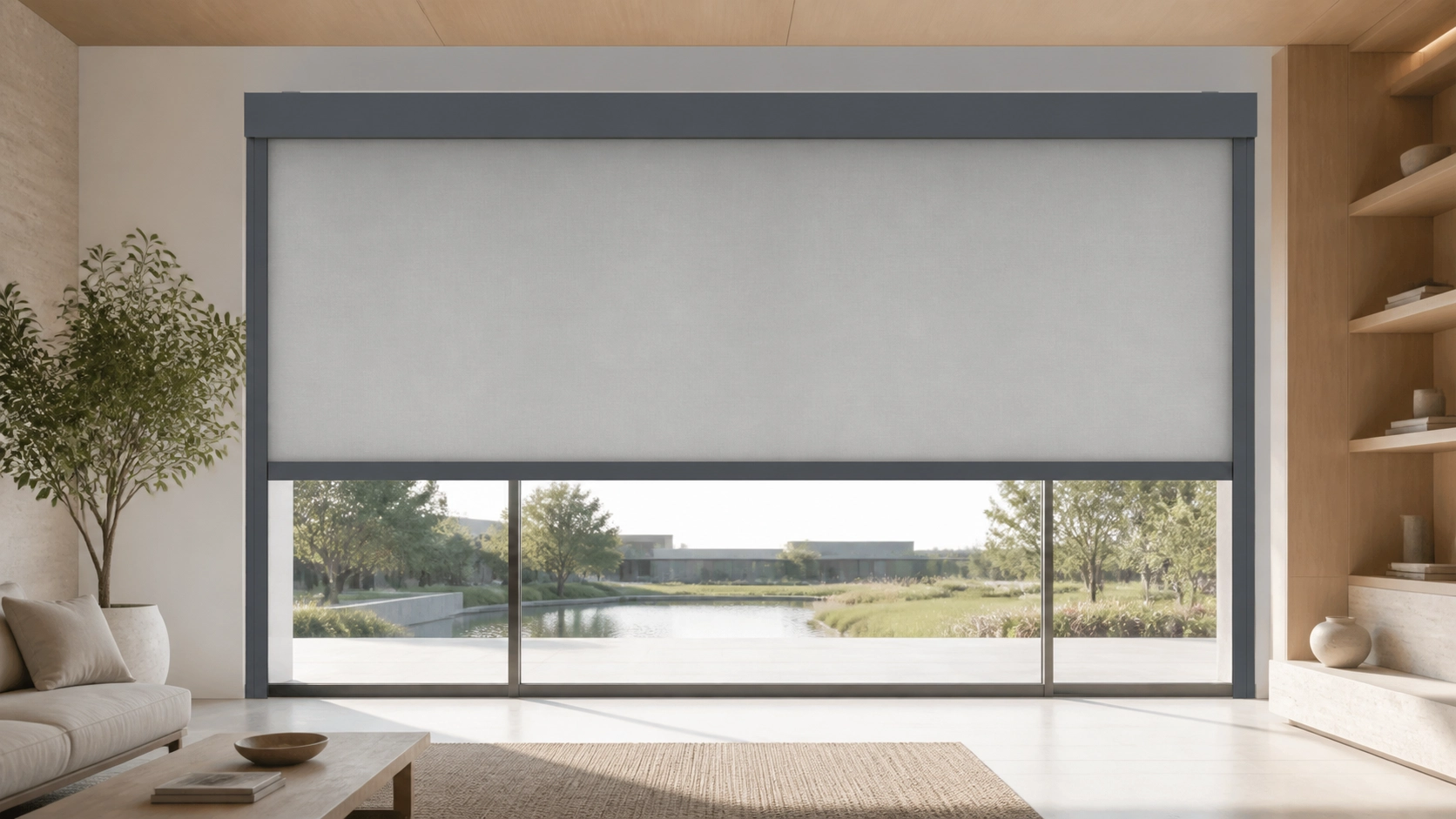
An indoor guided roller blind combines a roller tube and fabric with a headbox, side guidance and a bottom bar. The headbox protects the rolled fabric and operating components, while the side tracks guide the fabric as it moves up and down.
Compared with a free-hanging shade, a guided system can offer several practical advantages:
- More controlled fabric movement
- A neater, more consistent appearance
- Better alignment at the sides of the opening
- Reduced visible light gaps, depending on fabric and installation conditions
- Greater suitability for windows exposed to indoor airflow
- Cleaner integration with detailed commercial interiors
The WR85 applies these principles in a compact format intended specifically for indoor use.
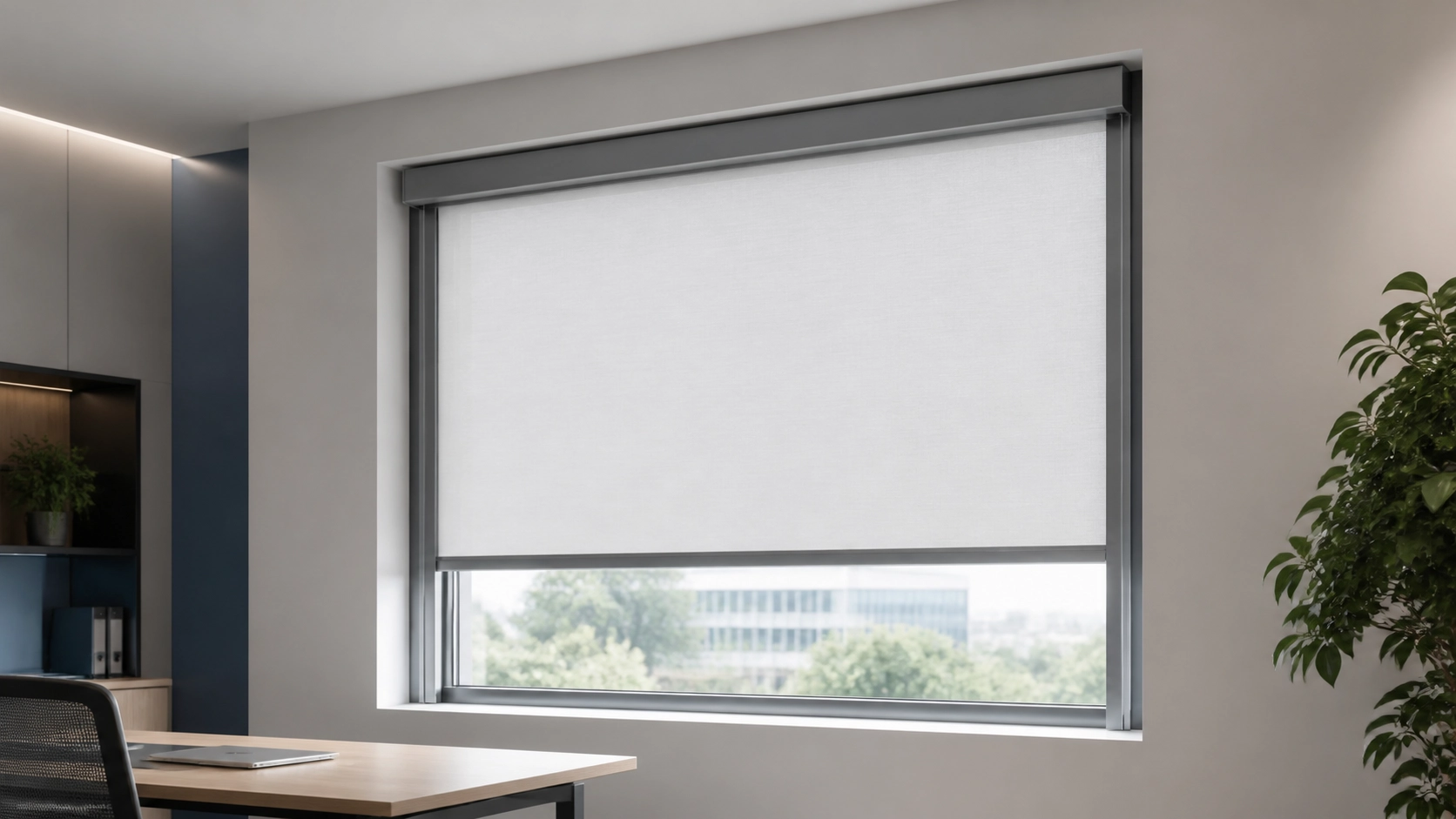
A Compact 85 mm Cassette for Finished Interiors
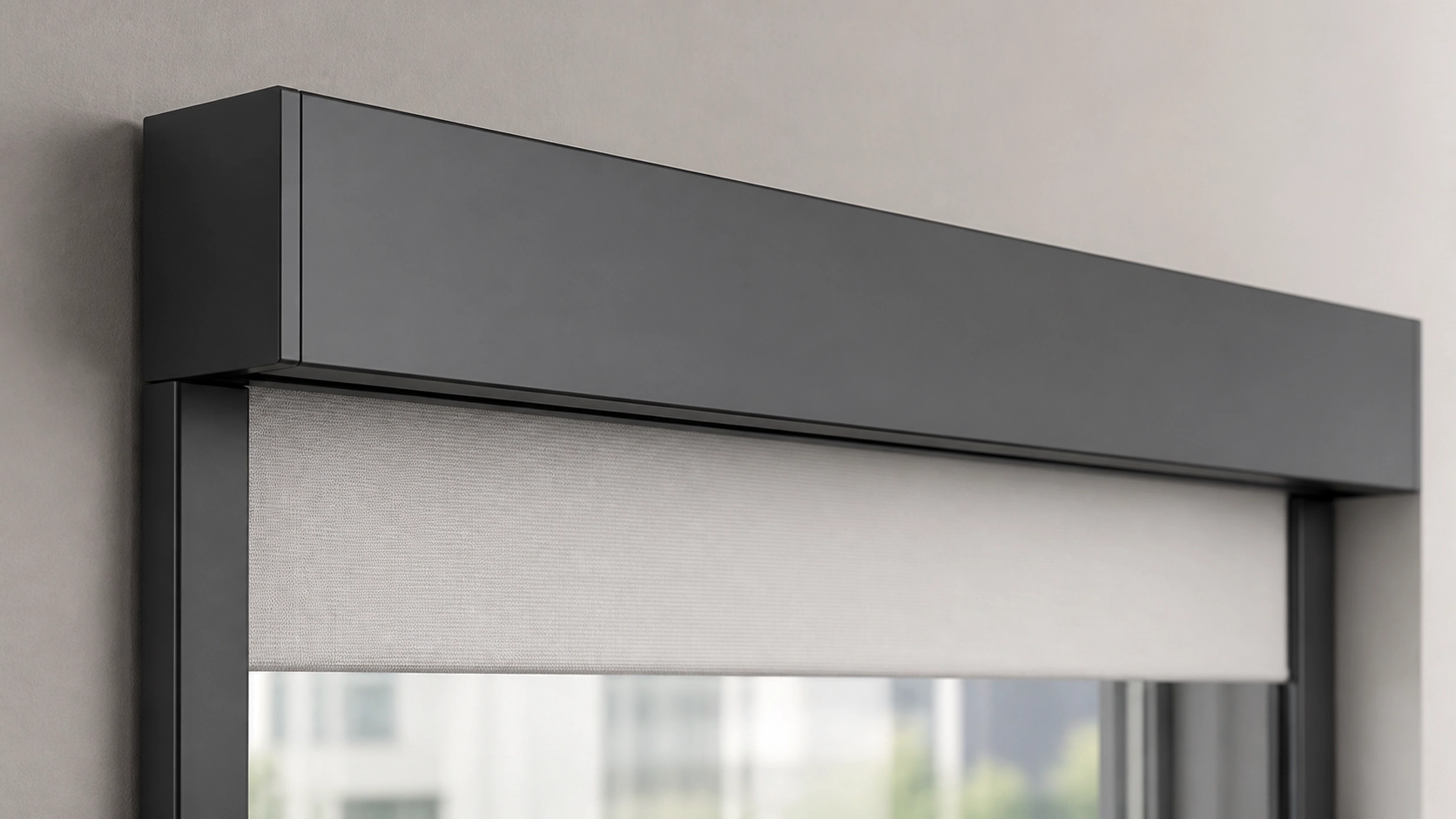
The WR85 uses an 85 x 85 mm cassette. This small, regular profile is easier to coordinate with office windows, hotel rooms, stairwell windows, interior partition glazing and other openings where a large headbox could appear visually heavy.
The square cassette also gives designers and installers predictable dimensions during planning. Once installed, the system sits close to the opening and creates a restrained architectural line rather than becoming the dominant feature of the window.
For projects where finish quality is important, the cassette uses an integrated front face without an obvious joint across the visible surface. This helps the headbox look flatter and more consistent after installation.
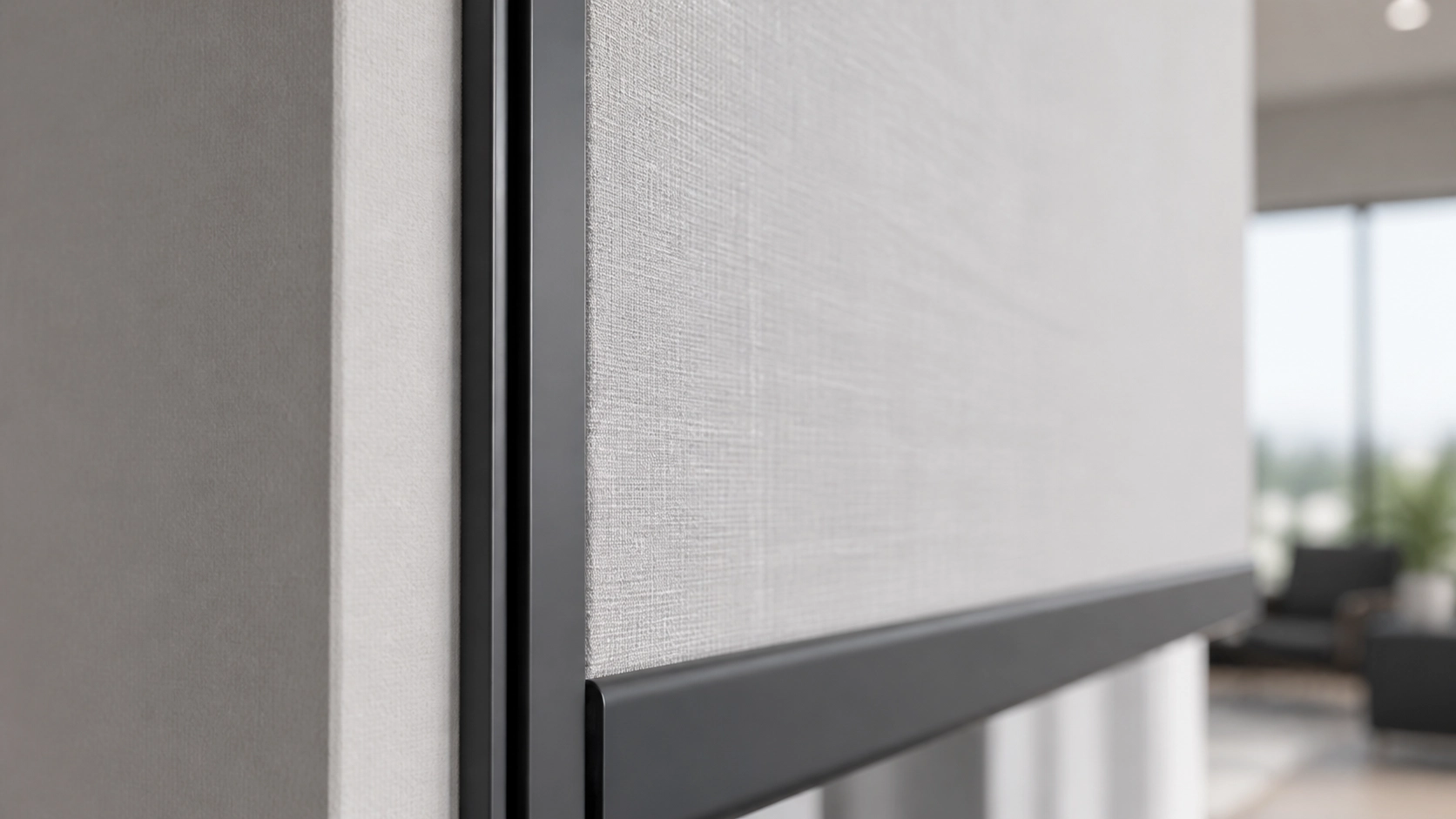
Slim Side Tracks for Stable Fabric Guidance
At each side of the opening, the WR85 uses compact 27 x 30 mm guide rails. Their narrow face minimizes visual intrusion while still providing continuous guidance for the shade.
The rail can be installed using wall-mounted, recessed or aluminum-frame connection methods, giving contractors more flexibility across different window details. The appropriate installation method should be confirmed from the substrate, recess depth, access conditions and final finish requirements.
Inside the guidance system, dual nano strips help locate the fabric and guide it vertically. This controlled movement is intended to reduce common problems such as fabric wandering, lateral displacement and jamming. It also helps the shade remain visually level during normal operation.
For projects with special fabric requirements or wider openings, an optional ZIP-guided configuration is available. This adds multi-point fabric retention along the sides to help manage movement, looseness and bulging caused by localized indoor airflow.
A 55 mm Roller Tube for Windows up to 2.5 x 3 m
The WR85 uses a reinforced 55 mm aluminum roller tube designed for repeated indoor operation. According to the product specification, the system can cover openings up to approximately:
- Maximum width: 2.5 m
- Maximum height: 3 m
Actual project suitability also depends on fabric selection, operating method, installation conditions and the complete system configuration. Dimensions should therefore be reviewed by the manufacturer before production, especially near the stated limits.
This capacity makes the WR85 relevant to many conventional office and hotel windows while keeping the headbox and side channels compact.
Concealed Bottom-Rail Detailing
Small hardware details often determine whether a blind feels integrated or added as an afterthought. The WR85 uses a high-strength aluminum bottom rail with a concealed fixing treatment. Surface weld marks and exposed screw connections are avoided on the visible face, helping the rail maintain a smooth and minimal appearance.
An optional dual-counterweight bottom-rail configuration can further balance the load across the shade. This is useful in indoor spaces where the blind is operated frequently and smooth, stable travel is a priority.
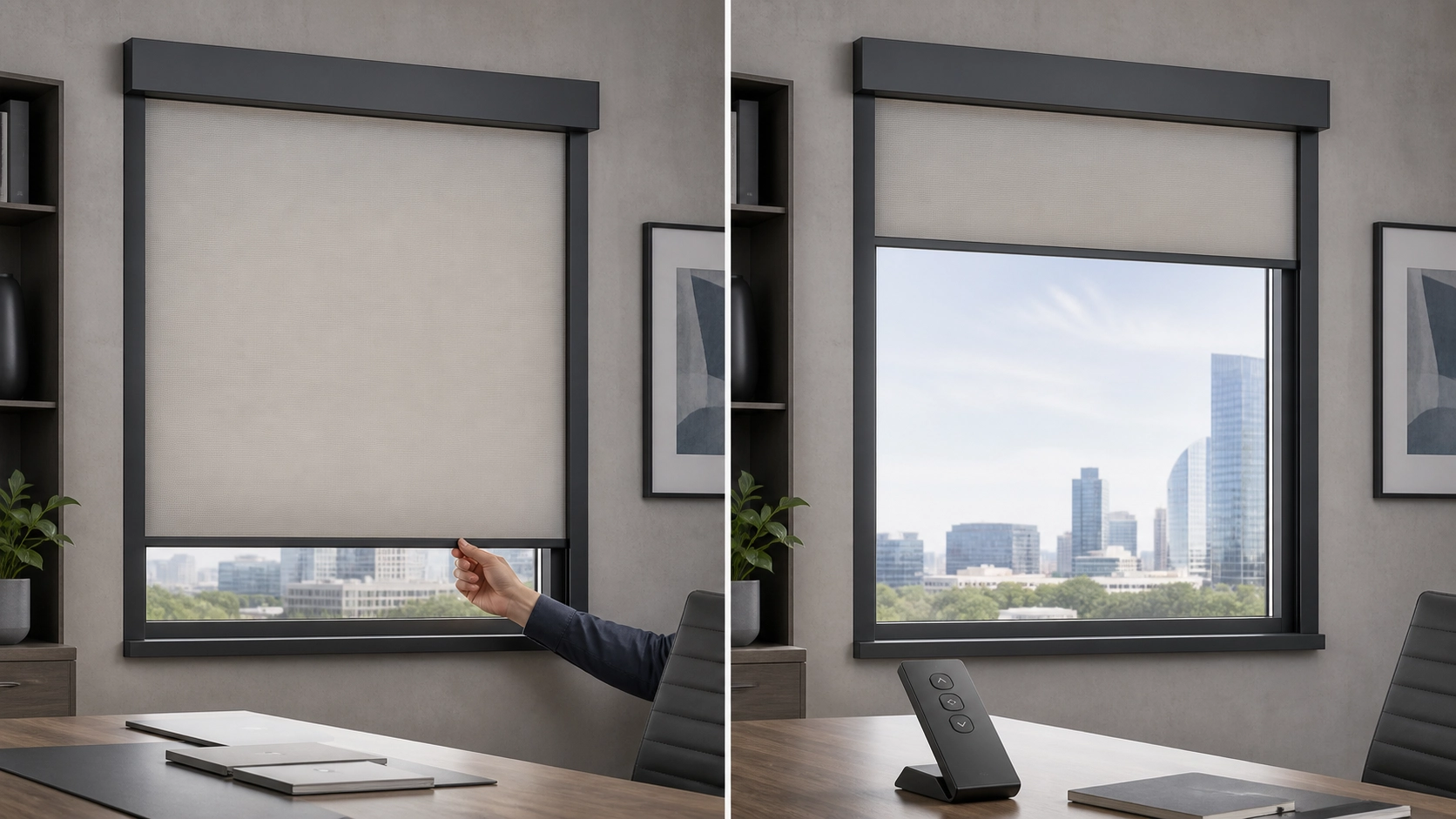
Manual or Motorized Control Options
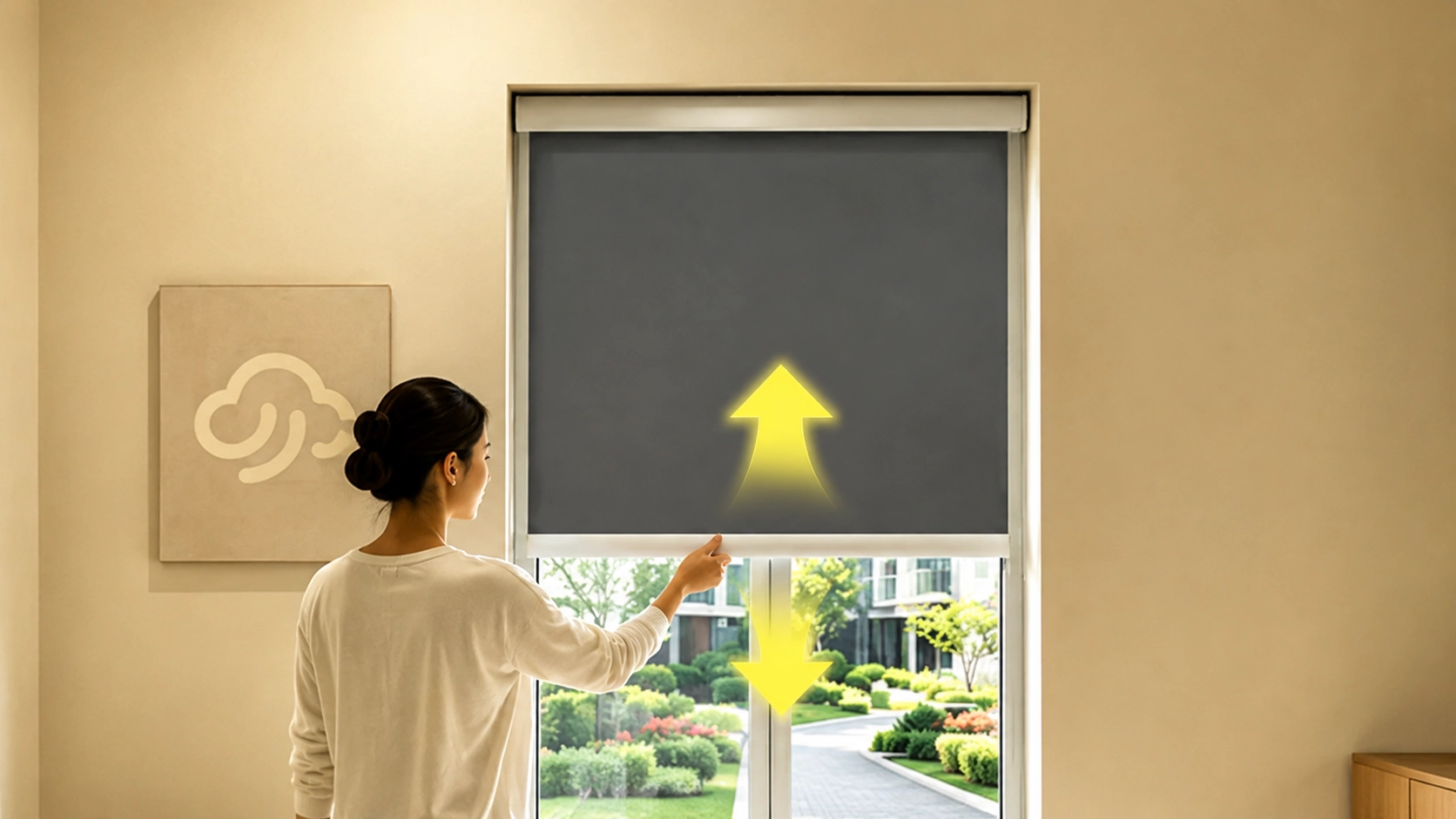
Different rooms need different levels of control, so the WR85 can be configured with either a manual spring system or motorized operation.
Manual spring operation
The manual spring option does not require a power supply. It offers straightforward operation and simple maintenance, making it useful for stairwells, small service spaces and individual windows where automation is unnecessary.
Motorized operation
The motorized option supports quieter, convenient control for offices, hotels and coordinated commercial interiors. Depending on the selected controls, functions may include:
- Remote raising and lowering
- Stop-at-any-position control
- Preset intermediate positions
- Mobile-device control
- Connection to a whole-building or whole-home control system
Motor selection, wiring, control protocol and integration requirements should be confirmed during project planning.
Where Does the WR85 Work Best?
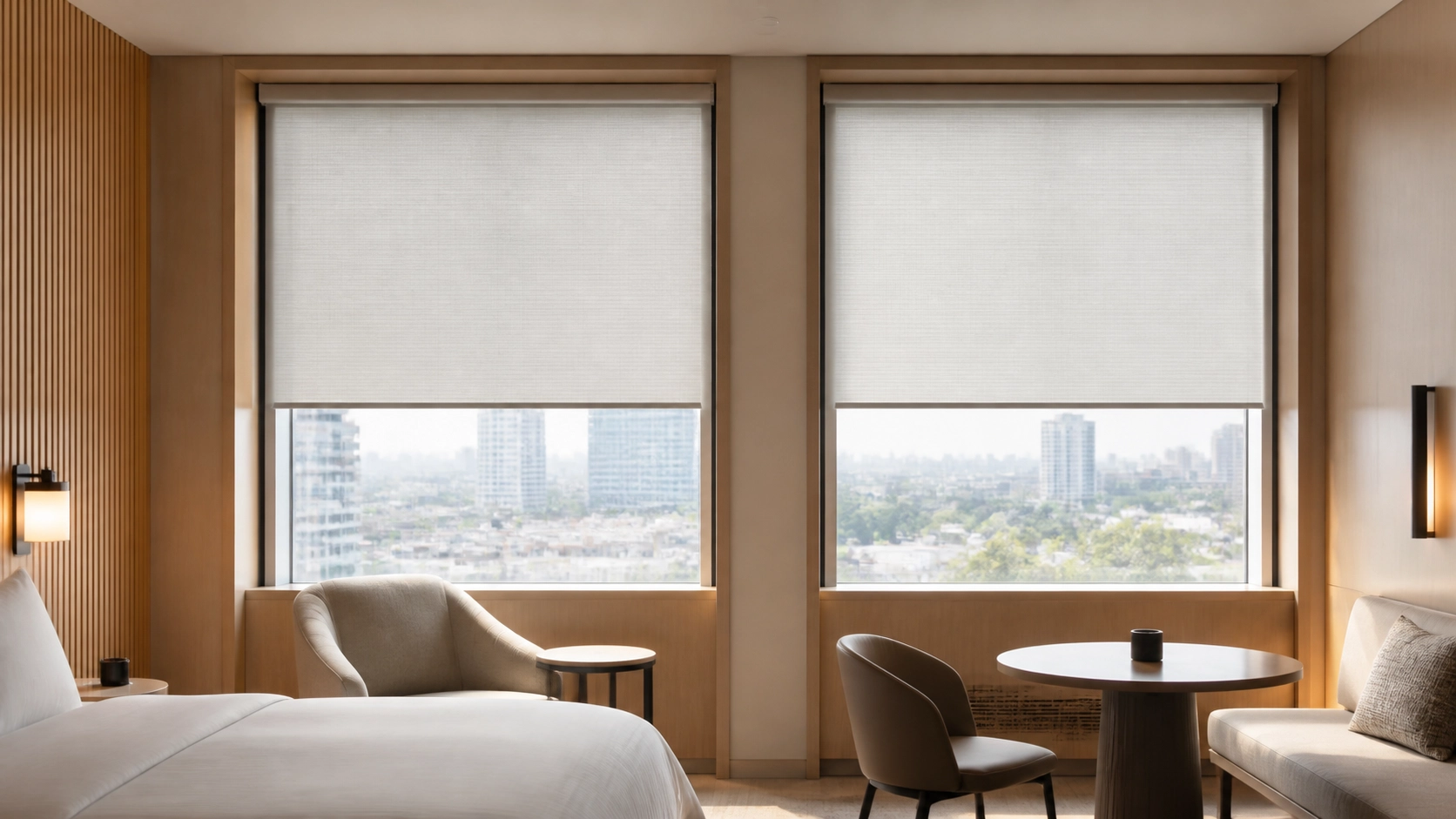
The WR85 is intended for fixed indoor architectural applications. Typical project locations include:
- Office windows and glazed meeting rooms
- Hotel rooms and hospitality interiors
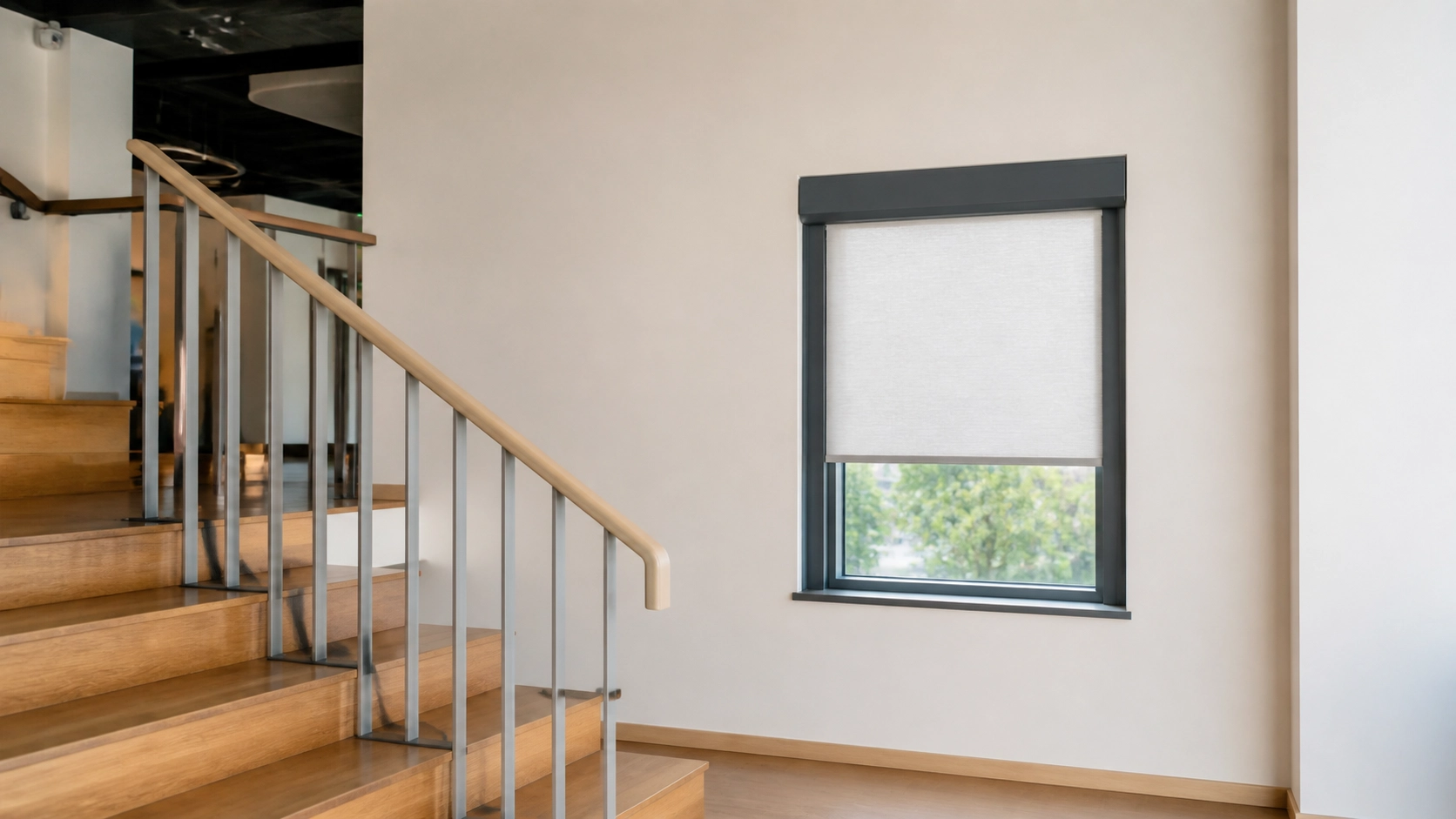
- Stairwell and corridor windows
- Interior light wells
- Equipment-room windows
- Recessed or built-in window details
- Small and standard-size commercial windows
It is particularly useful where the design calls for a compact cassette and slim side channels without sacrificing guided fabric control.
WR70 vs. WR85: Which Indoor Blind Should You Choose?
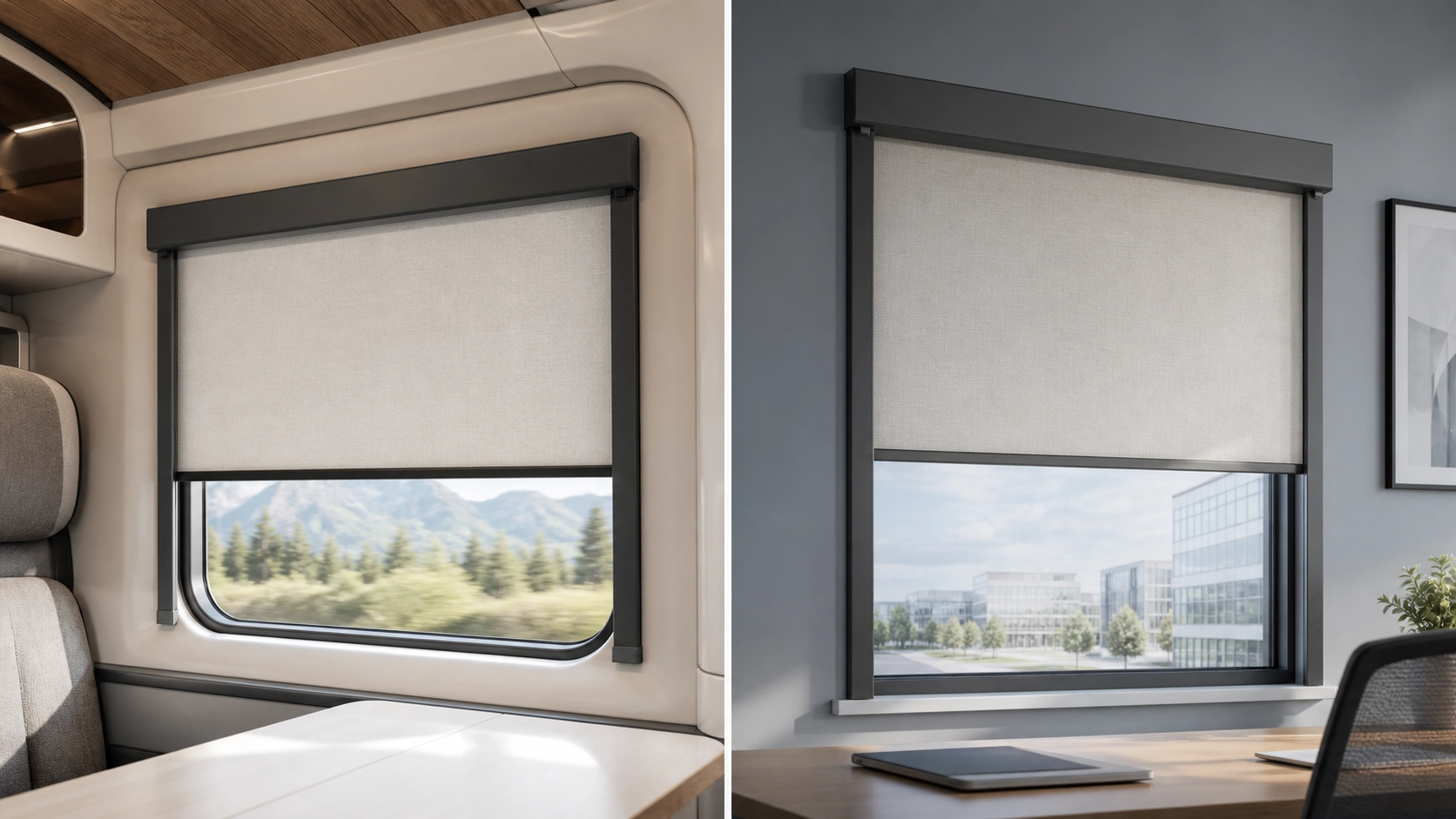
NewHoo offers both WR70 and WR85 compact guided roller blind systems, but they are designed around different project priorities.
| Selection factor | WR70 | WR85 |
|---|---|---|
| Primary application | Mobile transport and very compact openings | Fixed buildings and refined indoor spaces |
| Typical locations | High-speed rail, motorhomes and other transport interiors | Offices, hotels, stairwells and commercial interiors |
| Design emphasis | Resistance to ongoing vibration and movement | Compact detailing, visual integration and indoor project versatility |
| Side rail | Reinforced 30 x 35 mm profile | Slim 27 x 30 mm indoor profile |
| Best reason to specify | Dynamic installation environment | Architectural finish and adaptable building installation |
The two products may appear similar in size, but choosing by dimensions alone can lead to a poor specification. Use WR70 when the installation must cope with a moving vehicle and continuous vibration. Use WR85 when the priority is a clean, compact guided shade for a fixed indoor opening.
What to Confirm Before Requesting a Quote
To select the right cassette guided roller shade, provide the following project information:
- Finished opening width and height
- Inside-mount or face-mount requirement
- Window-frame and wall construction
- Fabric type and desired light control
- Manual or motorized operation
- Power supply and control protocol, if motorized
- Required profile color and surface finish
- Quantity, project location and installation schedule
For B2B projects, drawings or clear site photos can help the technical team review clearances, fixing positions and access for future maintenance.
A More Controlled Finish for Indoor Windows
The value of an indoor shade is not limited to raising and lowering fabric. In a well-designed interior, the system should also align with the opening, operate reliably and preserve the visual order of the room.
The WR85 addresses those needs with an 85 mm cassette, 27 x 30 mm side tracks, a reinforced 55 mm tube, concealed bottom-rail detailing and manual or motorized control options. For offices, hotels and other fixed indoor projects, it provides a compact way to achieve stable guidance without introducing oversized hardware.
Explore the WR85 Indoor Guided Roller Blind, compare the full Indoor Guided Roller Blinds range, or review the WR70 compact system for small and narrow windows.
Frequently Asked Questions
What is the difference between a guided roller blind and a standard roller blind?
A standard roller blind normally allows the fabric and bottom bar to hang freely. A guided roller blind uses side tracks to control the shade as it moves, improving alignment and reducing unwanted fabric movement.
What size windows can the WR85 cover?
The stated maximum size is approximately 2.5 m wide by 3 m high. Final suitability depends on the selected fabric, controls and installation conditions, so project dimensions should be reviewed before ordering.
Can the WR85 be motorized?
Yes. The WR85 supports motorized control and may be configured for remote operation, intermediate stopping, mobile control or building-system integration. A manual spring option is also available.
Is the WR85 suitable for outdoor installation?
The WR85 is designed primarily for fixed indoor applications. For balconies, patios, pergolas or exposed openings, choose a dedicated outdoor ZIP screen or windproof roller blind system based on the required opening size and project conditions.
Where are office roller blinds with side tracks commonly used?
They are commonly specified for office windows, meeting rooms, hotels, corridors, stairwells, interior light wells and other commercial spaces where controlled movement and a clean architectural finish are important.
Industrial Roller Blinds for Factory Partitions: A Flexible Zoning Case Study
L-Shaped Balcony Windproof Roller Shades: A Corner Installation Case Study
Related Article