Electric Windproof Roller Blinds: Technology, Structure and Applications
Electric windproof roller blinds are advanced shading systems designed for outdoor and semi-outdoor spaces where ordinary roller blinds may fail in high winds. Compared with conventional roller blinds, electric windproof roller blinds provide better wind resistance, fabric stability, privacy, solar control, and intelligent operation.
With the rapid development of green buildings, smart homes,s and outdoor living spaces, windproof roller blinds are no longer simple shading products. They have become integrated architectural sunshade solutions used in balconies, terraces, pergolas, sunrooms, hotels, commercial façades, and high-end residential buildings.
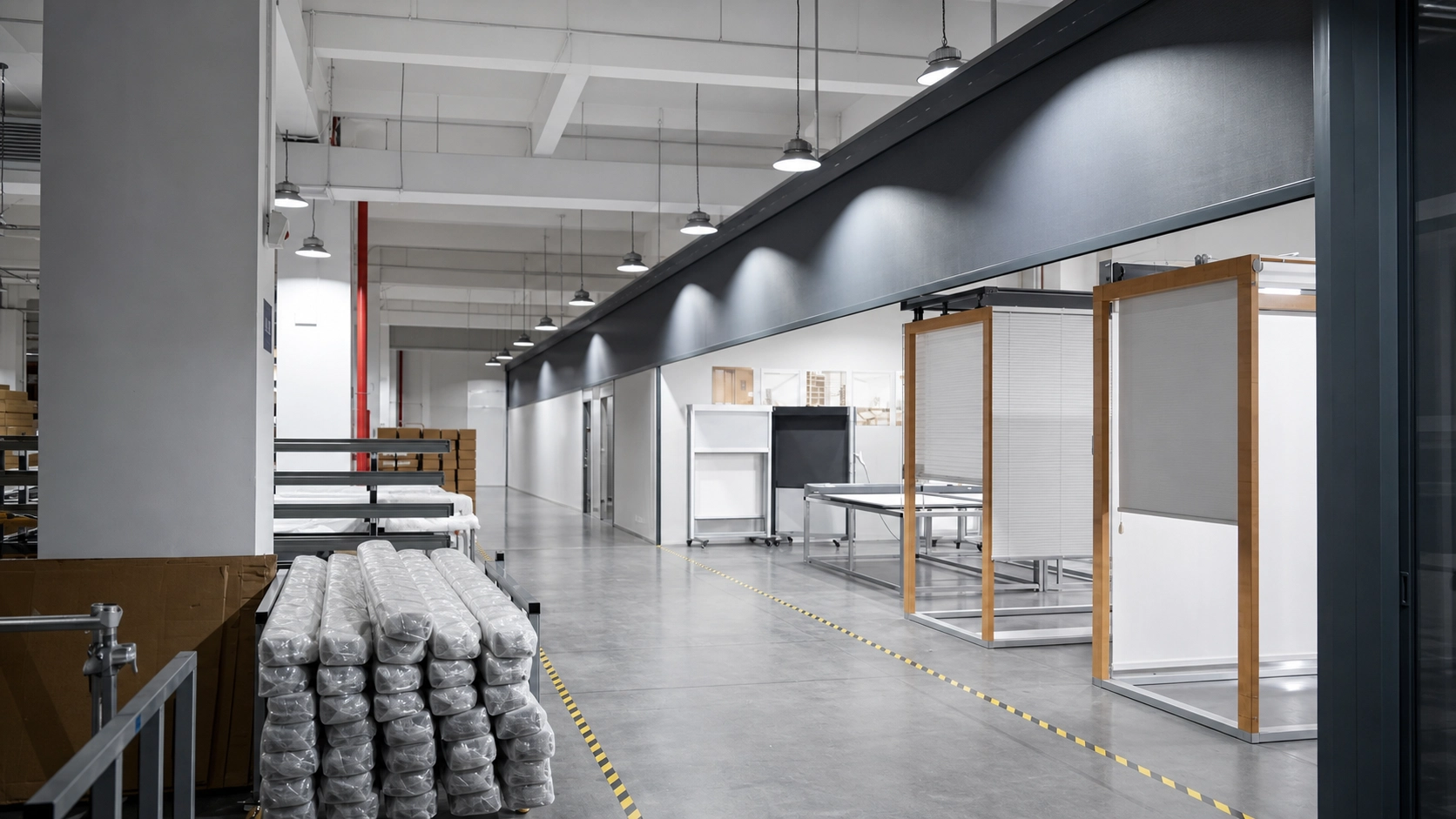
As a professional manufacturer of roller blinds and outdoor sunshade products, Newhoo focuses on electric windproof roller blinds, outdoor ZIP track blinds, motorized sunshade roller blinds, spring roller blinds, awnings, and customized shading systems for B2B projects.
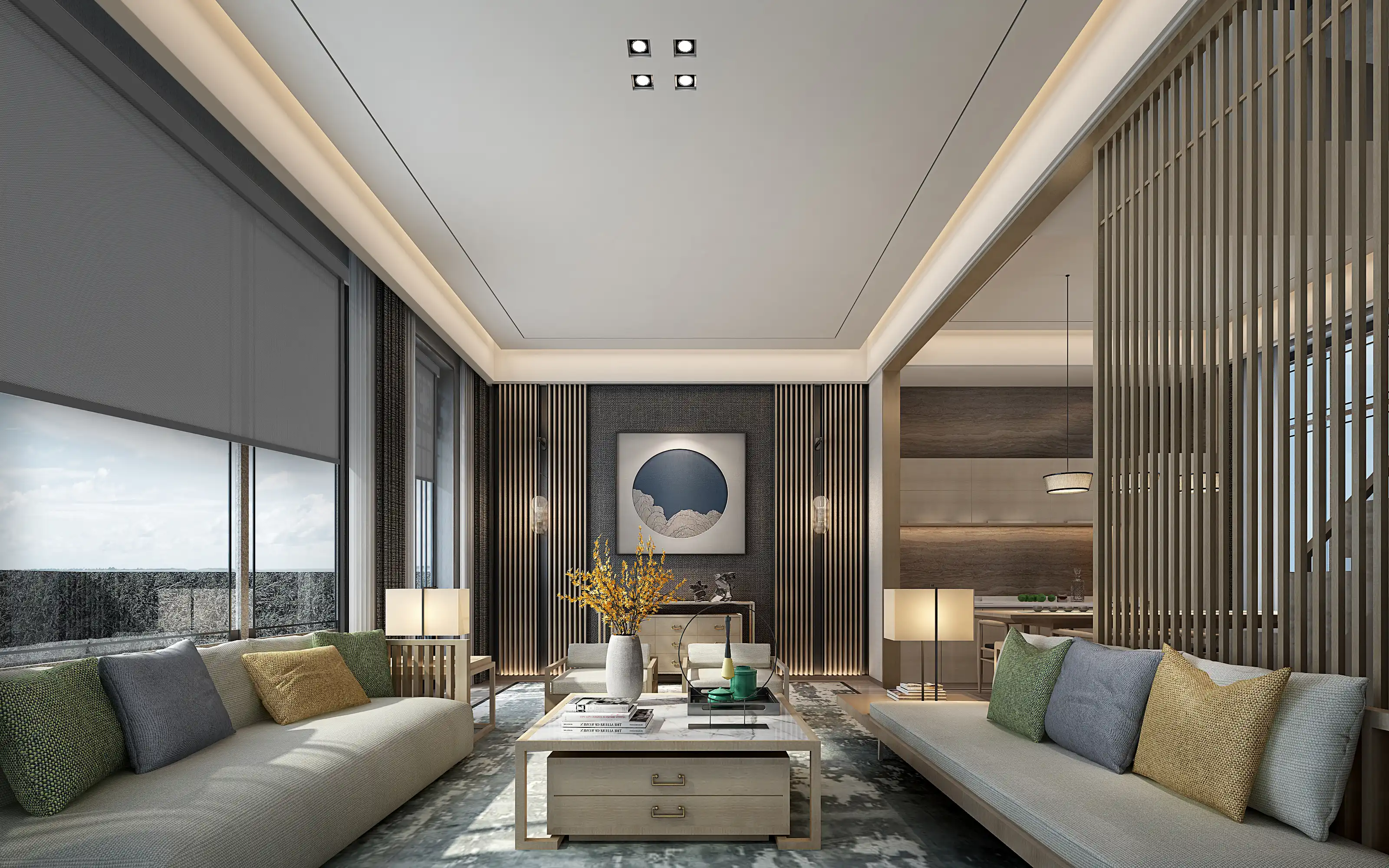
What Are Electric Windproof Roller Blinds?
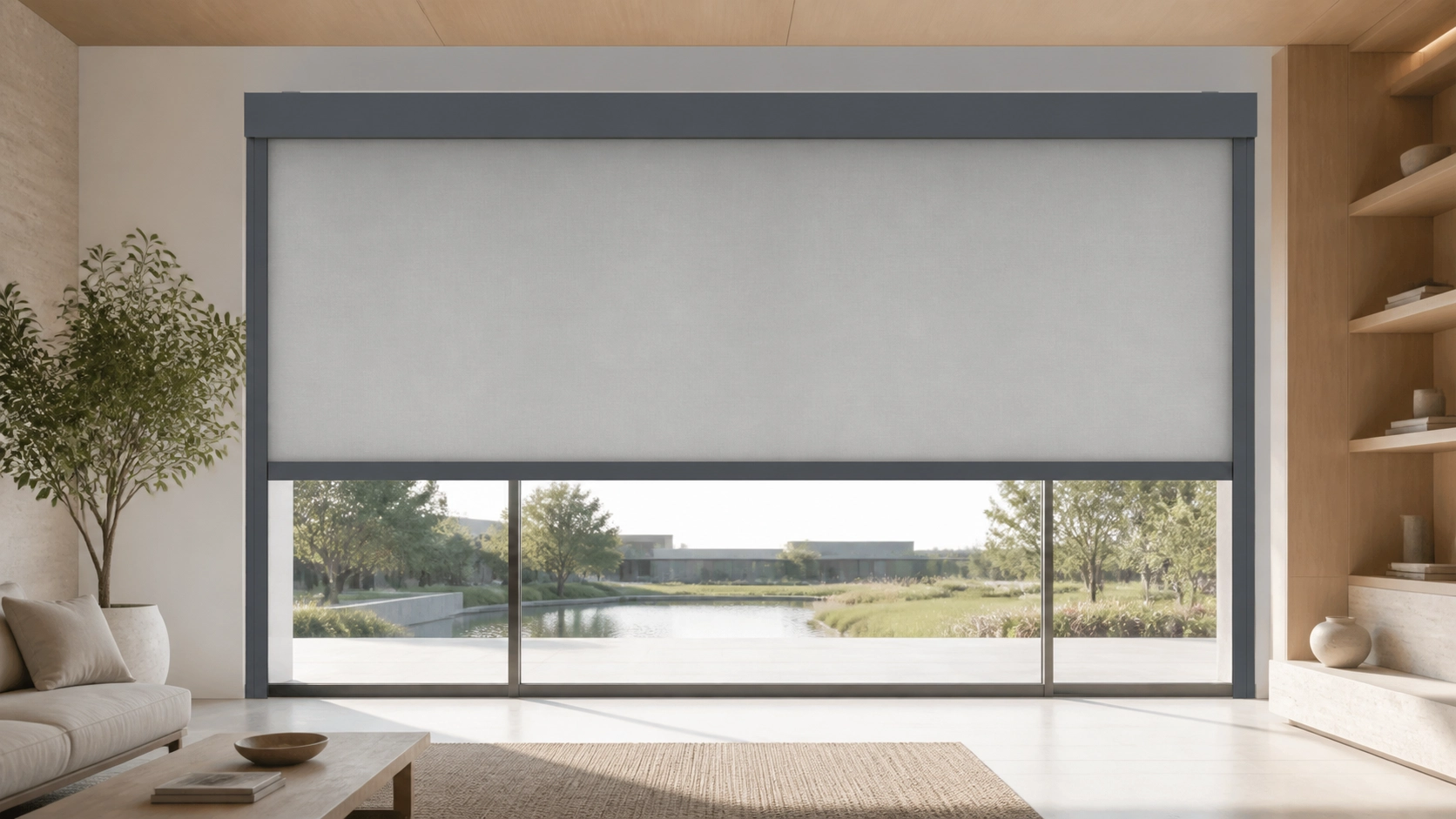
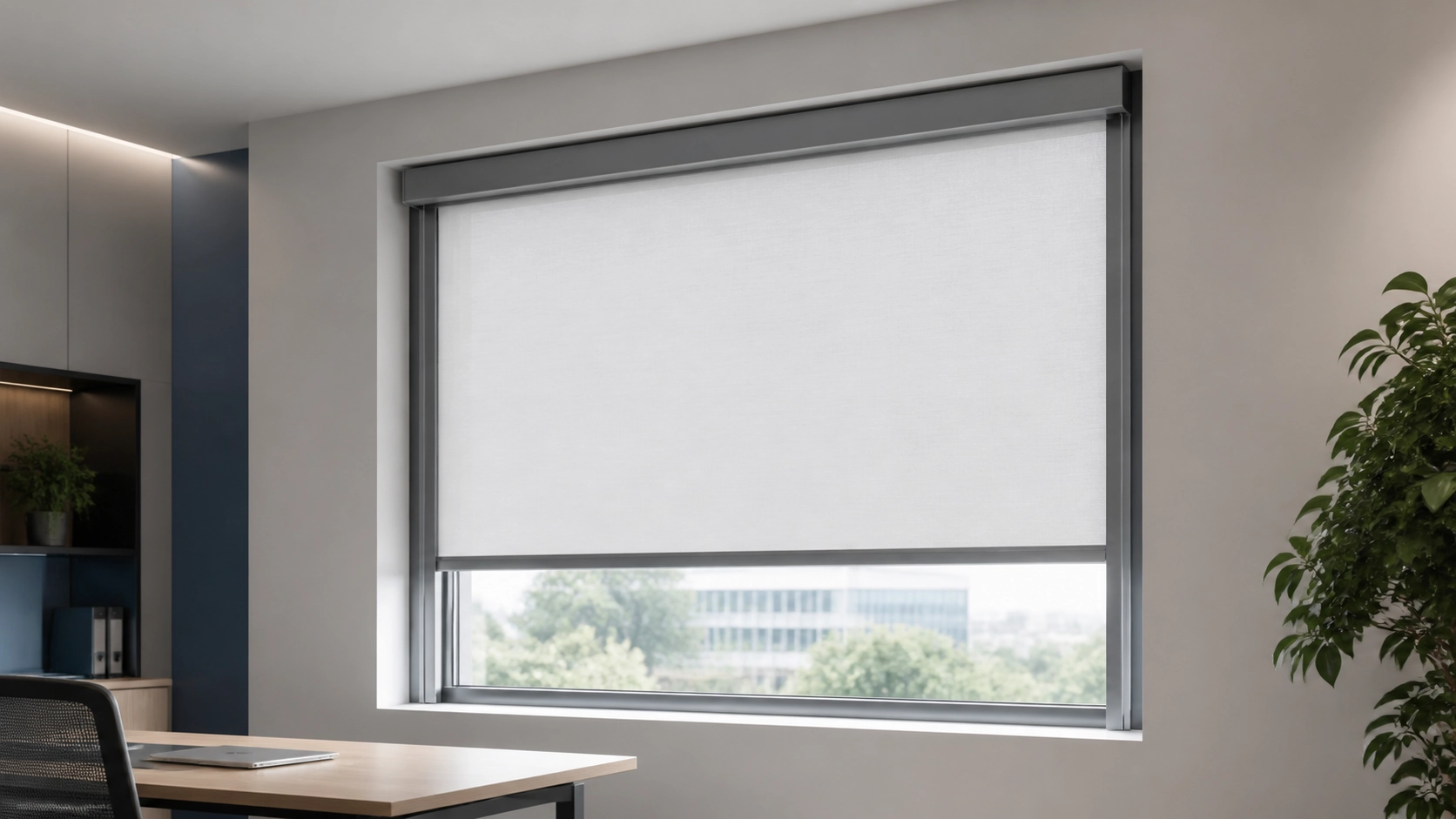
Electric windproof roller blinds are motorized roller blind systems designed to operate more stably in windy environments. Their main function is to prevent the fabric from swinging, deforming,g or coming out of the side tracks when exposed to outdoor wind.
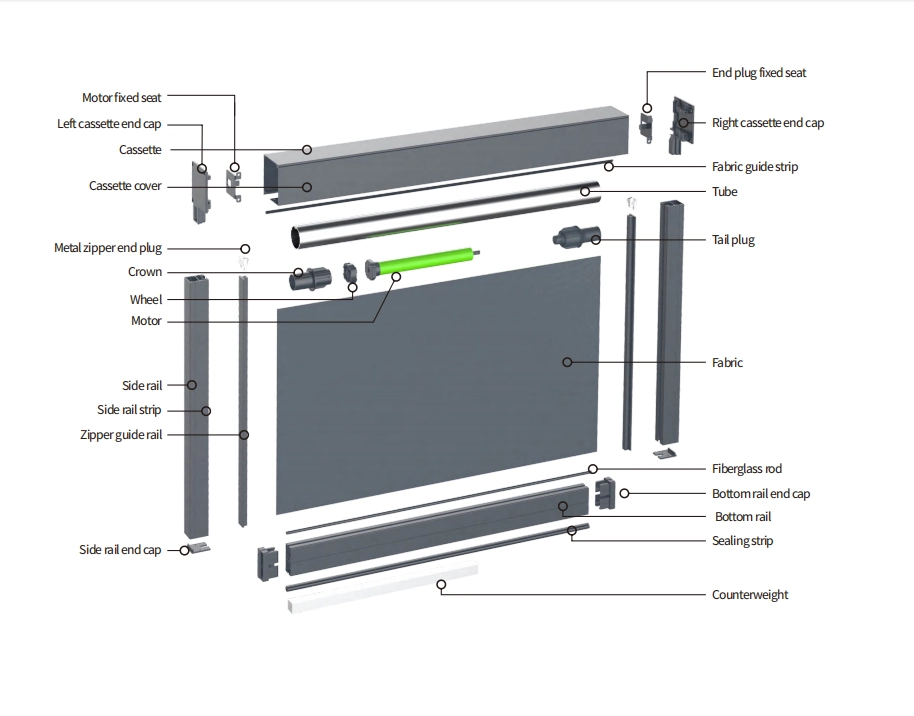
A standard electric windproof roller blind usually includes:
- Aluminum cassette or headbox
- Roller tube
- Tubular motor
- Outdoor shading fabric
- Side guide rails
- ZIP or anti-derailment system
- Bottom rail
- Remote control, wall switch, ch or smart control system
The biggest difference between a windproof roller blind and a normal roller blind lies in the side guiding structure. Ordinary roller blinds mainly rely on the bottom bar for weight and stability, while windproof roller blinds use side rails, ZIP tracks, guide wires, or special anti-slip structures to keep the fabric locked and tensioned.
Core Technology of Windproof Roller Blinds
Anti-Derailment Side Guide System
The side guide system is the technical foundation of a windproof roller blind. It keeps the fabric aligned during lifting and lowering, while also preventing the fabric from leaving the track under wind load.
Common side guide structures include:
ZIP Track Structure
The ZIP track system uses zipper-like edges attached to both sides of the fabric. These zipper edges slide inside aluminum guide rails, creating a locked connection between the fabric and the side tracks.
This design greatly improves wind resistance and sealing performance. It is widely used in outdoor ZIP blinds, motorized pergola screens, balcony blinds,s and high-performance exterior shading systems.
Pulley or Bearing Guide Structure
Some windproof roller blinds use a pulley and guide rail structure. The fabric edge is specially processed and guided through the side rail with pulleys or small bearing components. This structure improves smooth operation and helps reduce fabric deviation.
Steel Wire or Guide Rod System
For some lighter outdoor or semi-outdoor applications, steel wire ropes or guide rods can be used on both sides of the blind. This solution provides basic guidance and wind stability, but its sealing and wind resistance are usually weaker than those of n a ZIP track system.
Wind Pressure Resistance: A System-Level Design
The wind resistance of electric windproof roller blinds is not determined by a single component. It depends on the coordinated performance of the fabric, side rails, bottom rail, cassette, fixing brackets, and installation structure.
Reinforced Side Rails
Outdoor windproof roller blinds usually use extruded aluminum side rails. Compared with ordinary indoor roller blinds, the guide rails are deeper, stronger,r and more resistant to deformation.
A high-quality side rail should:
- Hold the fabric securely
- Reduce lateral movement
- Resist wind pressure
- Support smooth lifting and lowering
- Maintain long-term structural stability
For engineering projects, the guide rail thickness, fixing distance, screw specification, and wall substrate should all be considered during product design.
Floating Bottom Rail
The bottom rail is another important part of the wind resistance system. In ordinary roller blinds, the bottom rail mainly adds weight. In windproof systems, the bottom rail also helps distribute wind pressure.
A floating bottom rail can move slightly under wind pressure, reducing stress concentration and helping the fabric remain stable. This is especially useful for ZIP track blinds, large-size outdoor roller blinds, and high-rise balcony shading systems.
Strong Cassette and Fixing System
The cassette protects the motor, roller, tube, and fabric when the blind is retracted. It also works as a structural support point for the whole system.
For outdoor applications, the cassette should be made of durable aluminum profiles and connected firmly to the building structure. Poor fixing is one of the main reasons why outdoor blinds fail in strong winds.
Fabric Technology for Electric Windproof Roller Blinds
The fabric determines the shading effect, privacy level, heat control, view-through perforation, performance, and outdoor durability of the product.
Common fabrics include:
Fiberglass PVC Solar Screen Fabric
Fiberglass fabric coated with PVC is widely used in outdoor windproof roller blinds. It has strong dimensional stability, good tensile strength, excellent weather resistance, and better flame-retardant performance.
It is suitable for:
- Commercial buildings
- High-rise residences
- Outdoor balconies
- Pergolas
- Glass façades
- Sunrooms
Polyester PVC-Coated Fabric
Polyester-based coated fabric is cost-effective and flexible. It is often used in residential outdoor roller blinds, awnings, and medium-duty shading applications.
Its advantages include:
- Good shading performance
- Flexible processing
- Competitive cost
- Wide color options
Composite Functional Fabric
Composite fabrics combine different materials and coatings to achieve balanced performance in strength, flexibility, weather resistance, flame retardancy,y and environmental protection.
For high-end or customized projects, the fabric may be selected according to:
- Openness factor
- UV blocking rate
- Flame-retardant level
- Color fastness
- Waterproof performance
- Tensile strength
- Shrinkage stability
Motor and Control System
The core driving component of an electric windproof roller blind is the tubular motor. The motor is installed inside the roller tube and drives the blind up and down.
Common control methods include:
- Handheld remote control
- Wall switch
- Mobile app
- Voice assistant
- Timer control
- Group control
- Wind sensor
- Sun sensor
- Rain sensor
- Smart building control system
For outdoor applications, motor torque should be selected according to blind size, fabric weight, roller tube diameter, and installation height. Large blinds require stronger motors and more precise limit control.
Manual-Electric Dual-Control System
For some projects, Newhoo can provide manual-electric dual-control solutions. This type of system allows users to operate the blind electrically under normal conditions while retaining a manual operation option for emergency use or power failure situations.
This structure is especially suitable for:
- Villas
- Hotels
- Outdoor commercial areas
- Semi-outdoor residential spaces
- Projects with high reliability requirements
Main Applications
Electric windproof roller blinds are widely used in both residential and commercial spaces.
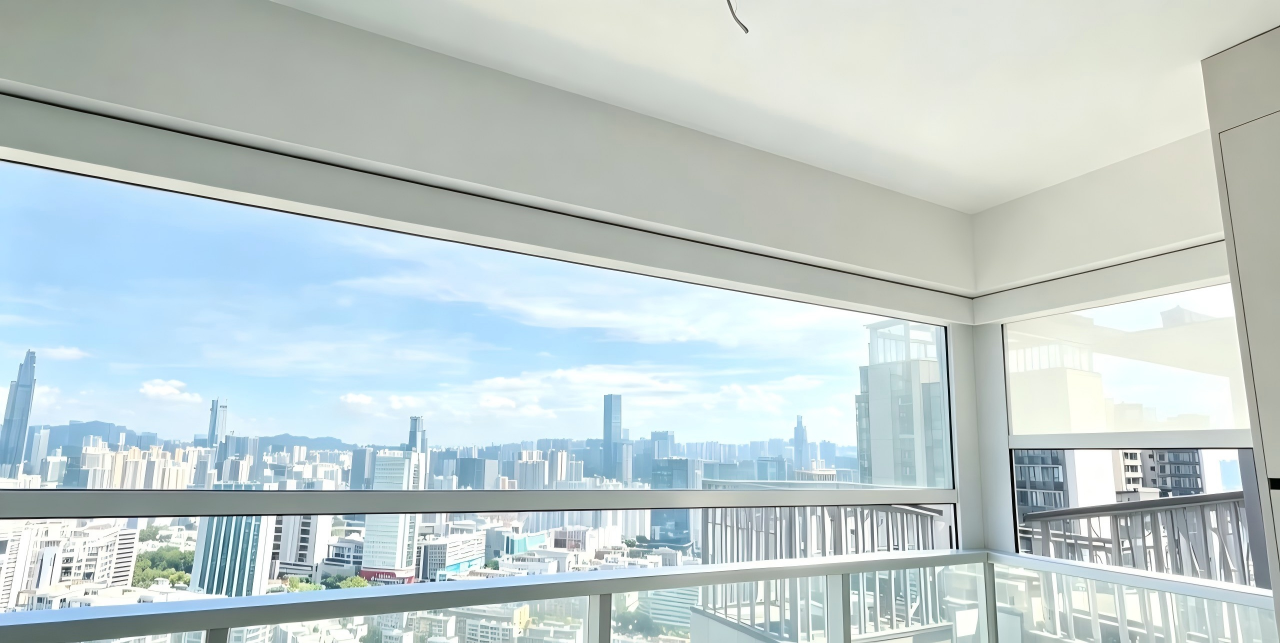
Balcony Shading
For apartments and high-rise residences, windproof roller blinds help reduce glare, improve privacy, and protect the balcony from direct sunlight.
Pergola Side Screens
Motorized ZIP track blinds can be used as side screens for pergolas. They help block wind, sunlight, insects, and rain splashes, making outdoor spaces more comfortable.
Sunrooms
Sunrooms often receive strong sunlight and heat. Electric windproof roller blinds can be installed on vertical façades or side openings to improve thermal comfort.
Commercial Façades
Hotels, office buildings, restaurants, and shopping spaces use exterior roller blinds to improve building appearance, reduce solar heat gain, and enhance user comfort.
Outdoor Hospitality Areas
Cafés, restaurants, and resorts use motorized windproof roller blinds to extend the usability of outdoor spaces and improve customer experience.
Why Choose Newhoo Electric Windproof Roller Blinds?
Newhoo provides customized roller blinds and sunshade solutions for B2B clients, distributors, contractors, and project buyers. Our product range includes indoor roller blinds, outdoor windproof roller blinds, motorized ZIP track blinds, awnings, spring roller blinds,s and other sunshade systems.
Newhoo focuses on:
- Outdoor windproof structure design
- Aluminum profile processing
- Motorized control systems
- Fabric selection and customization
- OEM and ODM production
- Project-size customization
- Stable B2B supply capability
Whether the project is a balcony, villa terrace, pergola, hotel façade, or commercial shading system, Newhoo can provide product selection support and customized manufacturing solutions.
NewHoo Successfully Concludes R+T Asia 2026 Exhibition
Related Article