UR120 90 Degree Corner Windproof Roller Blinds
Synchronized Corner Shading for Balconies and Terraces
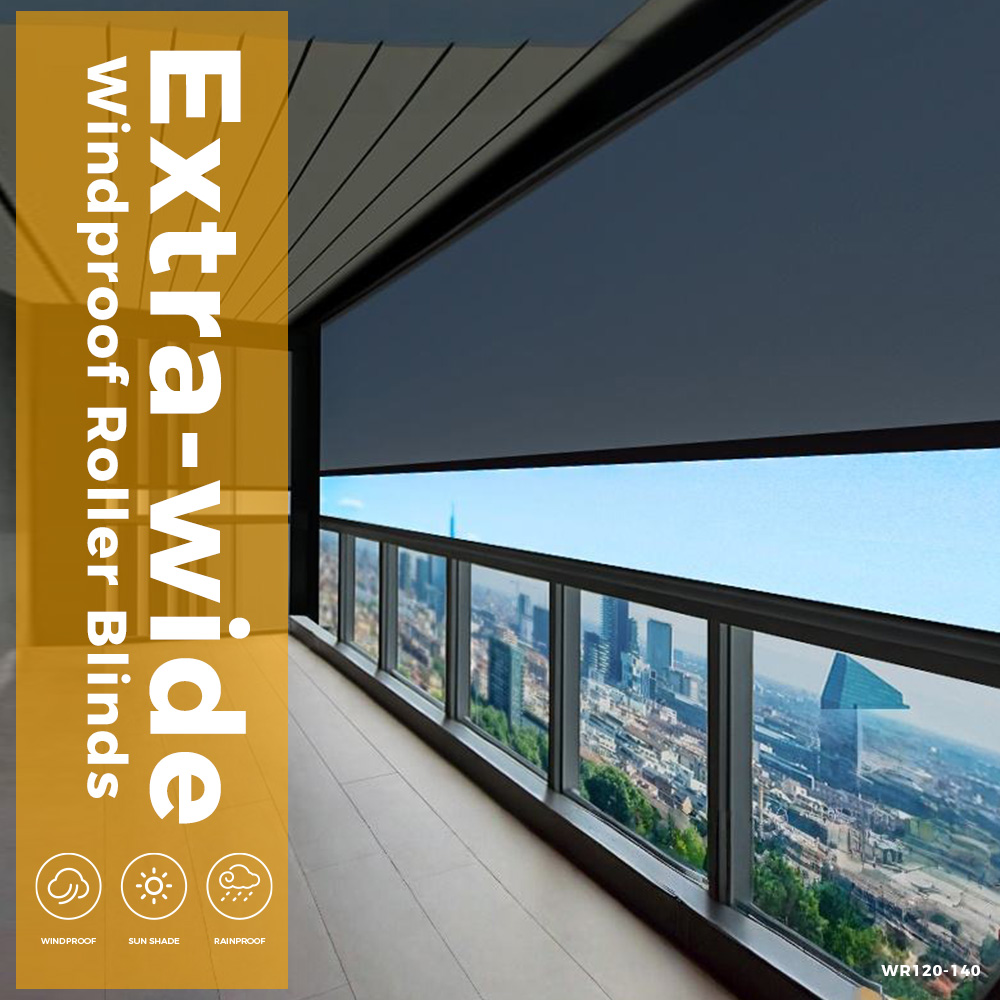
UR120 is a multi-linked motorized windproof roller blind system designed for 90° corner openings. It is suitable for L-shaped balconies, corner terraces, pergola corners, villa outdoor areas, and commercial seating spaces where two sides need shade and wind protection at the same time.
Instead of installing two separate blinds with separate controls, UR120 links adjacent blinds into one synchronized system. This helps create cleaner corner shading, easier daily operation,n and a more complete fabric coverage around the corner.
Designed for Real 90° Corner Conditions
Corner balconies and terraces are different from straight openings. If two ordinary blinds are installed separately, the corner area may leave visible gaps, the movement may not be synchronized, and the finished appearance can look less integrated.
UR120 is designed for this type of project. Through synchronized control, 90° bevel gear transmission and connected fabric panels, the system helps both sides work together as one corner shading solution.
For users, this means easier control and better comfort. For project buyers and installers, it provides a more professional solution than using two independent roller blinds.
One Control System for Two or More Blinds
UR120 uses one control system to operate at least two roller blinds synchronously. Both sides move together, so users do not need to control each blind separately.
This is especially useful for L-shaped balconies, outdoor restaurant corners, and terrace spaces where two sides need to open or close at the same time. The synchronized movement also gives the installation a cleaner and more consistent visual effect.
90° Bevel Gear Linkage
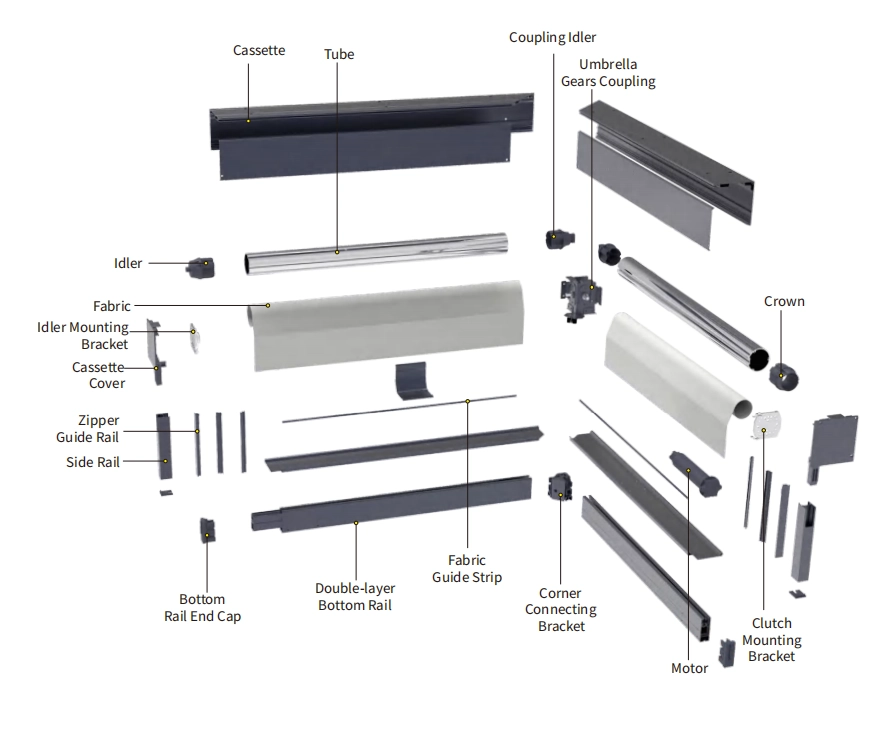
The core structure of UR120 is the 90° bevel gear coupling system. It transfers motion around the corner, allowing adjacent blinds on different sides to operate together.
This makes UR120 different from a simple two-blind installation. It is a purpose-built corner system, designed to solve the mechanical coordination problem of 90° outdoor openings.
Reduce Corner Gaps With Connected Fabric Panels
When the blinds are fully lowered, adjacent fabric panels can be connected through a special #4 zipper structure. This helps reduce the visual break between the two sides and creates a more complete shading surface around the corner.
When the system is retracted, each fabric panel rolls back into its own cassette. This keeps the system organized and makes maintenance easier than a fully fixed fabric connection.
Keep the Bottom Rails Aligned
For corner systems, bottom rail alignment directly affects the final appearance. If one side is higher or lower than the other, the whole installation can look uneven.
UR120 uses a floating bottom rail system to help each blind section stay aligned during operation. This improves the finished look and supports smoother movement across linked sections.
Stronger Corner Bottom Rail Connection
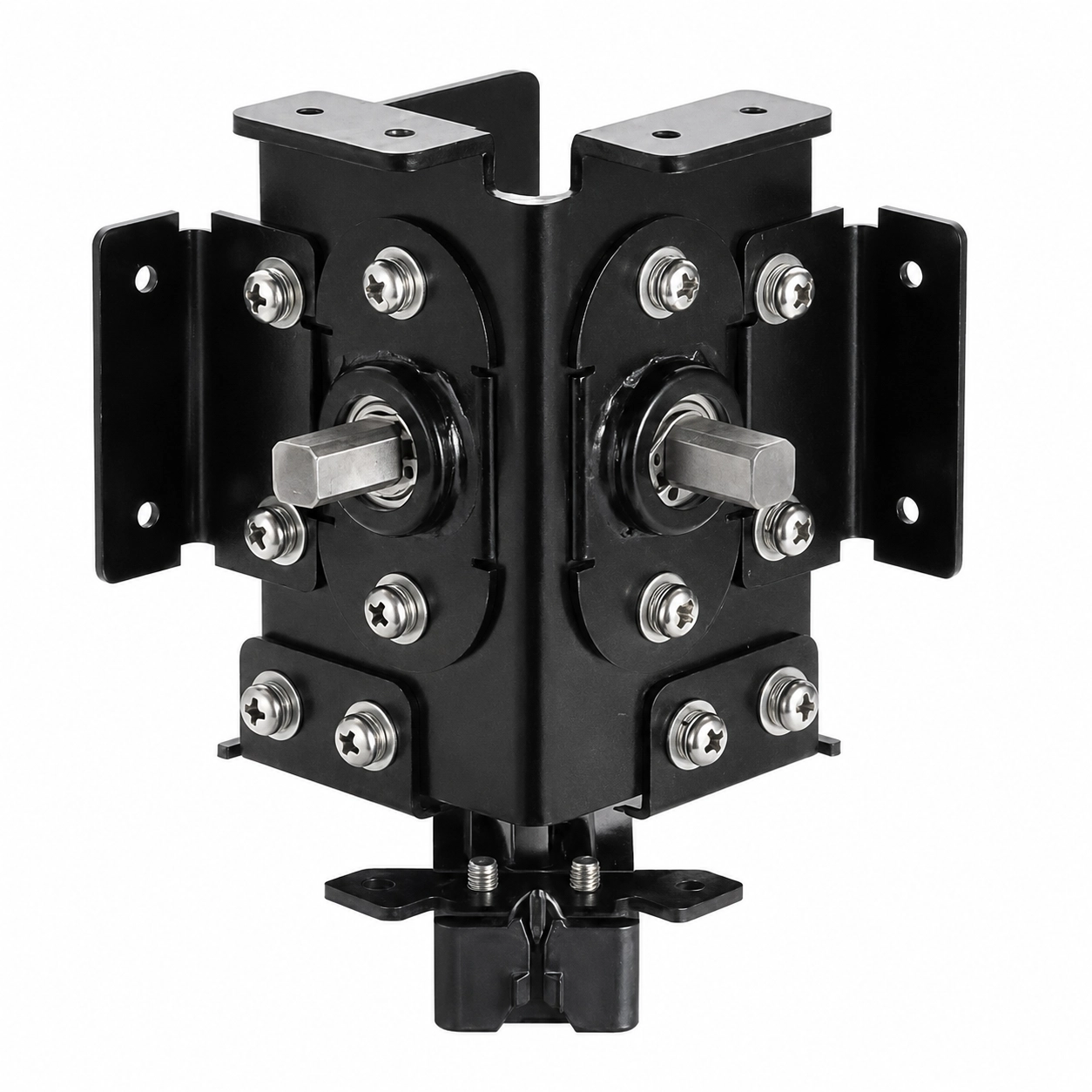
Adjacent bottom rails are connected with a die-cast rigid corner connector. This strengthens the lower corner area and helps the connected bottom rail work as a more stable structure after installation.
The floating bottom rail improves alignment, while the rigid corner connector improves strength. Together, they help UR120 perform better in real corner shading projects.
Direct Top Mounting and Split Assembly
UR120 uses direct top mounting and split assembly. This makes transportation, positioning, and on-site installation more practical for corner projects.
For project installation, corner openings often require more accurate alignment than straight openings. The split assembly design gives installers more flexibility when matching the system to the actual site structure.
System Specification Guide
| System Type | Operation | Control & Linkage | Fabric Connection | Main Structure | Recommended Configuration | Installation |
|---|---|---|---|---|---|---|
| UR120 Multi-Linked 90° Corner Windproof Roller Blind System | Motorized | One control system with a 90° bevel gear coupling | Special #4 zipper connection between adjacent fabrics | 120 × 120 mm cassette, 63 mm grooved tube, 30 × 35 mm side rail, floating bottom rail | Two-linked system; about 3 m × 3 m width and 3 m height; 45 tubular motor 20 Nm | Direct top mounting, split assembly |
Application Scenarios
UR120 is suitable for L-shaped balconies, corner terraces, pergola corner openings, villa outdoor spaces, hotel outdoor seating areas, restaurant corner façades and commercial outdoor shading projects.
It is especially suitable for spaces where two sides meet at a 90° angle and need synchronized shading, wind-resistant control,l and a cleaner corner finish.
Why Choose NewHoo UR120?
UR120 is made for corner spaces that ordinary roller blinds cannot handle well. It allows two or more blinds to move together, helps reduce gaps, ps and keeps the lower section more aligned after installation.
The 90° bevel gear linkage solves the corner transmission problem. The zipper-connected fabric panels improve coverage. The floating bottom rail and die-cast corner connector improve alignment and strength.
For balconies, terrace terracesmmercial outdoor areas, UR120 gives projects a more integrated corner shading solution than installing two separate roller blinds.
Custom Project Support
Corner blind projects need accurate size and structure confirmation. NewHoo can recommend a suitable UR120 configuration based on your project drawings and site conditions.
Please provide the width of each side, height, corner angle, installation position, fabric requirement, motor control requirement, site photos or drawings, quantity, and project location.
Latest Products